Sep 14, 2023

Nanotech hopes to combat antibiotic-resistant superbugs

publicpreview
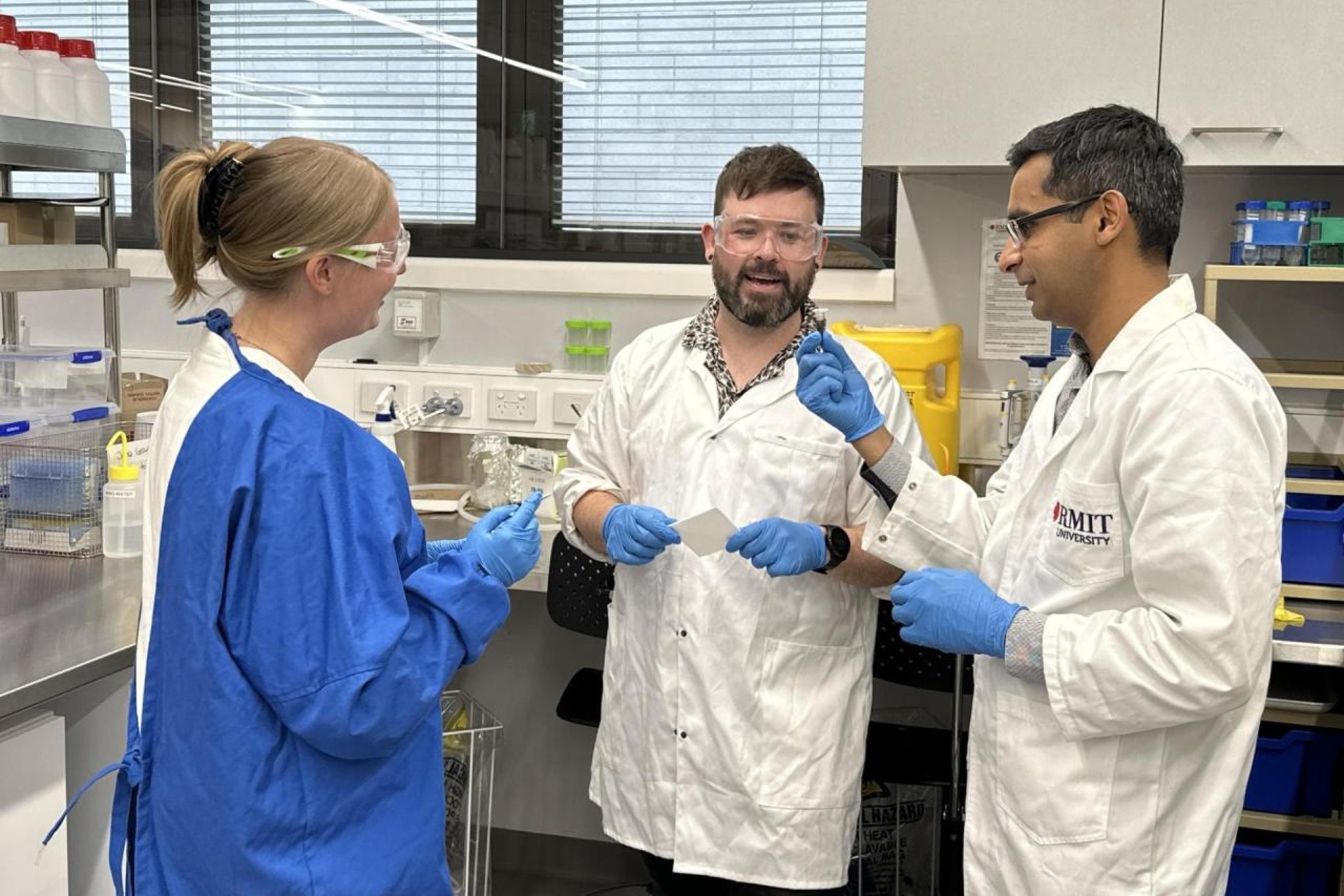
Professor Sumeet Walia (right) holding a vial of black phosphorus suspended in liquid with fellow researchers. [Source: Seamus Daniel/ RMIT University]

Key points:

  • Antibiotic resistance is a major global health threat, causing about 700,000 deaths annually and could rise to 10 million deaths a year by 2050 without the development of new antibacterial therapies
  • The new study led by RMIT University and the University of South Australia (UniSA) shows black phosphorus-based nanotechnology effectively treats infections by killing over 99% of bacteria without damaging other cells in biological models
  • Black phosphorus is the most stable form of phosphorus – a mineral that is naturally present in many foods – and, in an ultra-thin form, degrades easily with oxygen, making it ideal for killing microbes

Researchers hope their new nano-thin technology will be integrated into wound dressings and implants to heal antibiotic-resistant superbugs like ‘golden staph’. 

Advanced preclinical trials have suggested the black phosphorus-based nanotechnology material is effective against a broad range of drug-resistant bacterial cells that have previously been resistant to antibiotics. The new study tested the effectiveness of nano-thin flakes of black phosphorus against five common bacteria strains, including E. coli and drug-resistant golden staph.

Researchers tested the nanotechnology as an advanced infection treatment and wound healing therapeutic which achieved comparable results to an antibiotic in eliminating infection and accelerated healing. It provided rapid antimicrobial action, then self-decomposed after the infection cleared.

Wounds were found to close by 80% over seven days.
publicpreview (1)
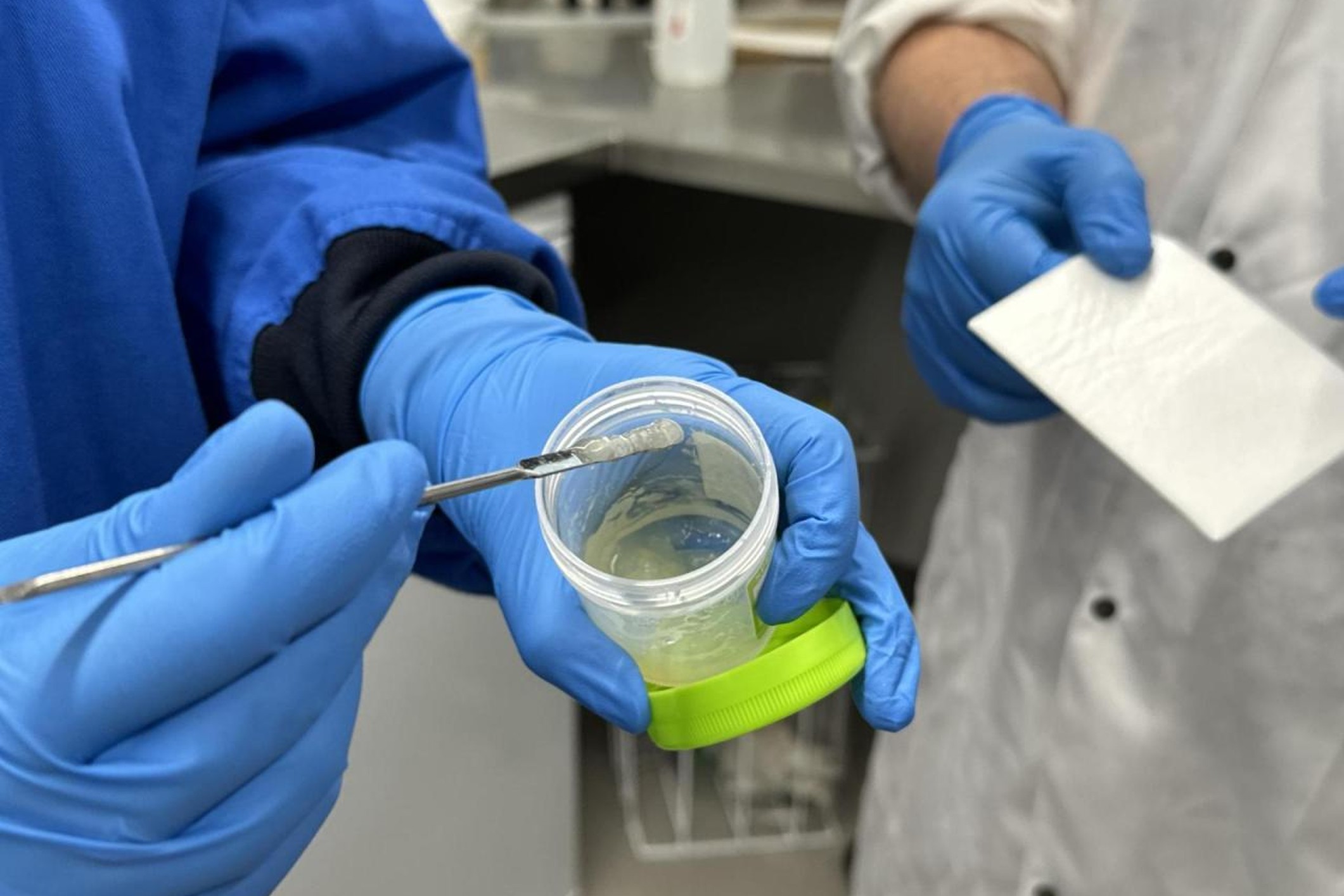
Gel can be integrated with the black phosphorus treatment to make a wound dressing. [Source: Seamus Daniel/ RMIT University]

A previous study led by RMIT revealed that black phosphorus was effective at killing microbes when spread in nano-thin layers on surfaces used to make wound dressings and implants such as cotton and titanium, or integrated into plastics used in medical instruments.

Lead researcher from UniSA, Doctor Zlatko Kopecki, and his team performed the pre-clinical trials to show how daily topical application of the black phosphorus nanoflakes significantly reduced infection at a time when antibiotic treatments are becoming scarce across the world.

“We urgently need to develop new alternative non-antibiotic approaches to treat and manage wound infection,” he said.

RMIT co-lead researcher, Professor Sumeet Walia, said the study showed how their innovation could be integrated into different forms of treatment and medicine to help combat these types of superbugs. 

“The beauty of our innovation is that it is not simply a coating – it can actually be integrated into common materials that devices are made of, as well as plastic and gels, to make them antimicrobial,” he said. 

“As the nanomaterial breaks down, its surface reacts with the atmosphere to produce what are called reactive oxygen species. These species ultimately help by ripping bacterial cells apart,” Walia said.

The research team are now looking to collaborate with industry partners to develop and prototype the technology for commercial use.

Leave a Reply

Your email address will not be published. Required fields are marked *

Advertisement
Advertisement
Advertisement

Top Rated Aged Care Facilities in Sydney

Aged Care Hotspots in Sydney, NSW are growing fast, with a number of new facilities opening every few months to continue to meet the demand of the ageing population. New South Wales has the highest number of government funded aged care facilities in comparison to the other states, with a total of 875. To understand... Read More

Stronger Aged Care Protections for Senior Australians

The Australian Government has released a new report detailing options for a Serious Incident Response Scheme for aged care, including findings that a broader range of incidents should be reported. The Morrison Government has released a new report detailing options for a Serious Incident Response Scheme for aged care, including findings that a broader range... Read More

Everyday Australians And Their Four-Legged Friends Make The Best Volunteers

While there is certainly no shortage of weird and wonderful pets these days, there is a reason that dogs have earned the nickname ‘man’s best friend.’ Dogs can provide a sense of both joy and companionship to older people who are lonely, and it has been proven that interacting with animals, in general, can also... Read More
Advertisement
