Palliative care is an approach that improves the quality of life of patients and their families facing the problem associated with life-threatening illness, through the prevention and relief of suffering by means of early identification and impeccable assessment and treatment of pain and other problems, physical, psychosocial and spiritual
– World Health Organisation
Palliative care has greatly evolved in Australia over the past few decades to help and care for so many patients and their families.
One doctor who has been at the forefront of Palliative care in the Central Coast is Dr Brian Shaw, who was recently awarded a Medal of the Order of Australia in the Queen’s Birthday Honours.
The respected doctor has earned the award for services to palliative care, having been the founding Medical Director at Central Coast Palliative Care Service, where he worked as a consultant for them for 18 years.
The Order of Australia is the principal and most prestigious means of recognising outstanding members of the community at a national level, which was established in 1975 by Queen Elizabeth II.
Dr Shaw received this highly regarded honour for not only having been an important part of the Central Coast’s medical community for several decades but also as a former President of Palliative Care NSW.
After graduating from medicine in 1960 and specialising as an anaesthetist at Gosford Hospital in New South Wales for 15 years, he attended a meeting at which palliative care was mentioned, and a seed was sown.
“I suggested we should set up palliative care on the Central Coast and the board at the hospital were very good – they found the money and we got the thing started,” Dr Shaw said.
From there he was appointed head of the team, and worked with a group of nurses to help countless families find comfort in extremely difficult times.
“We had a holistic system of caring for the pain, nausea and vomiting, and helping patients and their families with relationships,” Dr Shaw said.
“It was a very exciting time in my life, and while I moved on after 15 years, palliative care still continues on the coast.”
Unwaveringly humble, Brian said being awarded an OAM was a chance to increase public awareness even further.
“It is a great honour, but also another opportunity to educate the community that palliative care is important,” he said.
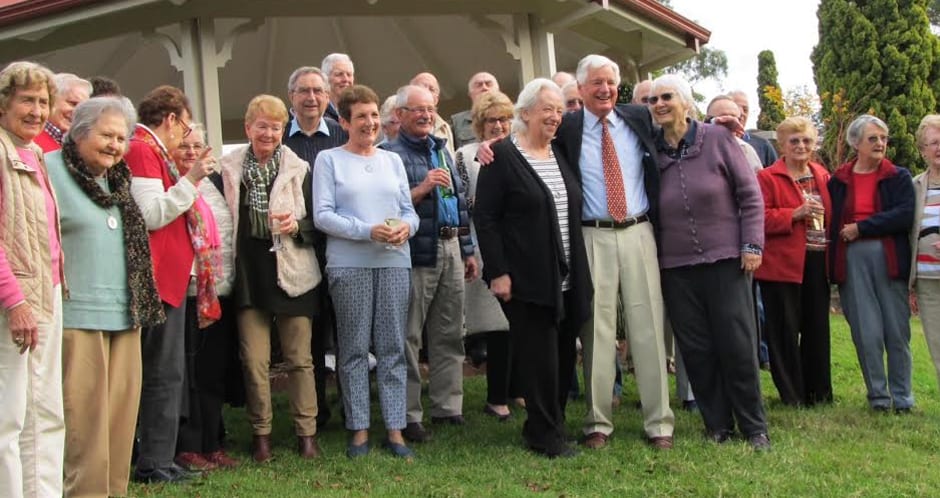
Last Saturday, Tarragal Glen Retirement Village held a celebratory lunch to honour resident Dr. Brian Shaw, which was attended by fellow residents and ex-colleagues
Elizabeth Richards, who organised the festivities, explained how honoured they were to celebrate Dr Shaw, “we were all thrilled Brian agreed to celebrate as he is such a lovely and modest man”.





