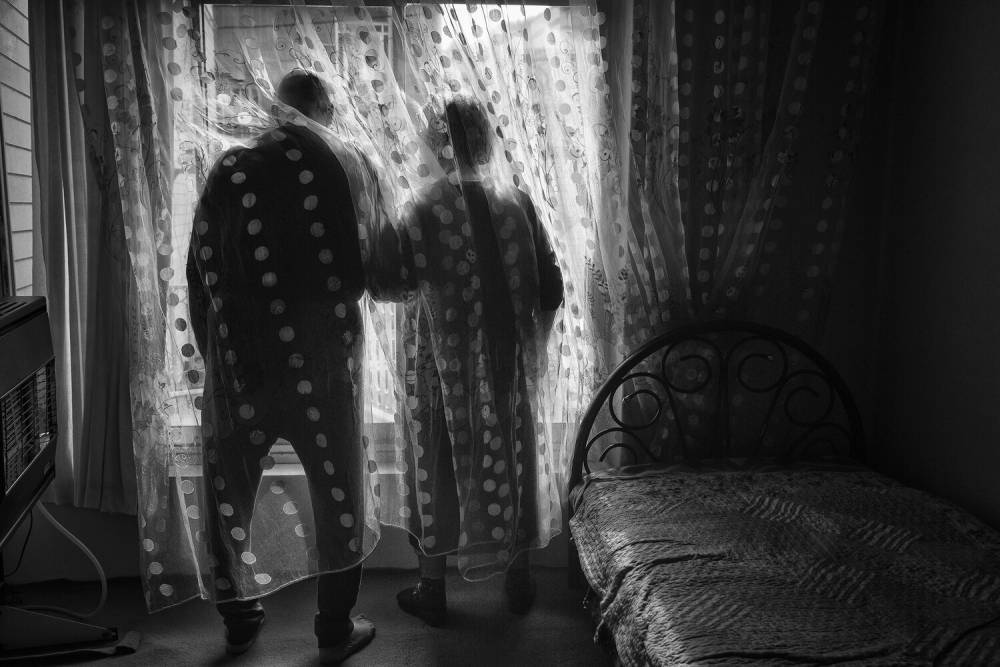
There is a history of Alzheimer’s disease in the family of Iranian photographer, Jalal Shamsazaran. Both his father and his aunt had it, and his grandfather too.
This thread running through the family history led Shamsazaran to begin documenting his father’s journey with Alzheimers’ in a project titled ‘The loss of oral history (The agony of remembering)’.
“Perhaps the character and behavior of my father is a part of my character and behavior in future. I can say that I am photographing myself,” Shamsazaran wrote in an email from his home in Iran to HelloCare.
Shamsazaran’s work has been awarded the Bob and Diane Fund grant for 2020, an annual award that recognises the work of a photographer telling the stories of people living with Alzheimer’s disease or dementia.
A self-taught photographer based in Tabriz, Iran, Shamsazaran developed the project with the support of distribution agency NVP Images.
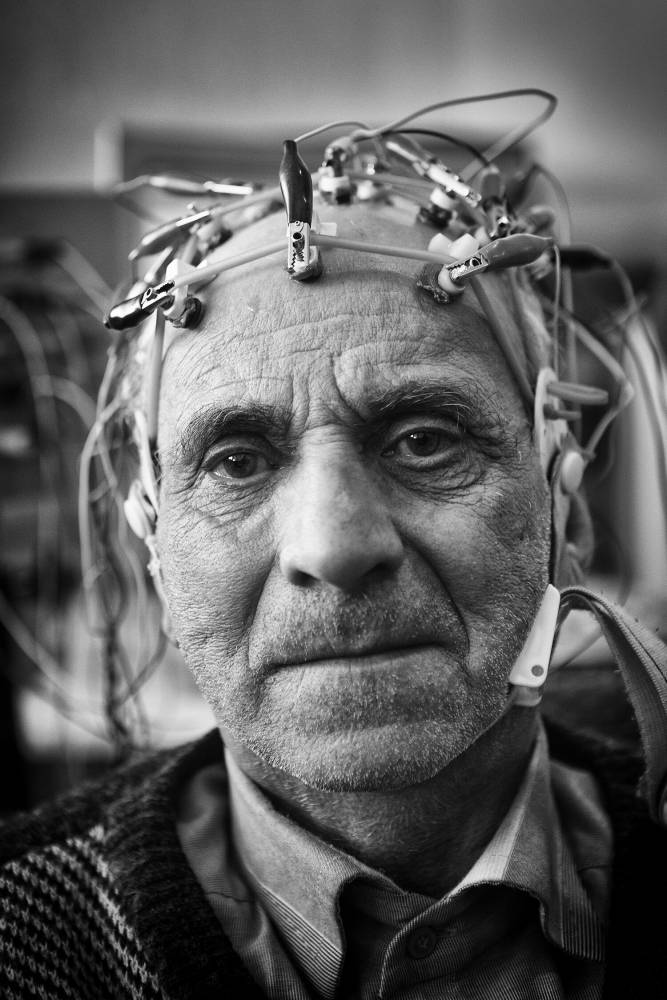
As his father’s condition deteriorated, Shamsazaran returned home to live with his parents, not only to support his mother, but also to spend time with them both.
It was difficult for him to travel to take photos, so he turned his camera to his family’s experiences, documenting his parents’ struggles; and in doing so he learned things about their lives previously unknown to him.
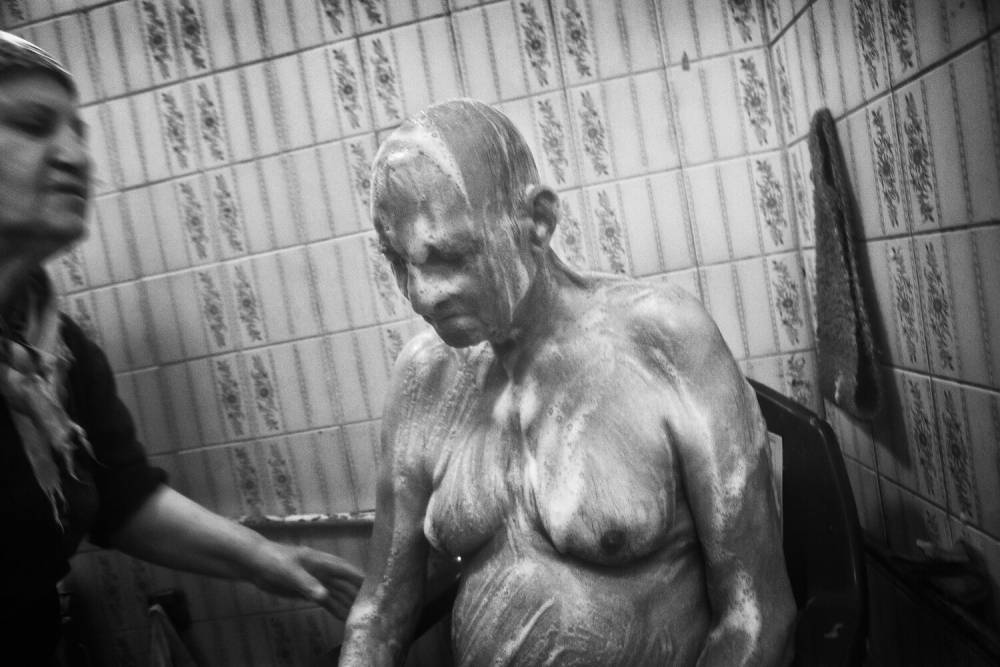
There is little support in Iran for people living with Alzheimer’s disease and their families.
“There is no department or ministry in Iran that directly covers these patients,” explained Shamsazaran.
The Alzheimer Association of Iran uses funds from charities and the government to produce educational material, but caring for people living with Alzheimer’s disease or dementia falls to families in Iran.
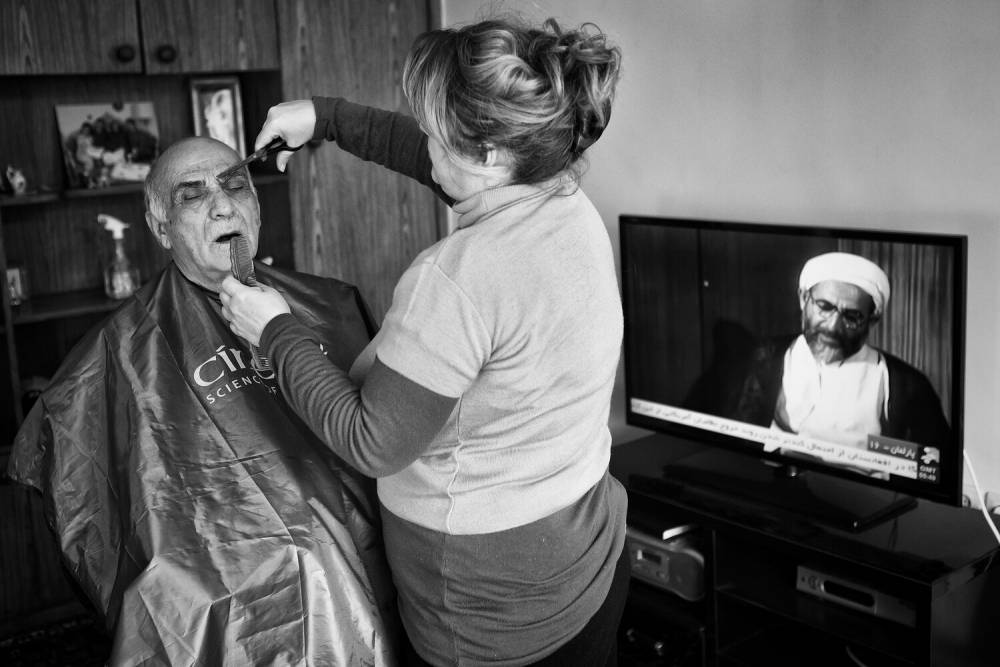
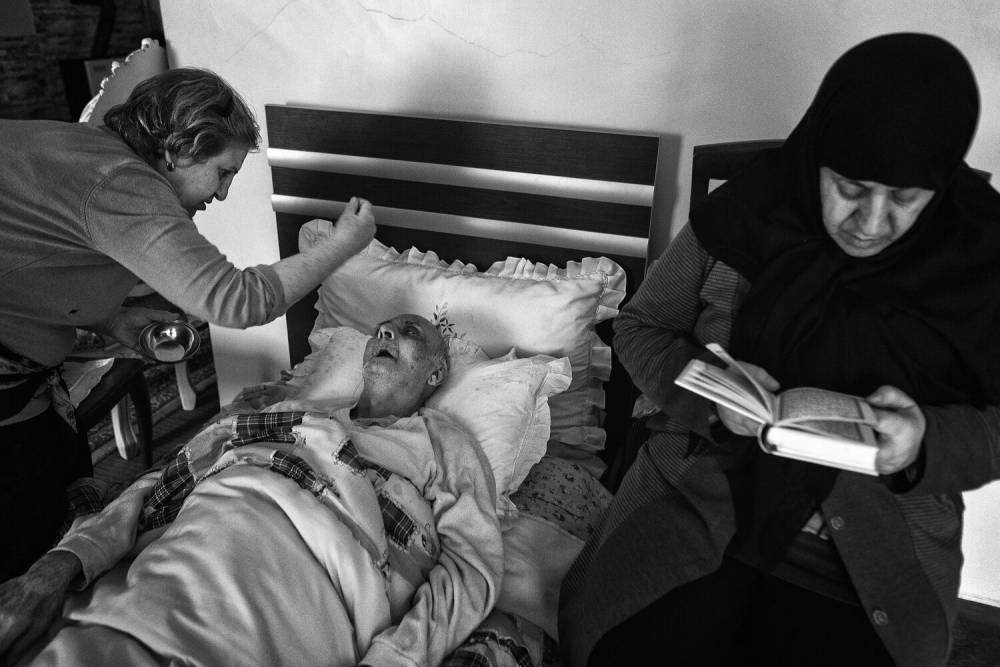
Shamsazaran’s evocative images often portray his father alone or withdrawn.
“My Dad was a social one,” Shamsazaran said, “but after Alzheimer’s disease, he gradually became depressed and somewhat isolated.
“Most of the time he cried when he talked about the past, and he became silent when he could not easily communicate with those around him.
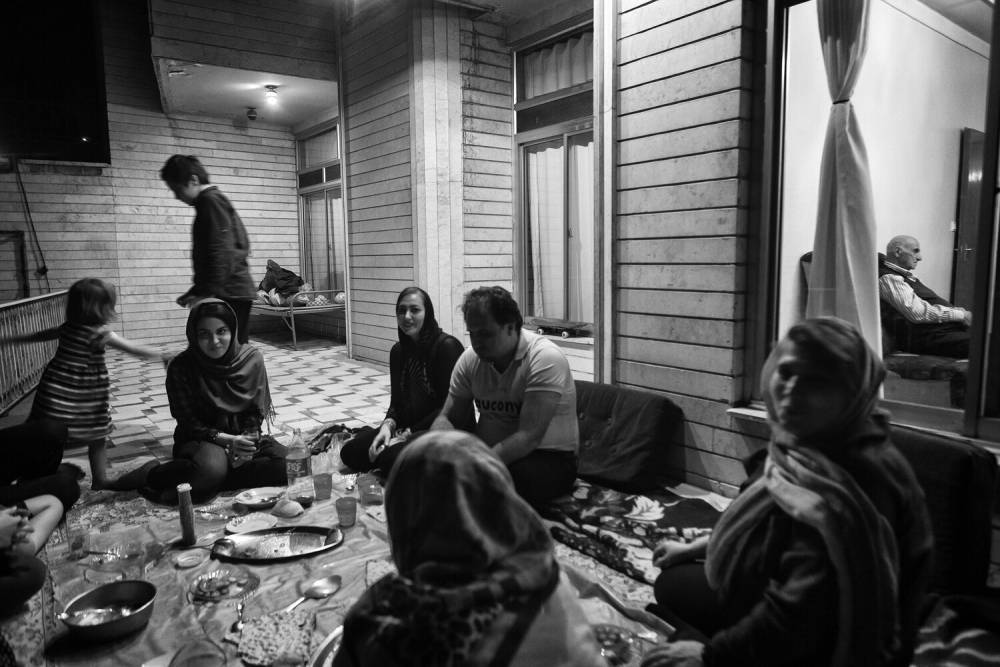
“He wanted everyone to be by his side, but when he was in the crowd, he was silent and preferred to sleep.
“My dad was never alone at all as my mom was always by his side. Also, my sister and I were with them most of the time. Even grandchildren came to our house on holidays.”
“In Iran, most families prefer to care for their Alzheimer’s patients,” Shamsazaran said. “One of the reasons is because of the higher costs of nursing homes, which most middle-class families cannot afford.
“Another reason is that caring for the sick and the elderly is part of Iranian culture, and spiritual and religious values. Landing them in a nursing home is sort of a ‘counter-value’,” he said.
I asked about a particularly beautiful photo of Shamsazaran’s mother and father side by side in a window behind a thin curtain blowing in the breeze.
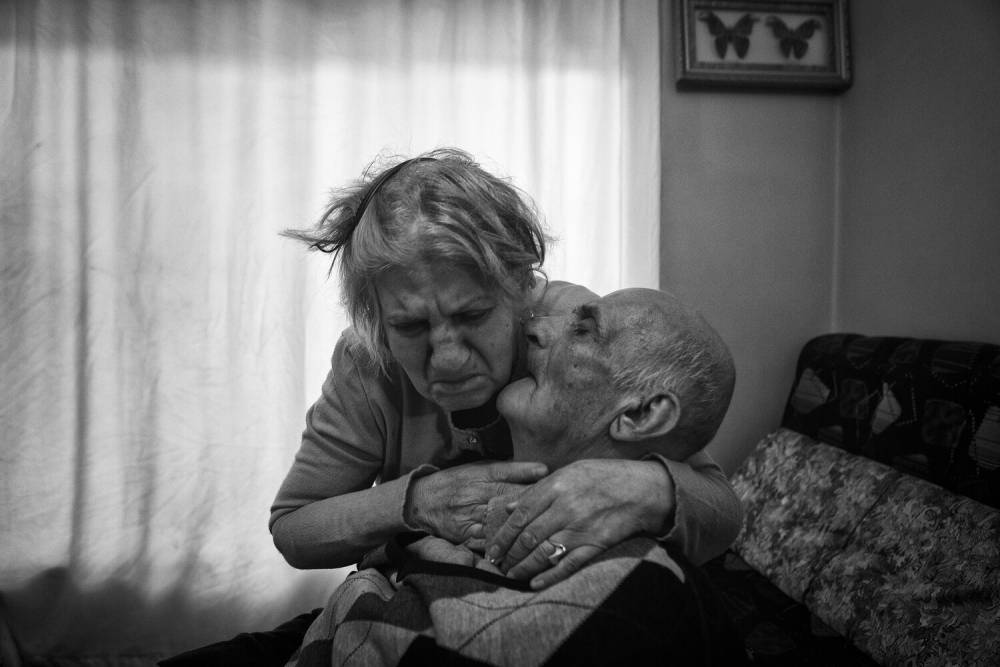
“Although my mom was tired and exhausted, she took care of dad with unconditional love and affection, as she did for her father-in-law, my grandfather,” Shamsazaran said, admiringly.
“After my father’s death, mom cried and felt lonely most of the time.
Unfortunately, the marking of Shamsazaran’s father’s death after 40 days coincided with the outbreak of COVID-19 in Iran, and the country went into lockdown. The ceremony had to be canceled and guests could not come. “It intensified the loneliness of my mom,” Shamsazaran explained.
“Looking at the photos, even when I edit them, was and is very difficult for me because all those moments are recreated for me again,” he said.
“But with all the grief I have when I look at the photos, I think that, although the photos are about forgetfulness, they are a reminder of something to me. They remind me of everything that makes sense, and the sense of life.”
In one of the most recent photos, Shamsazaran depicts an empty frame. I asked him about the image.

It symbolizes “the empty place of father at home”.
“There was a picture of my father that my mom loved very much, but unfortunately that picture was lost. My mom prepared a nice frame for dad’s photo she liked, but we still can’t find the missing photo.
“Still mom is looking for a picture of my father that she liked very much.”
Holding onto the memories is what keeps his mother going, Shamsazaran said.
In the past, Shamsazaran has worked on humanitarian and climate projects. His works have been published globally, and he has won various international awards such as Picture of the Year, and he was recipient of a Pulitzer Center Grant.
He hopes his photographs will make the world a better place.
Though Shamsazaran’s father died at the beginning of the year, his story lives on in his son’s images.
All images: Jalal Shamsazaran/NVP Images.
The intention of the Bob and Diane Fund is to help artists create work that improves the understanding of Alzheimer’s disease and dementia and inspires research, and ultimately helps to find a cure.
You can read HelloCare’s article about a previous Bob and Diane Fund grant recipient here.





I really appreciate this article and the beautiful photos, As I write this I am in tears. It is truly a special memorial to his father.
My husband has Parkinson’s and dementia and I miss him every day, he lives in a group home and he is becoming more confused.