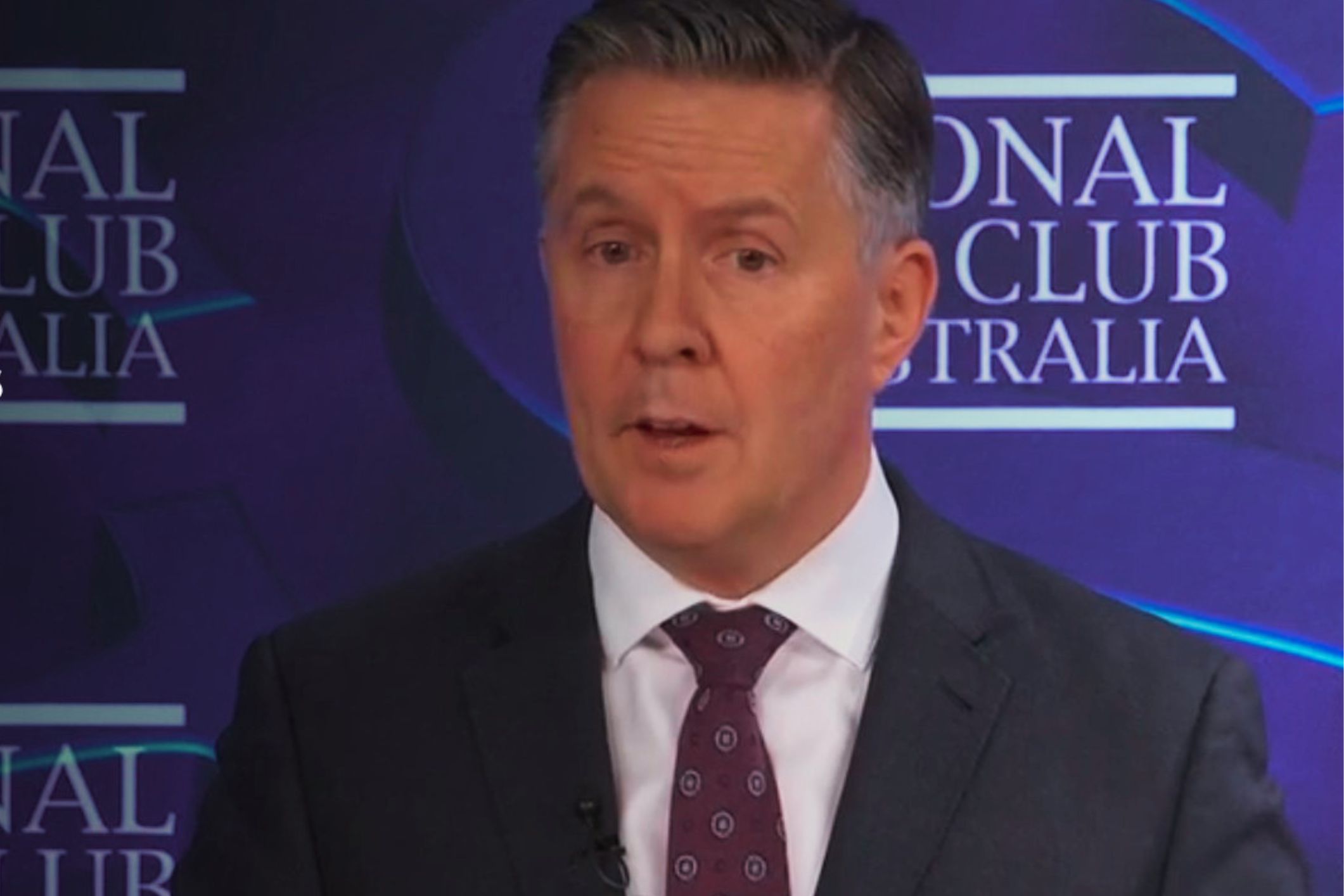
Older Australians will no longer have to pay out of pocket for basic care like showering under changes to the aged care system, but the cost will in part be offset by removing private health insurance subsidies for seniors.
The Albanese Government has unveiled sweeping reforms to both the aged care system and the National Disability Insurance Scheme that will see older Australians lose higher private health rebates, NDIS participants face reduced budgets, and a significant number of people with disability potentially transition out of the scheme. The changes have been framed as necessary to ensure long-term sustainability.
Health Minister Mark Butler delivered the announcements at the National Press Club, presenting the reforms as part of a broader effort to balance long-term viability with intergenerational equity. However, concerns remain that some vulnerable Australians may bear a disproportionate share of the impact.
In a move set to affect many older Australians, the Government is abolishing the higher private health insurance rebate for people over 65, a policy in place since 2004, and redirecting those funds into aged care.
Butler argued it is “simply not fair between generations” for two households on the same income to receive different rebates based on age.
However, Australians over 65 generally have higher healthcare needs than younger populations. They undergo more procedures, require more specialist care, and have higher rates of chronic disease. The private health rebate has helped offset these costs, easing pressure on both individuals and the public system.
The Government estimates only 0.4% of over-65s will drop their private cover. Even so, with cost of living pressures continuing, those who retain their policies may still face higher out-of-pocket costs. For retirees on fixed incomes, this change may be difficult to absorb.
The aged care announcement comes amid recent adjustments to the Government’s Support at Home program. Introduced in November 2025, the program included co-payments for basic care such as showering, dressing and continence management, with some older Australians paying up to $50 an hour for assistance.
Aged Care Minister Sam Rae has since confirmed the Government will reverse this from October 2026, reclassifying these services as “clinical care” and making them free.
However, those who have already paid these fees will not be reimbursed.
“This is about responding to the experiences of people,” Rae said in a Radio National interview, indicating the Government had listened to feedback following implementation.
For some older Australians, the reversal raises questions about how the original settings were determined and why concerns were not addressed earlier. Rae acknowledged there were differing views during the design process, though this may offer limited reassurance to those who have already drawn on savings to cover costs.
The NDIS changes are extensive and will affect the scheme’s 760,000 participants.
Butler announced plans to:
The Minister acknowledged the changes will have “a material impact” on participant plans.
When asked whether 2% annual growth, below inflation, represents a real reduction, Butler noted inflation has been variable, though in practical terms, this level of growth may reduce the scheme’s purchasing power over time.
Butler repeatedly emphasised sustainability, social licence, and the need to address fraud within the system. He also indicated that reforms would extend beyond compliance issues to broader scheme design.
Social and community participation supports, which enable people with disability to engage in daily life and maintain connections, are among the areas being adjusted.
While the Government has pointed to concerns about service quality in some cases, critics argue that reducing funding may not address underlying issues and could limit opportunities for participants. The Government has proposed a $200 million Inclusive Communities Fund as part of its response.
For participants, the changes may mean fewer hours of support and adjustments to how services are delivered.
The shift from diagnosis-based eligibility to functional capacity assessments is intended to better target support. However, implementation will be critical.
All current participants will be reassessed under the new criteria from January 2028. Those deemed to have lower support needs may transition out of the scheme.
Butler said the changes are not aimed at specific conditions, though acknowledged some groups, including people with autism and lower support needs, may be more affected due to their representation within the scheme.
The Government has pointed to “foundational supports” to be delivered with states as an alternative. However, these programs are still being developed, raising concerns about potential gaps during the transition.
The reforms rely heavily on cooperation with state governments, which now share increased funding responsibility following a National Cabinet agreement.
Some tensions remain, with varying levels of engagement across jurisdictions. Butler described this as typical intergovernmental negotiation, though effective coordination will be essential to ensure continuity of support.
The Minister highlighted fraud and organised crime within the NDIS as a serious issue requiring attention.
While widely acknowledged as a genuine concern, fraud is only one factor contributing to rising costs. Other drivers include increased participant numbers, changing needs, workforce pressures, and elements of the scheme’s original design.
Balancing integrity measures with continued support for participants will be an ongoing challenge.
The Albanese Government has made clear it sees reform as necessary to ensure the long-term sustainability of both aged care and the NDIS.
For older Australians, the shift in private health subsidies represents a redistribution of resources towards aged care services. For NDIS participants, the changes signal a more targeted and controlled scheme.
What remains uncertain is how effectively these reforms will protect those most in need while addressing financial pressures. Much will depend on implementation, particularly the rollout of alternative supports and cooperation across governments.
Butler closed his speech by emphasising national values and fairness. For many affected Australians, the real test will be how those principles are reflected in practice.



Leave the subsidy in for private health. Your only going to make it more expensive & the elderly will pull out of health insurance
Leave the aged care benefits alone. The aged have worked all their life & deserve something back.
NDIS should have been looked at a long long time ago.
Tax the rich who are rorting the system.
Cut back on immigration asap & look after our own
Immigration is providing the much-needed nurses and carers. Without them the whole system will collapse.
:::writing{variant=”social_post” id=”72814″}
The government’s backflip to include showering, dressing and continence support under the clinical stream of Support at Home is welcome—but it should never have been excluded in the first place.
These are not “basic” tasks. They are essential supports that protect health, dignity and safety.
But this correction only scratches the surface.
We are still operating a system that waits for people to deteriorate before stepping in. That’s not care—it’s crisis management.
Right now, a growing cohort of older people with complex needs are being left to decline at home without the right supports, until hospitalisation becomes inevitable. By then, independence is lost, costs escalate, and outcomes worsen.
And despite acknowledging the problem, implementation is pushed out to October.
Why the delay when the risks are immediate? Every month without appropriate support means more preventable decline, more hospital admissions, and greater strain on an already stretched system.
Let’s also be clear about how this change came about.
This wasn’t led from the top. It was driven by grassroots advocates—older people, carers, and frontline voices—who raised the alarm, engaged the media, and forced political attention.
Which raises a fair question: where were the peak advocacy bodies in this process?
Advocacy should lead, not follow. When policy settings are putting people at risk, silence or caution isn’t neutrality—it’s a failure to represent.
Prevention isn’t optional. Early, consistent support keeps people well, independent, and out of hospital.
If Support at Home is serious about reform, it must move beyond reactive responses and invest in keeping people stable—before they reach crisis point.
Because once crisis hits, the system hasn’t just failed—it’s made everything harder, and far more expensive.
:::
If the ‘generational fairness’ premise for abolishing senior private health cover rebate is ‘same income’ then only those seniors who have an income equal or above the ‘same income’ (whatever this is actually based on) should have the rebate removed. It most certainly should not apply to all, including pensioners.
The rollback of failed policy on co-contributions for hygiene etc cannot be spin doctored as ‘additional $ for seniors’ – those affected also deserve an apology and refund on co-contributions to date.
The current government continues to demonstrate by action that it does not value older Australians.
Extract reference from above article – ‘Butler argued it is “simply not fair between generations” for two households on the same income to receive different rebates based on age’.
In this post I am addressing the NDIS overhaul
I’ve worked as a Nurse Educator—but the most meaningful part of my career was as a trainer and assessor in community-based aged care and disability.
That’s where I saw what good support looks like—and it aligns closely with what the NDIS was designed to achieve: building capacity so people can live independently and participate in their community.
Success was never measured in hours of funded support.
It was when support was no longer needed.
But what I’m seeing now is a steady drift away from that intent.
Under the NDIS, there are increasing patterns that raise serious questions about purpose and outcomes:
Participants who can drive being transported by support workers.
Workers remaining present while someone is independently socialising.
Core supports used for high-cost social participation rather than skill development.
And increasingly—luxury holidays funded through social and community participation budgets, including situations where parents are engaged and paid as support workers to accompany participants on overseas trips.
This is where the line between support and substitution becomes blurred.
Because none of this builds independence.
A system designed to build capacity is at risk of reinforcing dependence—where services don’t step back over time, they expand to fit lifestyle expectations.
Choice and control matter. But they were never intended to remove accountability for outcomes.
The original intent was clear:
– Build skills.
– Increase autonomy.
– Reduce reliance on funded supports.
We need to return to that foundation.
Support should build capacity—not replace it.
Funding should drive outcomes—not entitlement.
Independence should be the measure of success—not the exception.
Because when the system is working properly, the end goal isn’t more support.
It’s needing less of it.
The NDIS was for all persons with a permanent disability then tony about changed it as so not to include seniors over 65. So we miss out on vital services like speech and physiotherapy there just isn’t enough funds in my aged care. This shortsightedness. Because the the skin is breaking because the lymphatic system owns dressing required every second day the go and nursing staff because I’m in a wheelchair after a stroke with limited mobility. Where the cost saving that?
One day they ( politicians) will need these types of care & heaven help them “if their retirement money pot dries up!!!
now lets fix the rest of the mess.