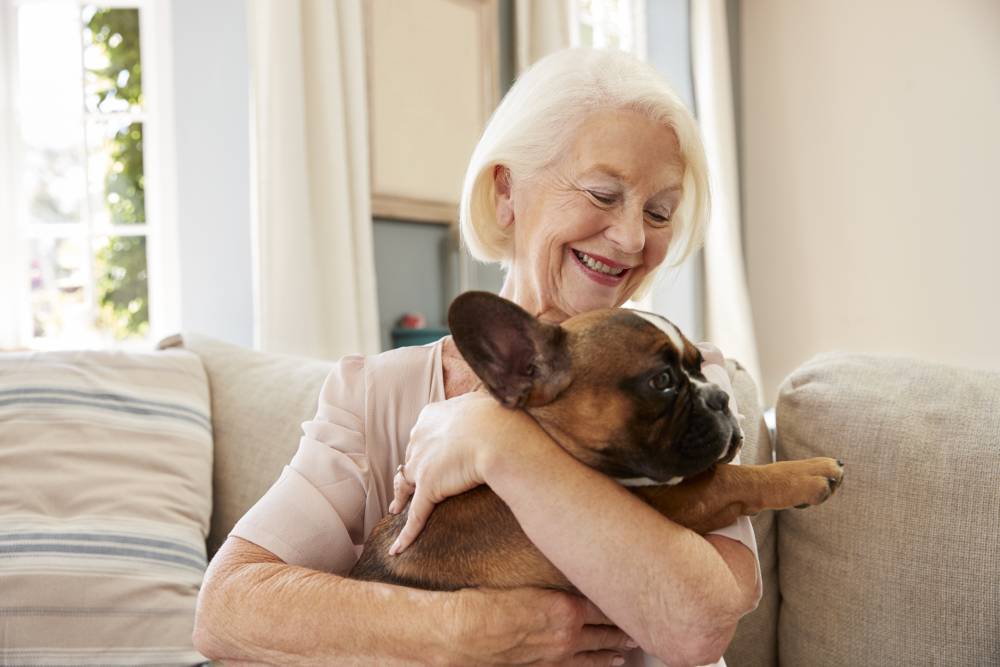
We know that the love of a puppy can be one of the best feelings in the world, but did you also know that puppy play can have health benefits too?
After noticing that the residents of Life Care’s Norman House in South Australia could do with some lighthearted fun, team leader Kirsty Chivers thought to bring her pair of french bulldogs, Barry and Zara to visit with the residents twice a week.
Coming to visit over 40 residents, Ms Chivers said that she’s noticed improvements in enthusiasm, mood, wellbeing and mental cognition since her pups started coming for playtime.
“Some of our guests were withdrawn, anxious or shy when they started visiting but with Barry and Zara by their side they’re happy to participate in games and activities and interact with others,” Ms Chivers said.
“Barry and Zara’s companionship has had a calming effect, lifted the mood and improved guests’ self-esteem. Dementia has deteriorated many of our guests’ cognitive function. They can’t remember our staff’s names or each other’s, but almost everyone knows the dogs’ names. Our guests look forward to visiting Norman House and feel at home here because they know they’ll get to spend time with, play with and pet the dogs.”
In times like the ones we’re in now, it’s important to find some joy in your day. Having regular visits from some loving and loveable dogs are no doubt the perfect antidote.