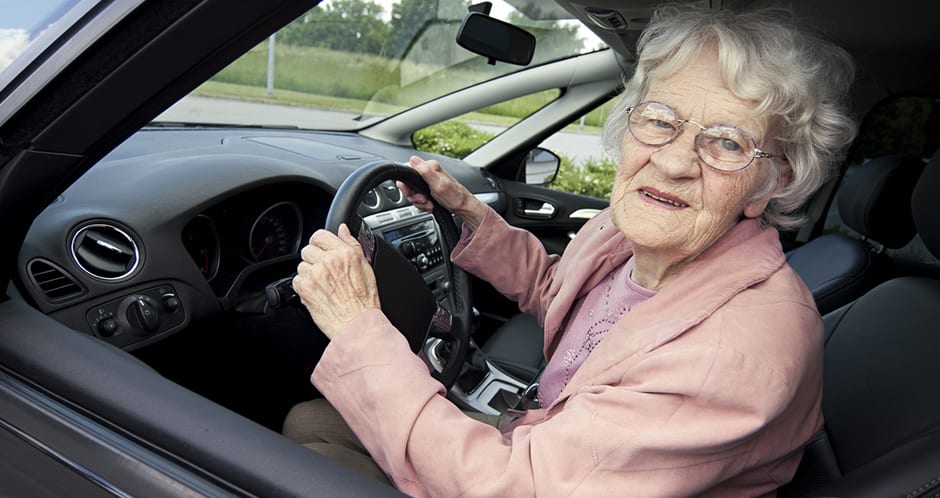
S’ plates could see elderly drivers displaying these signs as a way of monitoring them in their cars.
Due to an increase in motor vehicle related deaths for seniors in Victoria discussion and speculation around the possibility of displaying mandatory signs on elderly people’s cars. Similarly to learner ‘L’ and probationary ‘P’ plates that are used to identify other driver groups. Which would see senior groups with ‘S’ plates.
In addition, the Herald Sun reported that an opt-in to a “S1, S2” type of black-box monitoring system be installed. Where seniors would then have the driving ability monitored potentially replacing the need for medical and driving tests.
This comes after statistics showed that 47 people 70 years and over died on the roads in 2014-2015.
According to the Transport Accident Commission’s website in 2014-2015 there were forty-seven road deaths for those seventy years and over. Making it one more death than the year before. The road toll is higher for seventy years and over however does it mean that we need to label them? After all the fact that someone has ‘L’ plates does not mean they are underage, it means they learning to drive. Let’s avoid stereotyping people on the road, on the basis of how old they are.
Sparking debate on 3AW’s radio station by presenter Neil Mitchell that the suggestion to introduce S-plates for senior drivers is symptomatic of an increasingly bad attitude towards seniors. Reportedly saying “Let’s stop viewing older people as a burden. View them as an asset”.
With each state in Australia enforcing varying driving requirements for seniors perhaps this should be the first thing that should be reviewed so that each state is aligned on a national level.





