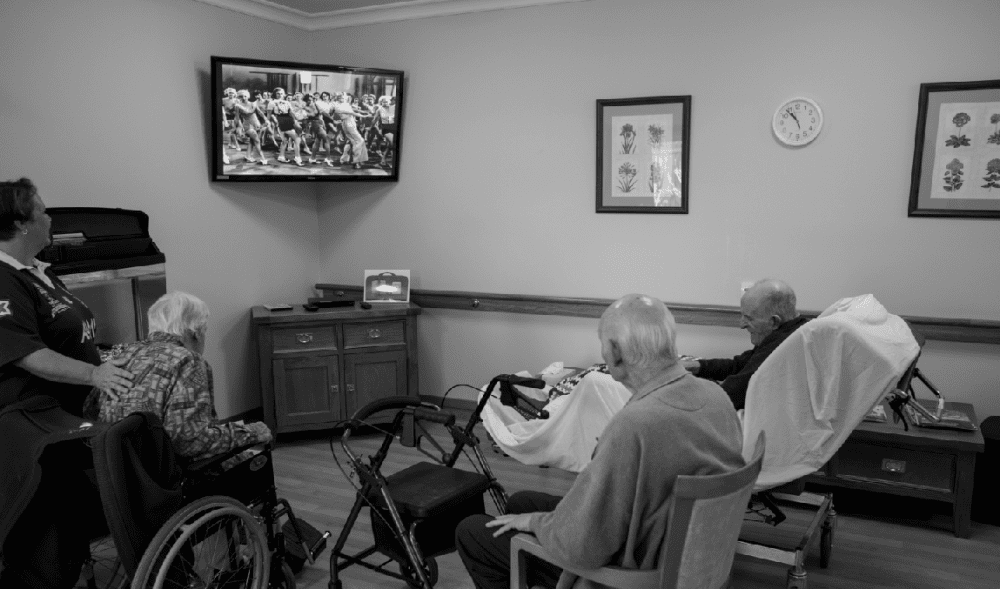
Listening to ‘Silver Memories’ radio station improves aged care residents’ quality of life and reduces depression, aggression, and agitation, according to new research.
Silver Memories is a radio station that plays music, comedy and radio serials from the 1920s through to the 60s, and has been specially designed for residents in aged care facilities to listen to.
Its announcers also call out birthdays, and make special hellos, and the station plays 24 hours a day, seven days a week.
Gary Thorpe OAM, General Manager, Silver Memories, said listening to the station transforms some residents.
“They became more engaged, often humming along with the songs, tapping their feet in time to the music,” he said.
“They would often then talk to other residents or staff about their memories of their younger days.”
“One man was very withdrawn, but he became much more animated when Silver Memories was on – his wife said it was the happiest she had seen him,” Mr Thorpe said.
“Another lady who kept very much to herself and used a walking frame, was observed by staff moving her feet in dance steps in time with the music – staff discovered that she used to be a champion ballroom dancer.
“They made sure she could listen to the Old Time Dance Music program at 3.30 each weekday afternoon,” he said.
“She started to dance to the music each day and is now much more mobile. She has gained enough strength in her legs that staff don’t have to follow around behind her any more,” Mr Thorpe explained.
Residents tended to feel the music was “specifically theirs”, Mr Thorpe said, often referring to the radio station as ‘our Silver Memories’.
The federal government funded a research project to help the developers of Silver Memories better understand the longer term effects of listening to the radio program for people living with dementia in aged care facilities.
The research evaluated the impact of Silver Memories on the wellbeing of each resident, and their quality of life. Symptoms of agitation were observed by a staff member who knew the resident well.
The study of 74 residents across 16 aged care facilities had carers and residents listening to the radio together as a group so staff could engage the residents in discussions about the songs. Silver Memories provides resources, such as quizzes about the music, to help stimulate interest.
After the group sessions, some residents would continue listening to Silver Memories in their rooms, while others would stay in the common room to continue enjoying the programs with others.
“The Silver Memories Nostalgia Service appears to be a very powerful and effective intervention for improving the quality of life and reducing negative symptoms in older people with dementia living in residential aged care facilities,” the research paper concludes.
“Importantly, it is a relatively inexpensive intervention that does not require a great deal of staff time and is sustainable over the longer term,” the paper states.
Since the research was conducted, Silver Memories service has been improved and enhanced, and now includes nostalgic images shown on a connected television to further engage residents.
“We think the impact of Silver Memories is likely to be even greater than reported,” the research paper states.
Silver Memories draws on the theory of ‘reminiscence therapy’, which involves talking to people living with dementia about past activities, events and experiences.
Tangible prompts, such as photos, books, and, in this case, music, are used to stimulate conversation and interest.
Reminiscence therapy has been shown to improve the mood, wellbeing and cognition of people living with dementia.
It has also been shown to reduce agitation, aggression, apathy and depression, some of the most challenging aspects of caring for someone who is living with dementia.
Mr Thorpe believes that getting residents to listen to Silver Memories could help aged care facilities reduce their use of antipsychotic medications, a topic that has received a lot of attention in recent months.
“The research showed that listening to Silver Memories reduced agitation and aggressive behaviour. It also had a large effect on reducing depression.
“These are serious issues that aged care staff have to deal with,” he said.
“If Silver Memories can help address these issues before they require the use of medication, that will be a benefit to the residents and the staff.”





Fantastic. I’m researching to see if a radio station exists in our area. We live in Santa Fe, New Mexico and a mixture of Spanish and oldies American would be phenomenal .