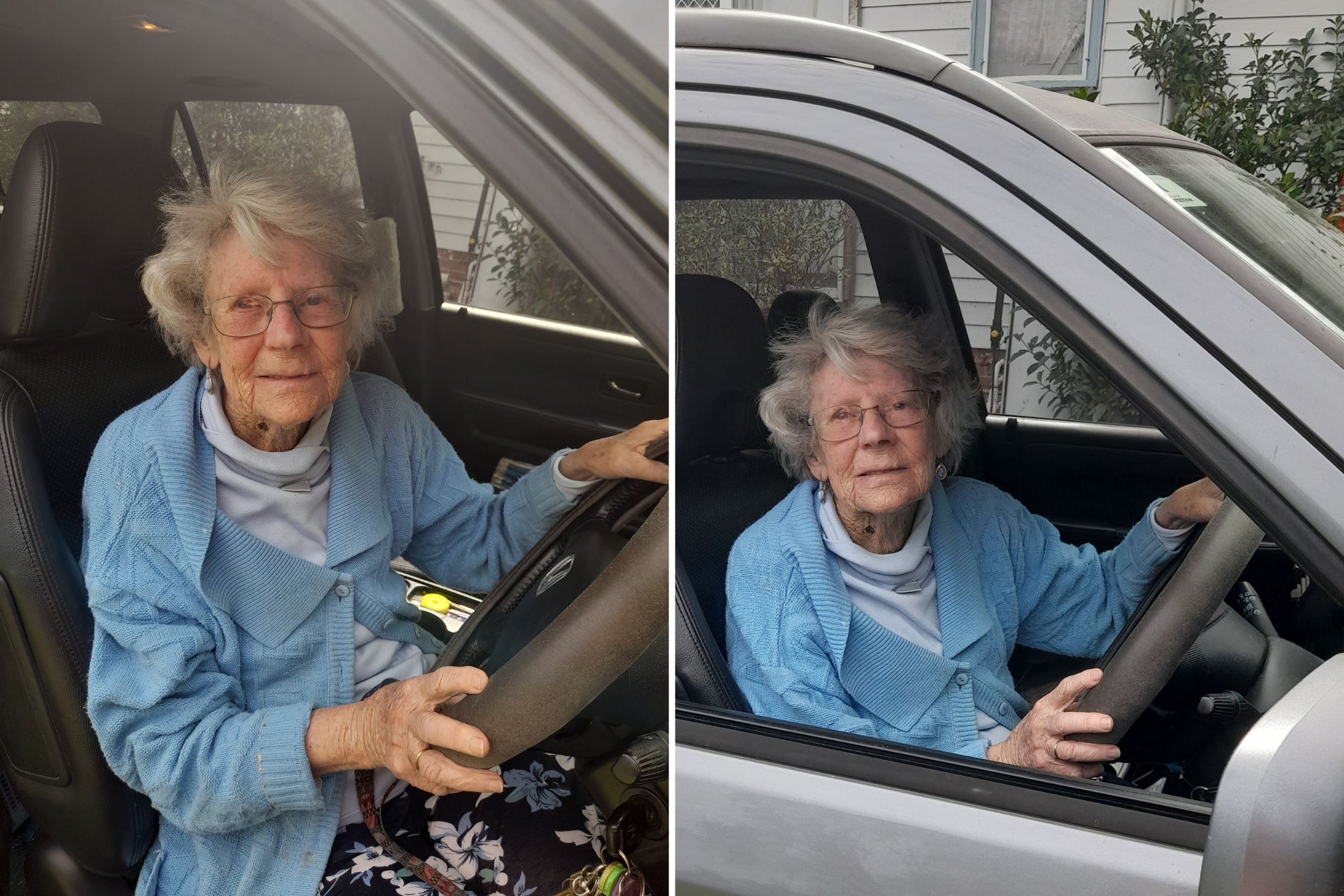
With her 85th birthday fast approaching, Lalor Park resident Patricia Fitzgerald was looking forward to one gift in particular: passing her practical driving test so she could keep her driver’s licence.
Driving in New South Wales
For Patricia, who was still living independently in her own home, she didn’t want to lose her licence and miss out on the ability to be in charge of her time.
This includes being able to volunteer as a verger – someone who assists in the ordering of religious ceremonies – at the All Saints Anglican Church in North Parramatta. Patricia regular attends the church and is always available to help with flowers, weddings and funerals.
“For me losing my licence meant catching buses, including getting my groceries on the bus,” Patricia said.
“Anything that needs doing, I’m available – but getting there by bus would take hours.”
She is also a big fan of her beloved grey Honda CRV she purchased during the pandemic years. It’s a recent addition to her life, allowing her to keep in regular contact with friends and family.
Losing her licence would mean she could lose touch with connections, new and old.
“I only just met my cousin for the first time recently, after I discovered we had the same great grandparents. I looked him up in the phone book, as part of my ancestry research,” she said.
With all of these fears swirling, Patricia found help in a relatively unlikely place – through her home care provider, HammondCare.
While most view home care support as something linked to personal care, medical care or for cleaning and maintenance, the HammondCare At Home team realised Patricia required something slightly different.
It was Carolyn Altman, a Pastoral Care Co-ordinator, who first recognised just how anxious Patricia was about the driving test after discovering she had been losing sleep.
To ease her fears, Carolyn took the approach of breaking down each specific worry Patricia had about her driving test, and then together they worked through each one. One fear was she would not hear instructions clearly.
“I made sure her hearing aids would be charged and ready. I was able to reassure her that even if she did not pass, she would have other opportunities – it would not be the end of it,” Carolyn said.
This simple but effective approach meant Patricia was filled with confidence ahead of her test.
And guess what? She passed! The only requirement is that she stays within 100 kilometres of her home and avoids night driving.
Patricia said she had the best night’s sleep and was grateful for the support of her pastoral care team.
“What they did was give me the confidence to go through with the test,” she said.


