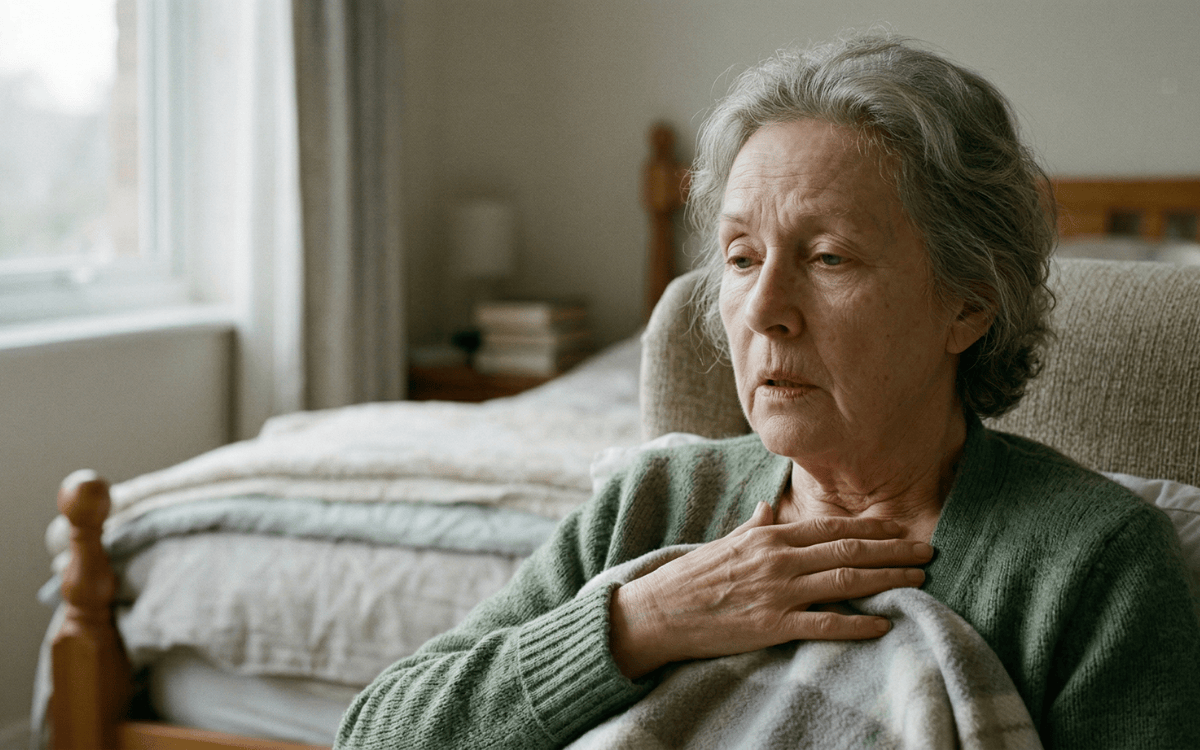
As Australia moves into RSV season, the public conversation tends to follow a predictable script. The focus lands on infants, paediatric wards, and the well-established risks for young children.
That focus isn’t wrong. It’s just incomplete.
New research published in Infectious Diseases and Therapy is adding to a growing body of evidence that RSV poses a serious and often underappreciated risk to older adults, particularly those who end up in hospital.
And the outcomes are not minor.
The study examined hospital data from adults aged 60 and over, comparing those admitted with RSV to those with influenza. What emerges is a picture that challenges some long-held assumptions about seasonal illness in older populations.
Among those hospitalised with RSV, more than one in ten required intensive care. Others needed mechanical ventilation or medication to stabilise dangerously low blood pressure. Complications extended beyond the lungs, with a notable proportion experiencing cardiac issues such as arrhythmias and ischaemia.
Mortality rates are where the data sharpens. Nearly 12% of patients died within 30 days of hospitalisation, rising to almost 19% within 90 days. That’s not just a difficult recovery. For many, it’s the beginning of a rapid decline.
Influenza still dominates seasonal planning, and for good reason. But when researchers compared outcomes directly, RSV did not come out as the milder counterpart many might expect.
In fact, older adults hospitalised with RSV showed slightly higher rates of severe complications and a modestly increased risk of death within 90 days compared to those with flu.
The difference isn’t dramatic, but it’s enough to shift the narrative. RSV is not simply the “other” winter virus. For some older people, it’s just as dangerous.
One of the more telling findings is who ends up in hospital with RSV.
These patients were typically older, more medically complex, and more likely to be immunocompromised. Many were already managing chronic respiratory or cardiovascular conditions, or had recent interactions with the health system.
In that context, RSV doesn’t need to be uniquely aggressive. It just needs to arrive at the wrong time.
RSV isn’t being ignored in Australia. But it is still largely framed as a paediatric issue.
That framing has consequences.
If the mental model of RSV is tied to children, there’s a risk that symptoms in older people are downplayed, delayed, or misread. What presents as a mild respiratory illness can escalate quickly, particularly in aged care settings where residents are already living with multiple vulnerabilities.
As the season builds, the challenge isn’t awareness of RSV itself. It’s recognising who else is at risk.
Vaccination is beginning to change the conversation. RSV vaccines are now entering the Australian landscape for older adults, particularly those with underlying health conditions.
But uptake, awareness and routine inclusion in seasonal planning still lag behind influenza.
Which leaves the sector in a familiar position. The evidence is there. The risk profile is clear. The response is still catching up.
RSV has never just been a children’s virus.
We’ve just been telling that story for so long it’s become the default.
For older Australians, especially those already managing complex health conditions, RSV can trigger serious complications and, in some cases, a rapid decline.
As this season builds, the shift isn’t about raising awareness of RSV itself. It’s about recognising that the risk profile is broader than we’ve traditionally framed it — and responding accordingly.


