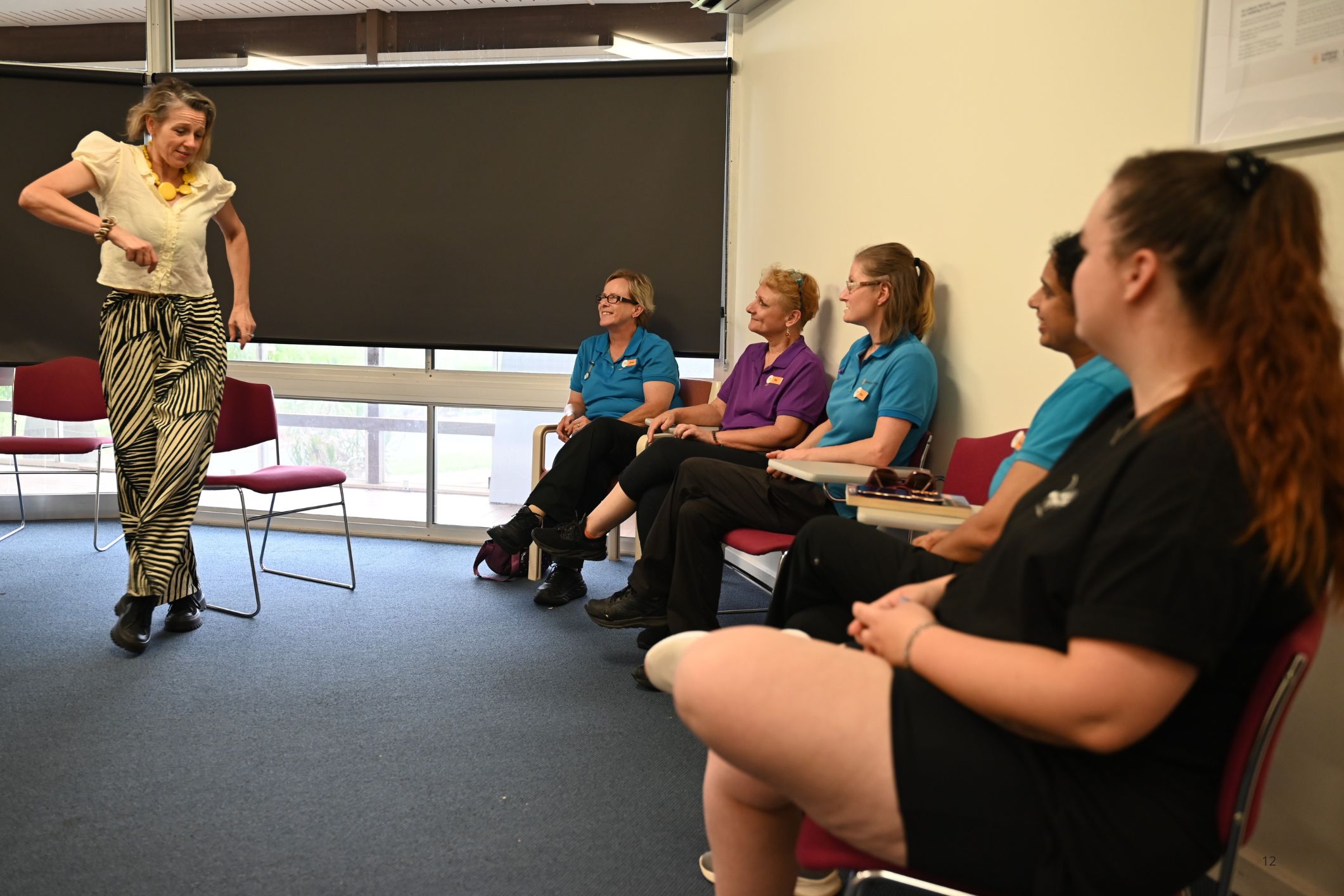
Humour and playfulness are strengthening relationships between aged care workers and residents through an uplifting program being delivered at Lutheran Services aged care sites in Queensland.
Developed by Clown Doctors Australia, the Laughter Boss training program inspires connection, fun and wellbeing for both residents and staff.
Lutheran Services Creative Engagement Lead Natalija Pearn said the program celebrated the human side of care.
“Our staff are incredibly dedicated, but not always sure they have permission to connect with residents in such a playful way,” Ms Pearn said. “The techniques taught by Clown Doctors gives them that permission. It reminds us that connection doesn’t always need to be serious – there’s joy in being present, listening, and laughing together.
“Supporting a workforce that truly connects with every resident is central to how Lutheran Services delivers its model of care.”
Clown Doctors Australia, a long-standing not-for-profit best known for delivering therapeutic humour behind red noses to children in hospitals, now extends its social care expertise to aged care staff.
Through their interactive Laughter Boss workshops, personal carers are coached in creative techniques that bring warmth and joy to everyday care.
“A moment of joy or a shared laugh can make a world of difference,’’ Ms Pearn said. “It can set a positive tone for the day. The training gives staff confidence and permission to be playful – to bring their whole selves to their work.”
Personal carer Louise Wilcox, from St Paul’s Aged Care in Caboolture, said she had learned valuable new ways to incorporate laughter in her connections with residents.
“My main take was the reminder to slow down, take time and really listen to our residents with empathy,’’ she said.
A small group of staff are also being trained as Laughter Care Champions, modelling positive engagement and emotional wellbeing in Lutheran Services’ dementia support units.
“These champions show that compassionate care and light-heartedness can go hand-in-hand,’’ Ms Pearn said.
The health and wellbeing benefits go far beyond smiles from reducing stress and pain to boosting mood. For staff, humour also builds team bonding and job satisfaction.
“We’ve already seen such a positive shift in the culture of our teams since introducing Laughter Boss training,” Ms Pearn said.
“With empathy and genuine connection, every day offers opportunities for purpose and joy. This program celebrates the humanity in care and proves that laughter truly is the best medicine.”


Yes, experienced staff are well aware of the benefits in laughter.
Laughter is the best medicine!
Unfortunately, workplace relations have dropped in more recent years to the detriment of many, especially the residents needing care.Bullying in Aged Care is rife!
You even have Nurses & care workers coming from other lands looking for a better life. They tolerate working in Aged Care until they can get out and go across to the public hospitals system!
I started Laughter Yoga sessions for residents in the aged care facility I live in, and at the 3rd session, ut was banned, as being too disturbing to the workplace, Firstly, the cafe, then the residents! The Facility Manager said could take it to another area, however it would either be difficult to access for wheelchairs and not user friendly.
Both staff and residents enjoyed either participating or hearing laughter around the facility.
What can I do? Where can I go to take this issue further?