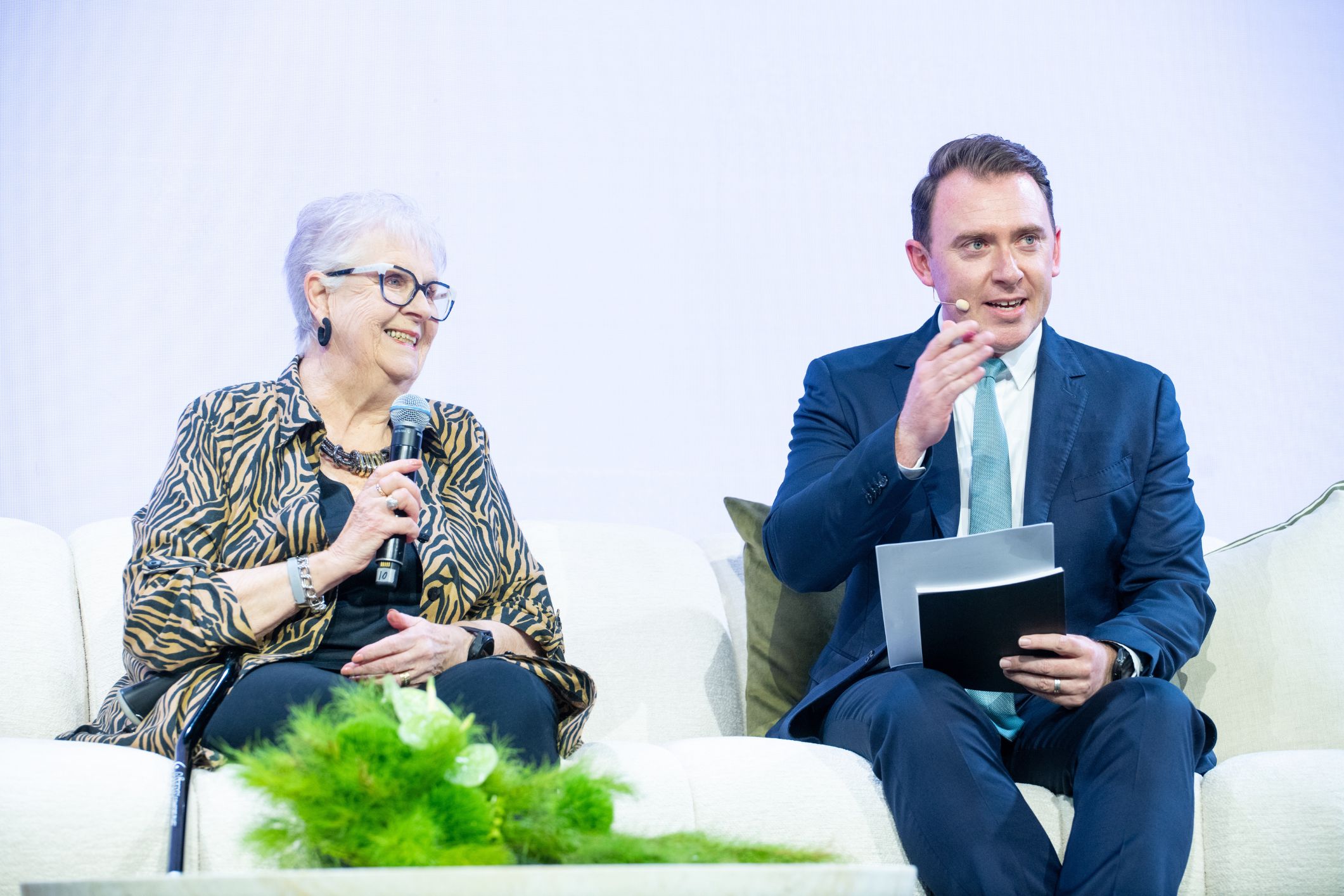
A retirement living panel at this week’s National Retirement Living Summit put a spotlight on one of aged care’s most overlooked injustices and the woman at the centre of it has a message for Canberra.
Dee Bock is 80 years old. She lives in a retirement village in Parkside, just three kilometres from Adelaide’s CBD. She has private health insurance, for now. She visits Centrelink offices and writes letters to federal politicians. She advocates. She shows up.
And still, every fortnight, she has to make difficult choices.
“I alternate between a very tight fortnight and one where I catch up on what I couldn’t afford the fortnight before,” she told a panel at the National Retirement Living Summit in Brisbane this week.
Dee is not homeless. She is not destitute. By most measures, she is exactly who policymakers describe when they talk about Australians who have “done the right thing”. She saved, she planned and she moved into a retirement village proactively after her husband Warren was diagnosed with inoperable cancer and heart problems.
The couple visited 35 villages before choosing their new home. It was a considered and responsible decision.
Warren passed away just ten months after they moved in. His pension income died with him. Her fortnightly income dropped from around $46,000 a year as a couple to approximately $30,000 as a single person, but her costs remained largely unchanged.
She has been managing the gap ever since.
Here is the part that should raise serious questions: Dee’s situation is not a gap in the safety net. It is a feature of it.
Under current Centrelink rules, if a retirement village resident pays an entry contribution above $258,000, they are not eligible for Commonwealth Rent Assistance (CRA). They are classified as a homeowner, even though they do not hold title to the property, cannot access the equity tied up in the home and often cannot make significant changes to their unit without village approval.
That $258,000 threshold was indexed since 1991. The legislation hasn’t been touched since then.
Dee discovered this on her third visit to Centrelink, at the Glenelg office, after two previous visits failed to provide the full picture. A caseworker there finally explained the rules clearly.
She was not angry. She was patient. But she was clear.
“I don’t think we’re on the radar.”
The gap between the CRA threshold and the reality of retirement village pricing is now enormous.
The average two-bedroom independent living unit in an Australian retirement village costs around $711,000. The CRA entry contribution threshold remains at $258,000. That is a gap of $453,000 and means the overwhelming majority of retirement village residents are automatically excluded from rent assistance, regardless of their actual income or financial stress.
Meanwhile, someone in almost identical circumstances, with the same age, pension and similar assets, living in a land lease community rather than a retirement village is likely eligible for both the Age Pension and CRA.
Same financial position. Different housing type. Completely different government support.
That is not a complex policy distinction. It is a divide that can determine whether someone can afford to keep their private health insurance.
Researcher Amber from Ansel Strategic, who shared the panel with Dee, said the issue is not a small edge case. It represents middle-wealth Australia, people’s parents and grandparents who accumulated modest assets over a lifetime, moved into retirement living at an average price point and now find themselves too wealthy to qualify for support, yet too cash-poor to live comfortably.
This issue disproportionately affects women.
Older women are already the fastest-growing group at risk of homelessness in Australia. The causes are structural and cumulative: lower lifetime earnings, fewer superannuation contributions, time out of the workforce raising children or caring for ageing relatives and the financial impact that can follow divorce or the death of a partner.
Data from the Australian Institute of Health and Welfare shows reliance on CRA among people aged 65 and over has risen by 70 per cent since 2013. Rental stress among Australians aged over 75 receiving CRA has increased in every state, rising by 125 per cent in Western Australia, 120 per cent in New South Wales and 118 per cent in Queensland.
Nearly 60 per cent of older female renters already live below the poverty line. The Age Pension sits only marginally above the poverty line for homeowners and 23 per cent below it for single renters once housing costs are taken into account.
For women like Dee, widowed, asset-rich on paper but income-poor in reality, the retirement village CRA exclusion compounds every one of these disadvantages.
She planned more than most. She still fell through the gap.
For those working in aged care, retirement living or community services, Dee’s story will sound familiar.
You have seen residents skipping medications to stretch their budget. You have had conversations about cancelling private health insurance. You have watched people delay necessary work on their homes because they cannot afford the costs involved.
The policy problem outlined here is not hypothetical. It appears in case notes, conversations and care plans across the country.
Yet the system’s response, including decisions made in this year’s federal budget, has failed to address the underlying structural issue.
The Retirement Living Council is calling for a review of the CRA entry contribution threshold, increasing it from $258,000 so it better reflects the actual cost of retirement village housing in 2026.
It would not eliminate financial hardship in retirement. It would not solve the gender superannuation gap or Australia’s broader housing affordability crisis.
But it would mean that people like Dee, who planned ahead, moved into suitable housing and did everything right, are no longer penalised for it.
Dee is writing to federal politicians Katie Gallagher and Tanya Plibersek following the Summit. Her local member, Steve Georgiadis, has previously facilitated introductions, but the responses so far have been non-committal.
She is 80 years old and she is still writing letters.
The least Canberra can do is respond with something more meaningful than a form letter.


