
Mar 08, 2017

Stages of Dementia – What might you expect?

As more research is done into dementia, the more we learn about how it affects the millions people all around the world. Over the years, the terms, and our understanding of the different stages of dementia, have also evolved.

While people may be aware of dementia and its stages, there are also some stages, called “pre-dementia”, that occur before a person develops dementia. Clinicians look at changes in memory and behaviour as a precursor of neurodegeneration which may lead to dementia.

Pre-dementia

People in pre-dementia are typically exhibiting behaviour changes and issues with their memory. However, just because they exhibit these symptoms, does not mean that they are guaranteed to develop dementia.

Mild Behavioural Impairment (MBI)

Mild Behavioural Impairment is generally seen if there is a consistent change in a person’s behaviour that has been present for at least a number of months. By noting MBI, clinicians suspect that the beginnings of neurodegeneration is being exhibited.

Mild Cognitive Impairment (MCI)

Mild Cognitive Impairment is generally defined by memory loss without the loss of other cognitive functions, with the notion that their memory issues are greater than what is typical of someone their age. The measure of MCI is compared to the “normal” behaviour of the person. People with MCI will have normal general thinking and reasoning skills, and should be able to perform normal daily activities.

Research currently suggests more than 20% of people who exhibit MCI will not go onto developing dementia.
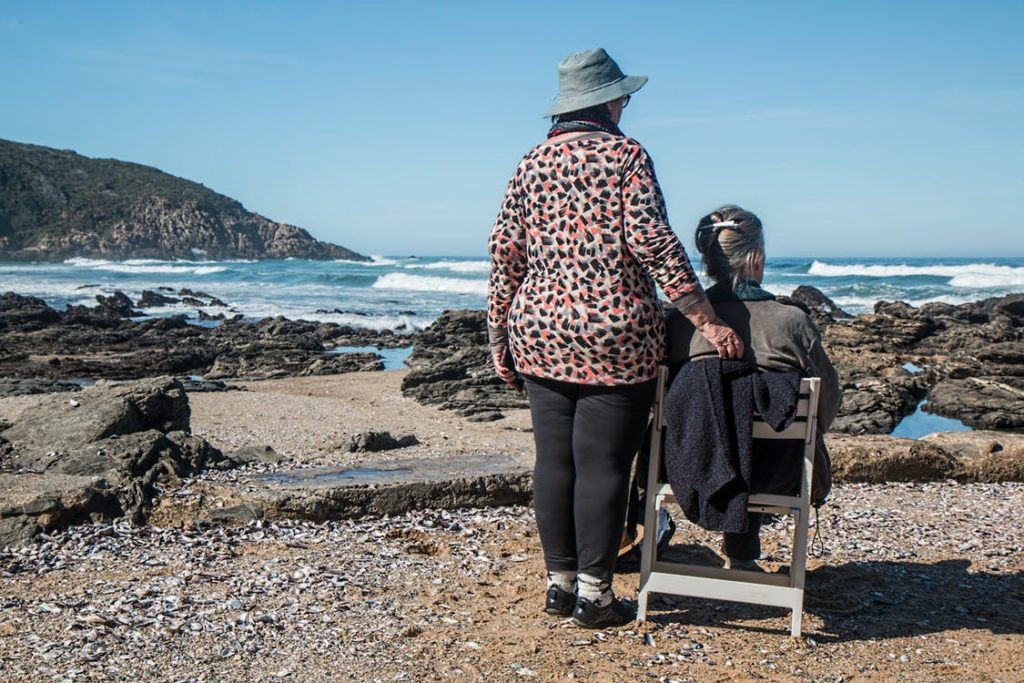
Old lady beach

Dementia

Some of the features and symptoms of dementia can be classified into three stages – early, moderate and advanced stages. However, it should be noted that not every person will show every symptom, or even go through every stage of dementia.

Early dementia

Early dementia is often missed, or usually attributed to old age or being overworked. As the onset of dementia is usually rather gradual, the early phase ends up being apparent in hindsight, when the person may be at a later stage.

Some of the symptoms may include;

  • Loss of interest in hobbies and activities
  • Be unwilling to try new things
  • Be unable to adapt to change
  • Show poor judgement and make poor decisions
  • Be slower to grasp complex ideas and take longer with routine jobs
  • Become more forgetful of details of recent events
  • Be more likely to repeat themselves or lose the thread of their conversation
  • Be more irritable or upset if they fail at something
  • Have difficulty handling money.

Moderate dementia

In moderate dementia, the symptoms and problems that people may have become more apparent and disabling.

At this stage the symptoms may include;

  • Be more forgetful of recent events. Memory for the distant past generally seems better, but some details may be forgotten or confused
  • Be confused regarding time and place
  • Become lost if away from familiar surroundings
  • Forget names of family or friends, or confuse one family member with another
  • Forget saucepans and kettles on the stove.
  • Wander around streets, perhaps at night, sometimes becoming lost.
  • Become very repetitive
  • Be neglectful of hygiene or eating
  • Become angry, upset or distressed through frustration.

Advanced dementia

Advanced dementia is the third and final stage. At this stage the person is severely disabled and needs total care.

In advanced dementia, people may:

  • Be unable to remember occurrences for even a few minutes, for instance forgetting that they have just had a meal
  • Lose their ability to understand or use speech
  • Be incontinent
  • Show no recognition of friends and family
  • Need help with eating, washing, bathing, toileting and dressing
  • Fail to recognise everyday objects
  • Be disturbed at night
  • Be restless, perhaps looking for a long-dead relative
  • Be aggressive, especially when feeling threatened or closed in
  • Have difficulty walking, eventually perhaps becoming confined to a wheelchair

With dementia, the terms are ever evolving and can be different between different diagnostic methods. The Diagnostic and Statistical Manual of Mental Disorders, 5th Ed (more commonly known as DSM-V) also has it’s own definition for the criteria of different dementia stages.

Disclaimer: Please be aware the above article is merely information – not advice. If users need medical advice, they should consult a doctor or other healthcare professional.

Leave a Reply

Your email address will not be published. Required fields are marked *

Advertisement
Advertisement
Advertisement

35 specialist dementia care units to be rolled out across Australia, new trial

The government has announced it will roll out 35 specialist dementia care units across Australia to ensure that some of the most vulnerable people living with dementia receive the specialist care they require. The government has revealed it will invest $70 million in the Specialist Dementia Care Program. The network of specialist dementia care units... Read More

Melbourne in lockdown again: Why have 29 aged care homes still not been vaccinated?

As Victoria goes into another circuit-breaker lockdown, and faces a possible third wave of a COVID outbreak, there are concerns for aged care residents in almost 30 homes who are still yet to receive a single vaccine dose. The news comes despite the fact that 655 residents died last year during the state’s devastating second wave. Read More

Robot Pets Can Reduce Agitation in People Living With Dementia

Pet Therapy is not exactly a new idea in the aged care space, but over the last few years, there has been a definite increase in the number of aged care facilities that have begun to incorporate the love and companionship of animals as a way to stimulate residents and combat issues of loneliness and... Read More
Advertisement
