
About 54,000 Australians have a heart attack every year, and in 2015, 8,443 people died from them. Meanwhile, it is estimated that in 2017 there will be 55,000 strokes among Australians, 80 percent of which could be prevented.
For both stroke and heart attack, there are a few risk factors that can’t be controlled, such as age and family history, but many of the risk factors are related to lifestyle choices:
Recently, researchers have discovered why stress increases your risk of both stroke and heart attack. The study involved 293 people over the age of 30 without any pre-existing cardiovascular issues. Activity in the brain and bone marrow, as well as inflammation of the arteries, were monitored for an average of more than three years. At the same time, the researchers examined the effects of perceived stress on the brain, bone marrow, and arteries.
In the brain, the amygdala is associated with emotion, fear, and stress. It communicates with the bone marrow, encouraging the production of white blood cells. Continued stress leads to continued white blood cell production; too many leads to plaque build-up and inflammation in the arteries, which can then lead to heart disease. In three to seven years, 22 of the study participants suffered a cardiovascular event.
In 2015, a survey by the Australian Psychological Society showed that Australians were experiencing higher levels of stress, anxiety, and depression than they were five years before that, with 35 percent reporting “…a significant level of distress in their lives.” Unfortunately, stress can cause a wide variety of physical and mental issues, including headache, muscle tension, fatigue, trouble sleeping, anxiety, restlessness, irritability, depression, withdrawal, and, as we now know, heart attack and stroke.
Sometimes, despite someone’s best efforts to reduce stress and live a healthier lifestyle, he or she will experience a heart attack anyway. This is why it’s important to know the symptoms, keeping in mind that not everyone will experience the same symptoms, and they are not always severe or obvious:
The key to surviving a heart attack is to get help immediately. Call Triple Zero (000) if you suspect you might be having a heart attack. Waiting to call until you’re sure could cost you your life.
Treatment for your heart attack will depend upon the severity of the episode. Your doctor will determine the best course of action. You might undergo tests like an angiogram, MRI, blood test, or electrocardiogram to diagnose the heart attack. From there, you might require a procedure, like a heart bypass, or medications.
Recovery will continue long after you leave the hospital. Take all medications and follow all guidelines as directed by your doctor. He or she can also suggest lifestyle changes, such as quitting smoking, eating healthy foods, and exercising, to prevent future heart attacks.
As with heart attacks, stroke symptoms can vary from person to person. The most common way to identify a stroke is to use the F.A.S.T. test:
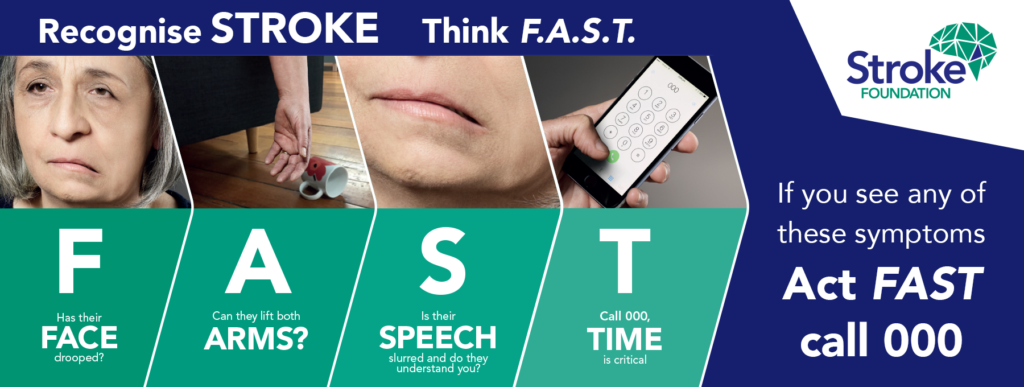
A stroke victim might also experience one or several of the following symptoms:
Waiting to treat a stroke can result in brain damage. Call 000 as soon as you suspect a stroke.
Treatment begins while you are waiting for the ambulance. Allow the person to lie down, with the head slightly raised and supported. Support any weak limbs and loosen tight clothing. If the person is unconscious, perform CPR.
The recovery process depends upon the severity of the stroke, but if there is lasting brain damage, the victim could require around-the-clock care. Most stroke survivors will require some pain management, physical therapy, speech therapy, and emotional support. A rehabilitation program can’t always return the patient to life before the stroke, but it can improve his or her quality of life.
Changing your lifestyle, including reducing stress, offers the best opportunity to reduce your risk of stroke and heart attack. To ease stress and anxiety, get plenty of rest, exercise, eat healthy food, avoid caffeine, take deep breaths, and maybe try some relaxation techniques you can learn in yoga or from this mindfulness course. Sometimes, lifestyle changes can be challenging, but your health is worth it.
Disclaimer: Please be aware the above article is merely information – not advice. If users need medical advice, they should consult a doctor or other healthcare professional.





