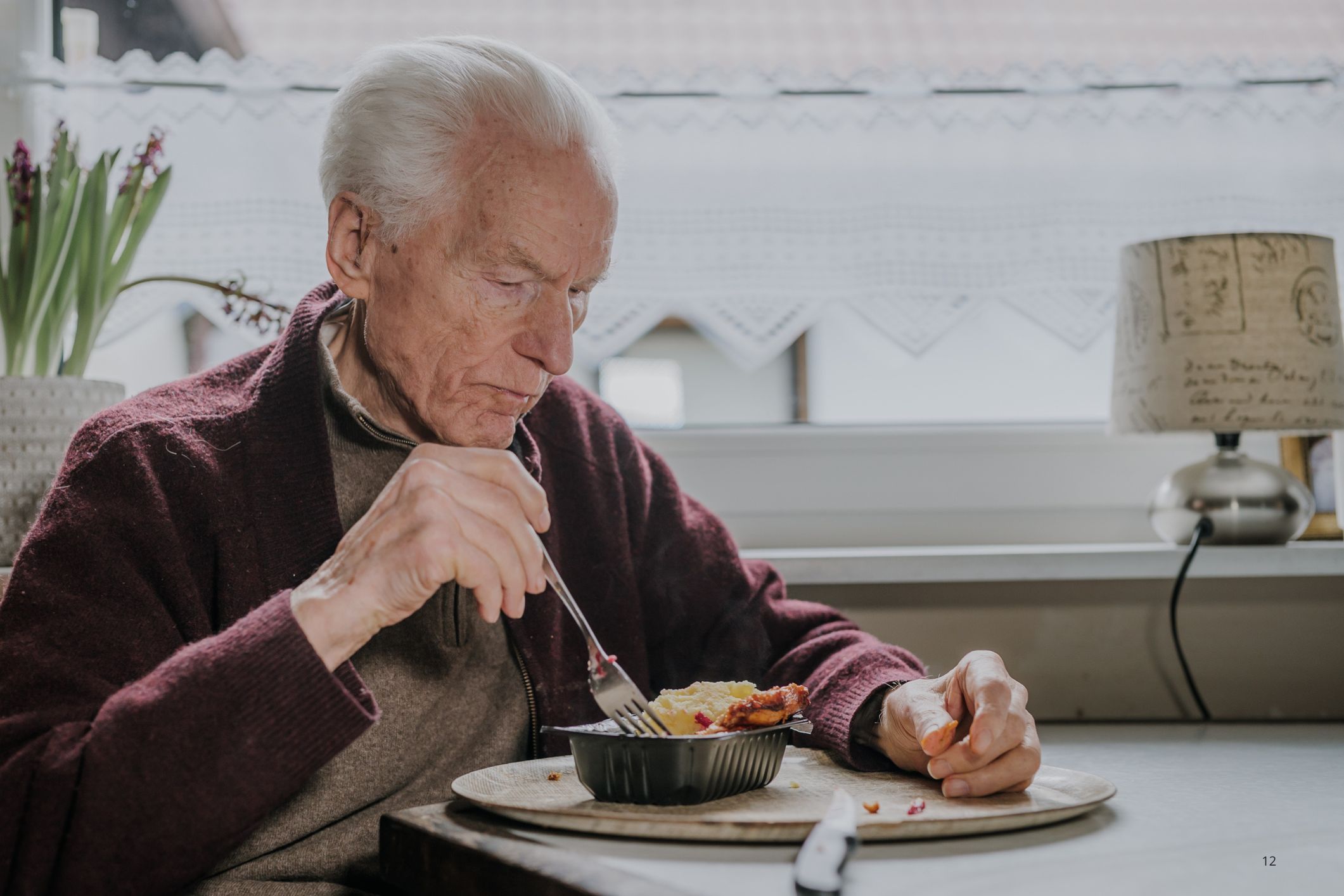
In just under three months since the Albanese government’s much-hyped Aged Care Act came into effect, Australian seniors are facing a harsh new reality.
Billed as a “rights-based” overhaul to empower older citizens with dignity and choice, the reforms have instead unleashed a wave of confusion, bureaucracy, and skyrocketing out-of-pocket costs. Nowhere is this more evident than in the realm of home-delivered meals, a lifeline for many frail elderly who rely on such services to maintain their nutrition and independence at home.
Just over two months into the Support at Home (SAH) program, which replaced the Home Care Packages (HCP), forums and social media are ablaze with stories of inflated prices, inconsistent interpretations, and families forced to choose between essential meals and other basic needs.
The meal delivery mess: Confusion and cost hikes
A recent post on an aged care Facebook forum highlighted the frustration with ordering dinners from a popular meal service for an elderly parent.
Under the old HCP Level 3, the cost was straightforward: a 30% user contribution plus a 10% provider fee. Now, under SAH, it is a murky mess, potentially 30% of the meal cost plus 17.5% on a $20 provider fee per meal.
The service advertises a bundle of 15 meals (five breakfasts, lunches, and dinners) for $99 delivered, equating to about $6.60 per meal. Yet some providers are charging $20 per meal, ballooning the total to $300 for the same package – tripling the original cost.
Even after subsidies, the out-of-pocket hit feels punitive. “No one seems to be able to agree on the cost,” the poster lamented, echoing a chorus of comments from confused users grappling with the cost increases.
This chaos stems directly from the government’s new mandates. SAH requires meals to be priced and claimed on a “per meal” basis, an all-inclusive rate that bundles preparation and delivery and excludes only raw food costs.
Gone are the days of simple bundled invoices under HCP; now, every meal must be itemised separately for government claims, forcing providers into administrative hell. As one commenter explained, the meal service is refusing to change their invoices so providers can automate this, so a human being is entering this manually.
This is why costs are up. Providers, burdened with extra staff to handle the paperwork, pass these costs on, often via surcharges or inflated per-meal rates. One provider in Hobart broke it down: on a $99 package, the client pays $29 (30%), the provider covers $70 from the package, adds a 10% invoice fee ($7), and claims a meagre $5.14 per meal from the government, netting just $7 profit.
But for users, the effective drain on their SAH budget is higher, and with means-tested co-contributions kicking in, out-of-pocket expenses can soar.
The forum comments reveal the human toll. One user described paying $30 on a $100 order, with the provider adding 10% on their $70 share, totalling $77 from the package, still a jump from pre-reform simplicity.
Anonymous participants accused providers of shameful mark-ups, while others suggested stocking up before November 1 or self-purchasing to avoid the rort. “It is so ridiculous,” wrote one commenter. “I could order meals and they make it seem good oh we’re paying 70% oh and a couple of other % as well um why?” Another despaired: “Does this government want them to die?”
These are not isolated gripes; they are symptomatic of a system designed to save the government $18.8 billion over the forward estimates by shifting costs onto seniors, many of whom enter care in their eighties with minimal savings. Only 15% of octogenarians have over $100,000 in super, per expert data.
Fee increases across the board
Leading aged care economist, Kathy Eagar, has been scathing in her assessment of these reforms. She dismisses the “rights-based” rhetoric as a “smokescreen” for ramping up consumer co-payments, arguing that the changes offer no tangible improvements for seniors.
Under SAH, non-clinical services like meal delivery fall into the “everyday living” category, where full pensioners pay 17.5%, part-pensioners face means-tested rates up to 80%, and self-funded retirees bear the full 80% brunt, far higher than the old system’s flat contributions
“We should not be expecting people to choose between a shower or a meal,” Eagar warned, highlighting the unethical nature of these hikes. In the meal delivery context, this means seniors could see their weekly food costs double or triple, forcing them to skip deliveries or opt for cheaper, less nutritious alternatives from supermarkets or Meals on Wheels (which, at $6 per hot meal out-of-pocket, remains a bargain but is not always accessible or suitable).
This meal delivery fiasco is just one thread in a tapestry of devastation. Broader fee increases under SAH compound the pain: gardening rates have leapt from $55 to $90 per hour, with providers pocketing the difference while the service remains unchanged, as one forum commenter noted.
Personal care like showering, now subject to co-payments, has seen hourly fees spike from $68 to $118 for some, forcing reductions in hours or dipping into savings at $1,478 monthly out-of-pocket. Stories like that of a 78-year-old self-funded retiree, whose daily fees tripled to $98.38 despite identical needs, illustrate the inequities. Approved after the September 12, 2024, grandfathering cut-off, she is not “no worse off” as promised, far from it.
Advocates warn of downstream horrors: skipped services leading to falls, infections, social isolation, and premature hospital or residential care admissions, which are exponentially more expensive for taxpayers.
Tough to swallow
Even government-funded advocacy groups have offered only muted defences to the recent aged care reforms, celebrating vague “rights” such as choosing shower times, which were already standard practice.
The Department of Health continues to defend the reforms as necessary for sustainability in an ageing population, ignoring the fragmented and inefficient funding model long criticised by experts.
Sadly, a Medicare-style levy, recommended by the Royal Commission, remains off the table. Why? Because a new perceived tax could get voters offside.
As home care waiting lists stretch to nine or twelve months in some regions and providers morph into debt collectors, the Albanese Government’s reforms stand exposed as a deliberate cost-shift.
Australian seniors are not “cashed-up boomers”. They are ordinary people who deserve dignity in their final years. And when the decision was made to put political preservation over the needs of vulnerable seniors, it was not done on an empty stomach.



This is a user pays system. It was set up to shift resources away from Aged Care onto other government programs like Defence. This isn’t about rights or choices. It is simply their way or whatever you can afford to pay.
Support at Home is a complete mess and half baked funding program. Take Allied Health, for example, three months and no invoices paid. The Home Care Provider challenges all invoices, demanding a fee reduction; otherwise, contracts will be cancelled. Service can be negotiated, but not 60% below the fees prior to the 1st of Nov 2025. Home Care Package was simple: home visit $180 (1 hour of service), plus travel fees based on time in 15-minute increments: $45 for 15 minutes of travel time. Now Home Care Providers say, you can only charge $150 that includes everything, if you want to service OUR customers. Reason: HCP don’t have management fees, so they charge the client $320 ($170 on top of physio fees) to “cover management fees”, justifying that they also need to make the money. However, the Home Care Client, after being charged $320 for physiotherapy by a Home Care Provider, says Oh no, physiotherapy service is too expensive, I would prefer to use other services. 50% of all our home care visit clients dropped off and no longer receive care, OUT OF FEAR THAT THE HOME CARE PROVIDER WILL CANCEL THEM. Was this by design, or did Home Care Providers completely lose their way?
Meals on Wheels providers have been begging for clarity about billing processes and a standardised arrangement between Meal services (predominantly CHSP funded) and HCP/SAH providers for ages – particularly over the last 12-18 months… Govt advice is that “it is an arrangement between two business entities” and with the guidelines so open to interpretation, has resulted in this mess.
Meal providers have multiple sub-contracts all with slightly varying demands about how billing MUST be done – an administrative burden we are not resourced to accommodate but apparently aged care is now market-driven. Therefore Meals providers are at the mercy of the bigger operatives in the sector, if we want to continue providing nutritious and often customised meals, social connectivity and welfare checks to our clients – or we risk losing them to pre-packaged drop-and run operations that have a more robust marketing budget than we do…
Meals (along with transport and social support) should be left in CHSP and not merged into the SAH debacle.
Billed as a “rights-based” overhaul to empower older citizens with dignity and choice, the reforms have instead unleashed a wave of confusion, bureaucracy, and skyrocketing out-of-pocket costs. Nowhere is this more evident than in the realm of home-delivered meals, a lifeline for many frail elderly who rely on such services to maintain their nutrition and independence at home.
I blame this situation on the Federal Government funding cuts to shire councils as providers of MoWheels service.
If only they had increased funding rather than cut it, this may have been avoided.
Home support already provided help in the home with meals and shopping, so some of these clients may not have needed meals delivered.
To make the funding cuts as they did in 2022/23 forced councils to consider other priorities above their duty of care to their aged population and others, using the MoW vital service. My shire council chose to abandon over 120 recipients of daily hot meals and welfare checks by over 100 dedicated volunteers!
So people are complaining that they don’t want to have a Medicare-style levy, but they don’t seem to know (yet?) how much money is actually being siphoned off from the taxation coffers to fund this fiasco? Also, would they be happy that the siphoned money is going into the pockets of some-at-least providers who do not seem to care much about anything, apart from their bottom line. In my experience, certain ‘industry advisers’ were utilised, virtually across the board, to tell the providers how they could maximise their profits. I think the new pricing system is a prime example of that. There was talk about how one advising body had recommended that they increase their fees, and that option appears to have been taken up with gusto.
why dont politians realise go out of their way to MAKE THINGS hard for people .WHY ARE THEY SO STUPID???
This constant statement from the Department in defense of the new act and program makes absolutely no sense whatsoever and defies logic and reality:
“The Department of Health continues to defend the reforms as necessary for sustainability in an ageing population”
If there was any legitimacy to this claim, anyone receiving services, especially those who are grandfathered, would not be in a position where they are being forced to reduce the services they receive. This is not because of requirements to contribute to the cost of those services, it is driven wholly and solely on the new pricing methodology under the program and has merely redirected funds previously used to fulfill the needs of the consumer, directly into the providers hands. The government is now using more taxpayer funds to pay for the services while the consumer is reducing the services previously received.
This is FACT, undeniable and indisputable. So my question is:
How exactly have the changes created a more sustainable Aged Program??
Everyone is paying MORE and receiving less. The MORE is going to industry, not additional packages to reduce waitlists. More grants for new builds to compensate for the balloon of baby boomers yet those builds are not going to cover all areas required, so then what?
New rules introduced on whims or grievances aired to government by industry will continue to place those with frailty at risk and cause irreversible harms and consequence.
There is no valid or reasonable justification for what many are experiencing and battling today. They have no organization or impartial body they can go to discuss or seek answers, nor provide a strong defense to the gross inequities.
Providers are supported by the ACQSC, other advisory groups such as the providers association. They work closely with the department where a recipients has no direct access outside of My Aged Care who do not determine all the day rules the program operates under. Add to this the growing PROVIDER ONLY community of practice online open discussion forums where providers exchange ideas and opinions as well as information used to justify pricing to consumers. One such is managed by the department and a new one created by INVOX labeled QANDA (Q&A) is signaling red flags as there is no oversight by any governing body.
The best consumers have are social media groups where there is a clear and loud message, the act isn’t and never was fit for purpose and is detrimentally impacting the lives of the Aged and their families.
Thank you for your supportive comments… from an oldie affected by these recent horrendous thoughtless changes
I am really disappointed…I am transfing from Hcp to SAH Level 2. not grandfathered and told I’ll most likely not get hardship.. I’m on DSP and am single in own home…
I was told 2 days ago, as I discussed how pleased I was with my liteneasy subsidy, 28days order, that my provider would charge $23 A MEAL for my monthly order …they are obviously claiming for meal prep, delivery, buying raw food and invoicing…none of which they do…
I am beyond angry at t this double dipping…I’ve been with liteneasy for yrs..it’s an important part of my PKG…
I also get 2 hrs a fortnight ,of cleaning, inpay of $15.30…
It’s not enough and goodness knows what else is being eroded .
I’m behind in utilities, car repairs, and have been more unwell in the last 17days..spending more on medication…having to rely on neighbours.
The “carer” was rude and obnoxious, seemingly taking great delight in $23 a meal ..it’s a total ripoff…
Im seriously thinking of dropping the PKG and paying out of my own pocket ..Goodness knows whatl happen as get more unwell
No such thing as social or anything else
Welcome to old age
It’s a bloody disgrace