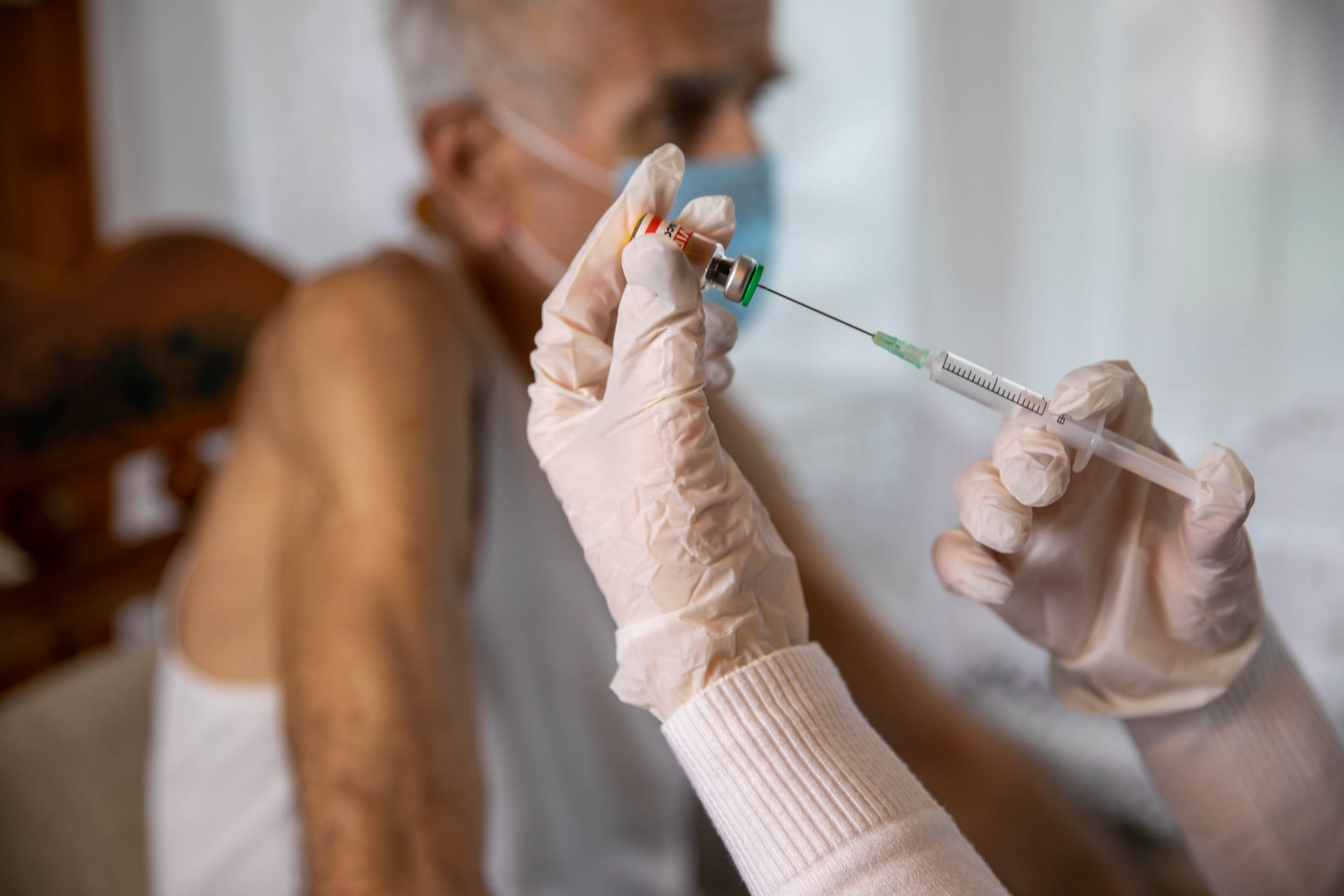
Residents of aged care facilities will begin being vaccinated next week with the Pfizer vaccine, while aged care workers will begin to be vaccinated in March when supplies of the AstraZeneca vaccine become available.
Thousands of residents at more than 240 aged care homes will receive their first dose of the COVID-19 vaccine next week, across 190 towns and suburbs in rural and urban areas in every state and territory across the country.
The full list of locations is available on the Minister of Health’s website here. The sites were chosen using a “risk matrix” developed by the Department of Health.
But aged care staff will have to wait around six weeks to receive their jab when supplies of the AstraZeneca vaccine reach Australia’s shores.
“And the AstraZeneca vaccine is coming online, we think, in early March and we’ll be able to get the staff vaccinated pretty quickly.”
“The evidence from overseas is vaccinating the staff and residents at the same time is not actually a very effective way to do it,” explained Murphy, in a press conference.
“The staff vaccination programs have a different logistic need and will have a different workforce to do that,” he said.
Residents have been chosen as the first recipients of the vaccine because of their “extreme vulnerability” to the virus.
Aged Care Minister Greg Hunt said the “staged approach” to the rollout will ensure those who need the most protection will receive it first.
“Both of our vaccines will prevent serious illness. That is our primary goal,” he said. “To keep people out of intensive care and off ventilators. Both vaccines approved for use in Australia do that very well.”
Because there is no community transmission of COVID-19 at present, there is not a “burning” need to fast track the rollout, said Murphy.
“It’s perfectly safe to take four of five weeks to vaccinate all of the aged care residents.”
Residents living in areas where it might be “difficult” to ensure the specific conditions for the Pfizer vaccine – in particular, providing the extreme cold storage – may also receive the AstraZeneca version.
“There may be some parts of the country where we may have real difficulty getting the frozen Pfizer to, but our intention at the moment is to try and get Pfizer to every aged care resident if we can,” said Hunt.
The vaccines will be defrosted before being transferred to the aged care homes, and then “reconstituted” on-site.
Each vaccine lasts refrigerated for between three and five days.
In the Pfizer hubs, the vaccine will largely be defrosted on the day of administration.
Specialist logistics providers will deliver the vaccines to the aged care homes in what Brendan Murphy has described as “a very carefully planned outreach program”.
The vaccinations will be administered by a team of 500 specialist nurses who have been trained “intensively” over the last few weeks to administer the vaccine in aged care homes.
The nurses will travel to the aged care homes to administer the vaccines.
The government has the capacity to bring on more nurses if needed.
Aged care facilities have been advising families and residents about gaining consent for residents to receive the vaccine.
Aged care residents who are unable to provide consent will be able to have consent given by a family member.
“Consent is being sought in all cases,” said Hunt.
You can read more about the procedures for gaining consent on the Department of Health website here.
Every person who receives the vaccination will have it documented in the Australian Immunisation Register, which can be accessed through Medicare for proof of vaccination.
Hunt had strong words for Facebook, which yesterday banned news websites, including government sites with important information about the vaccine rollout.
“There is a risk that if you cannot have accurate information, that those who wish to promulgate falsehoods and fictions can do so without a response,” Hunt said.
“I would say again to Facebook, think again, you may be in it for the money. But the rest of us are in it for safety, protection and responsibility.”
He encouraged Facebook to “return to its origins… focused on community and engagement, not on money.”
The ‘COVID-19 vaccine aged care readiness toolkit’, including a checklist for site readiness and vaccination day, is available here.
More information about COVID-19 vaccination for aged care workers is available here.


