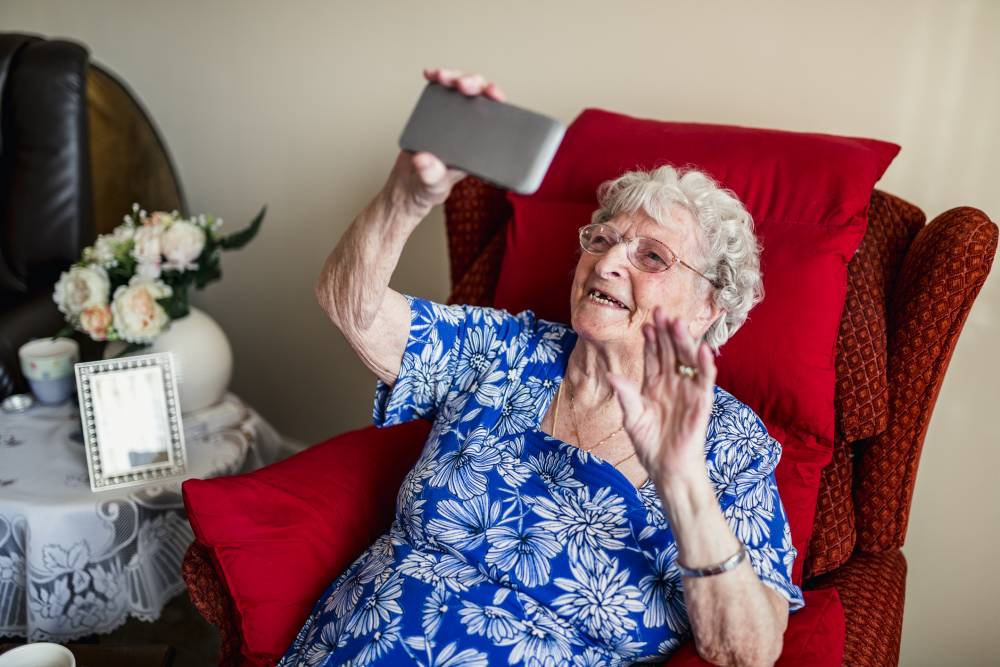
Older adults are one of the populations most vulnerable to COVID-19. This vulnerability likely means they will probably have to engage in physical distancing for longer than the general population.
For these adults, staying social during this time, while maintaining a physical distance, is crucial. Even before COVID-19, older adult populations have been dealing with the realities of social isolation and loneliness. The isolation, however, has been highlighted and exacerbated with the coronavirus pandemic.
Before COVID-19, those of us in the field of geriatrics, have been trying to help create a culture of community to combat depression, social isolation and loneliness. However, right now physical distancing is utterly necessary.
Physical distancing, however, does not mean we have to be disconnected. What can older adults do now to ease the distance?
Older adults who used video chat technology such as Skype had significantly lower risks of depression than those who did not video chat. Video calls can help us all cope with this pandemic, and enhance the well-being of an older population moving forward.
Video calling platforms can help support the development of a stronger sense of connection and maintain already existing relationships.
Video calls keep older adults engaged and a part of their loved ones’ lives. They can still visit with their grandchildren, have that morning coffee with their friends and be virtually present for memorable moments like birthdays. It allows older adults to remain physically distant, but emotionally present.
Several accessible and free options are available such as: WhatsApp, FaceTime, Skype, Zoom and more. These apps allow older adults to interact face-to-face with their loved ones.
While some older adults have good access to technology, some will need assistance using it.
In a recent survey of communities in the United States, 90 per cent of older adults expressed their desire to maintain their independence. In North America, almost 29 per cent of older adults live alone. Therefore, technology is essential more than ever to help ease the distance.
Luckily for some, technology is pervasive: in North America, 53 per cent of older adults own a smartphone and 26 per cent have Skype. Statistics show that a third of the older adult population owns a tablet.
While many have the means to connect with the outside world, roughly one-third of Americans over the age of 65 say that they never use the internet, and 49 per cent say they do not have a home internet service.
This makes it likely that many older adults will need some help with technology. If you are a younger family or community member, you can help.
When you are dropping off the essentials for any older adult, take a moment to remind them of the available apps on their phone that enable video calling. If someone does not have a smartphone, look for spare or old phones you could use to set them up with essential numbers and apps.
If they have not used an app before, recommend the one that you use the most so that your familiarity can assist them. If you both own Apple devices, we recommend using FaceTime. If you are trying to reach someone with an Android device, WhatsApp or Google Duo might work well.
It may be hard to teach your loved one how to video call from a distance, and it may get frustrating. You can try to get help from a tech services company. Patience is needed when teaching newer technologies, but it’s worth the effort, especially since, as the research shows, it can lead to long-term benefits.
Right now, we need human connection more than ever. Calling and texting help, but a face-to-face connection, even virtually, can go a long way.
This article was first published in The Conversation
Photo Credit – iStock – SolStock


