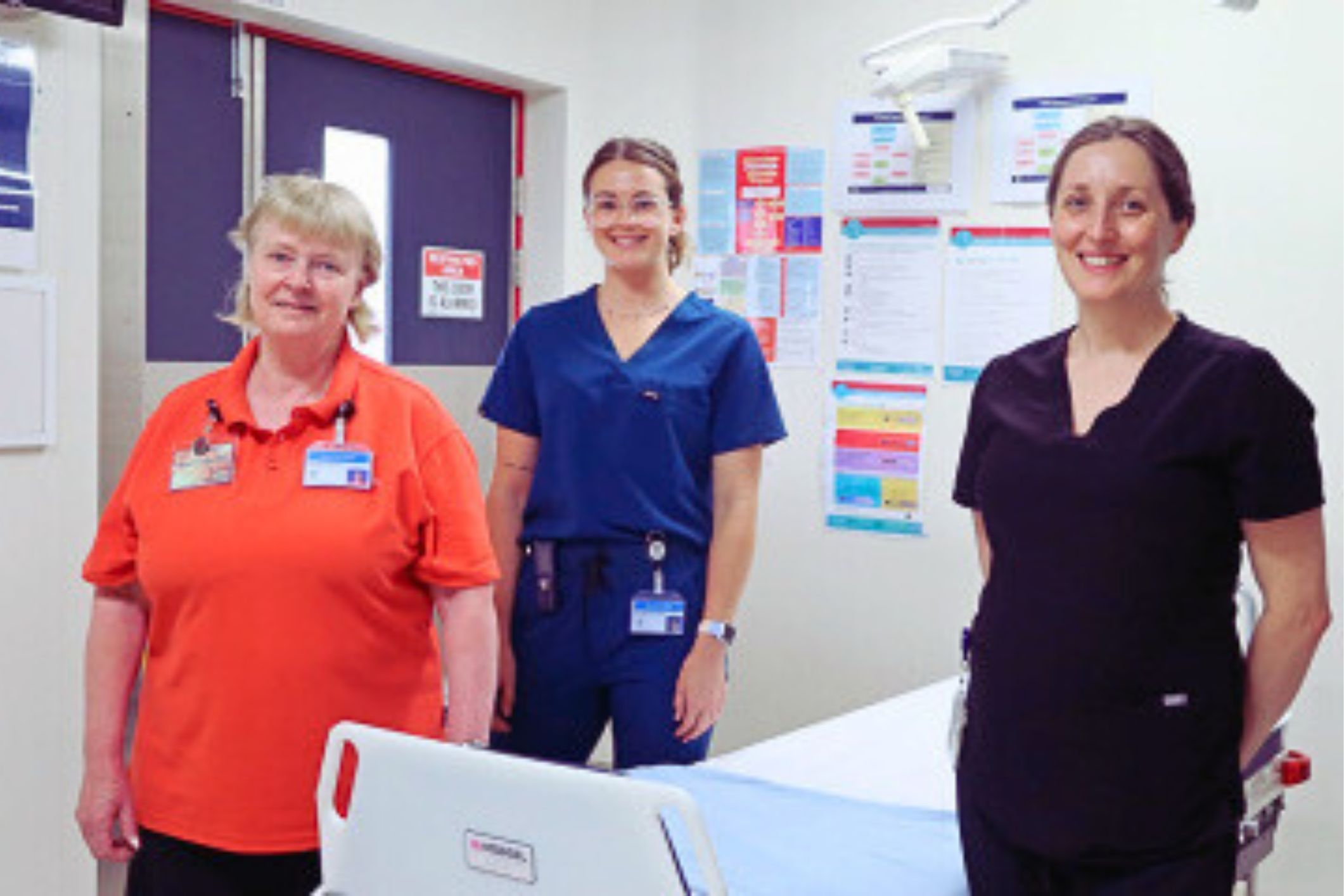
These hospital volunteers understand that non-clinical supports are just as important as clinical ones!
While medication management, record keeping and observations are important, sometimes just having someone to talk to or a little treat outside or the regular set menu does the world of good.
Residential aged care facility (RACF) patients are receiving these social supports whilst undergoing treatment at QEII Hospital’s Emergency Department (ED) in Queensland, facilitated by a team of seven dedicated volunteers.
Volunteers work behind the scenes to deliver the Emergency Care Companions Volunteer Program (ECCVP), a joint initiative between the CAREPACT program and QEII ED that offers a range of non-clinical supports including company and friendly chats, warm blankets, snacks, games and diversional aids.
As QEII receives the largest proportion of RACF residents attending ED in the Metro South Health region, Emergency Physician Doctor Casey Bennetts says the ECCVP was developed after the team identified a need for a specialised social support service for the hospital’s most vulnerable.
Made up of a combination of local volunteers sourced through QEII Volunteer Services and Griffith University students on placement, the team deliver the specialised service on a variable roster running weekdays between 8.30am – 4pm. Patients are screened for suitability by CAREPACT nurses at the start of each day to ensure no resident is left alone during the experience.
“This is an extremely vulnerable cohort of patients who can’t always readily express their needs. They’re also a group of patients who are at significant risk of having adverse events occur, due in part to their age, but also due to their medical and cognitive frailty,” she said.
With a focus on improving the comfort and overall ED experience of vulnerable older patients, Dr Bennetts said the ECCVP provides more than just social benefits to patients. By having a more positive at the ED RACF patients are at lower risk of developing distress, delirium or agitation during their time there.
“The ED can be quite a confronting experience when the patient is concerned for their health and their well-being and have to do it alone,” Dr Bennetts said.
“The environment can feel like a sensory overload for anyone who’s not used to it, especially for those who are frail, or who are unable to walk independently or express their needs without assistance. It can be quite a tough environment to be in alone.”
Since its launch in mid-2023, the program is said to have had a notable positive impact on both patients and volunteers.
Students have reported that they feel very supported in the program and like they’re doing something valuable and rewarding for aged care residents while RACF patients said they enjoyed the company and thanked volunteers for their time.
Due to the program’s initial success, the CAREPACT team have been able to transition to a nurse-led model and has its sights set on expanding the ECCVP to reach more EDs in the region over the next few years.


