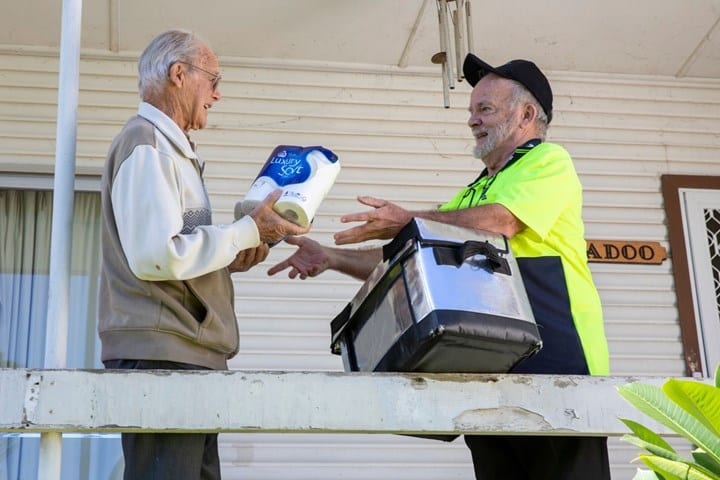
As panic buying continues to sweep Australia, leaving supermarket shelves bare, many elderly people are struggling to get their hands on everyday supplies.
On Friday, Woolworths announced a great new initiative to get supplies to those in need.
Woolworths has begun working with Meals on Wheels in New South Wales via their network of volunteers to help deliver toilet paper directly to the elderly in the community.
The support is intended to help vulnerable and elderly shoppers overcome some of the challenges they have been facing in securing essential items like toilet paper, due to recent unprecedented customer demand.
The first delivery of toilet paper was dropped off on Friday morning at the Meals on Wheels Central Coast branch in Tuggerah with more deliveries across NSW to follow in the next week.
Meals on Wheels volunteers in the Tuggerah area will hand-deliver a 4-pack of toilet paper along with their usual prepared meals to those they service in the community.
Woolworths intends to provide further support to other state-based Meals on Wheels organisations with further deliveries of toilet roll to them over the coming weeks.
Meals on Wheels NSW CEO, Les MacDonald said “We run special shopping assistance programs for the elderly at various Meals on Wheels branches around NSW and our volunteers have faced challenges in sourcing products such as toilet paper for those we support.
“We would like to thank Woolworths for recognising that Meals on Wheels is an integral part of all communities and for lending a helping hand at this time to support the most vulnerable in our community.
“We have an amazing network of local Meals on Wheels staff and volunteers who can make small, but important initiatives like these possible in challenging times – and we truly do deliver ‘more than just a meal.”
Woolworths Supermarkets Managing Director, Claire Peters said, “We are pleased to begin working with Meals on Wheels in NSW to help provide for the elderly and vulnerable in the community.
“Due to the unprecedented demand for certain products in our stores, we’ve heard that many elderly and vulnerable people in the community are missing out on items they may need when they shop.
“While we’ll continue to do our very best to continue restocking our stores, we encourage all Australians to be mindful of those in your community at this time who might need help and ensure that we continue to support each other.”





what a great idea thanks woolys