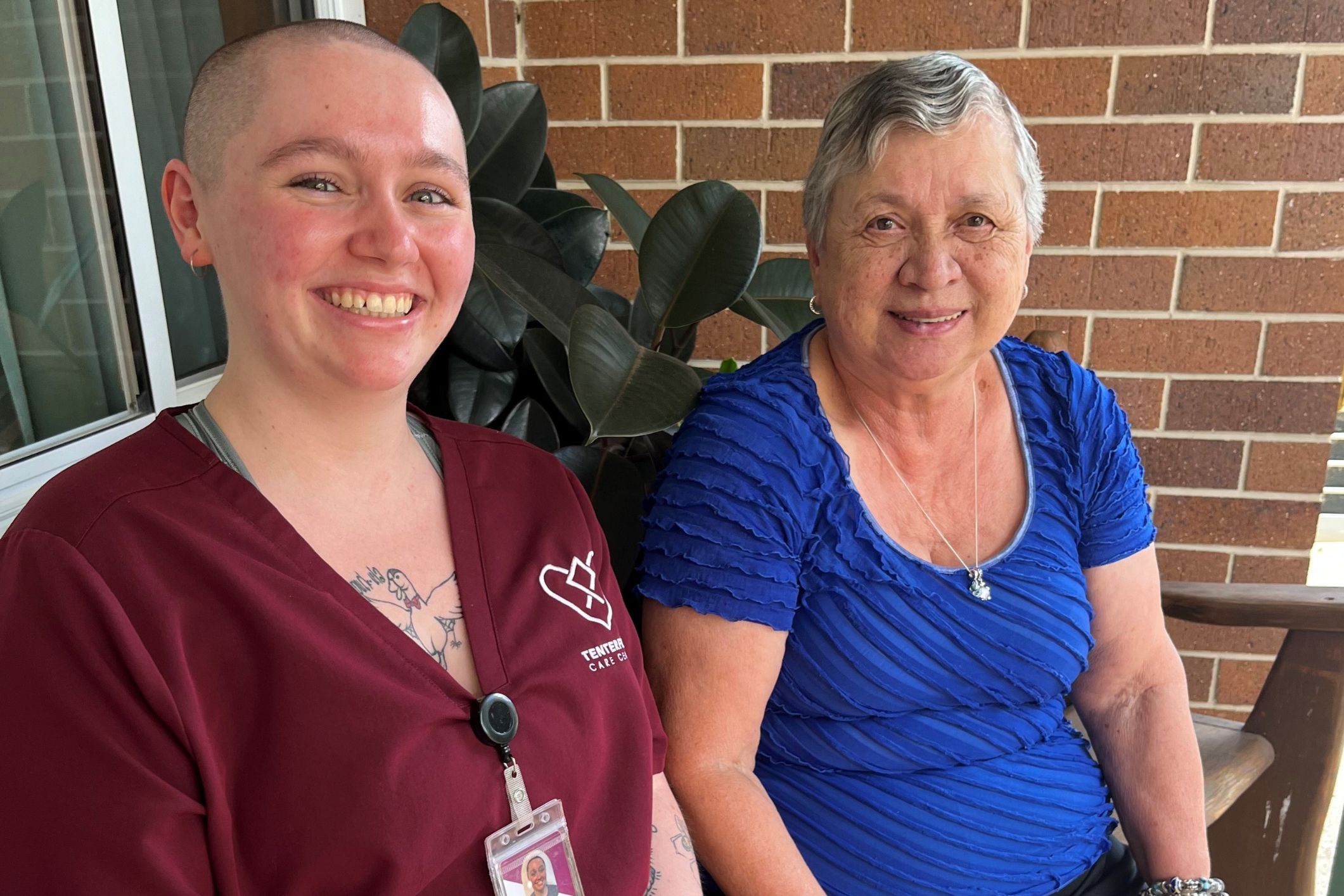
At 23, Crissy Hodge is joining the growing influx of nursing graduates forging a new career path, moving straight into aged care at a time of intense shortages. She’s found fulfilment working with Australia’s older generations, loving the flexibility her new career brings.
“When I did a placement in aged care in university, the main thing I enjoyed was talking to people, getting to know them and learning about their life stories,” she said.
Crissy’s journey into nursing began with a deep desire to help others in need. She chose aged care because she loves hearing about the lives of the older people she cares for.
“No-one in my family has been a nurse or spent any time in a medical field. I’ve always wanted to help, and I wanted to know why people were unhappy or hurt. I applied for university (nursing) at the end of year 12. When I started classes I realised how much I loved it. I don’t have to be in one place, and I can travel with nursing.”
Crissy left Canberra to begin her nursing career at Tenterfield, in NSW’s New England highlands, which has a regional population just shy of 7,000. She works in the high-care 46-bed Haddington Nursing Home, operated by the Tenterfield Care Centre.
“I started in February last year and this is my first nursing job ever. I’m enjoying it,” she said. “I’ve only grown up in big cities but it’s definitely a change. It’s a fairly quiet family-orientated town, and it has a sense of community. Everything in town is a maximum of five minutes away.”
As a first-year nurse, Crissy has been supported through the Aged & Community Care Providers Association (ACCPA) Transition to Nursing Practice Program for graduate Registered and Enrolled Nurses. She is part of a group of 63 RNs and ENs who have recently completed the program.
The transition program provides online learning support via weekly Zoom meetings with facilitators and guest speakers. Drop-in sessions are also available if nurses have questions. Videos of the meetings, presentation slides and information databases are available for future reference for current participants and all alumni.
“(Nursing) is a big responsibility but after a year I’m feeling a lot more confident about where to get the information and support I need,” Crissy said.
“Nurses are the heart and soul of aged care facilities, providing compassionate care and support for residents day in and day out,” ACCPA CEO Tom Symondson said.
“We cannot thank our nurses and care workers enough – they are an inspiration and are lighting the way for others to follow.
“Nursing involves lifelong learning and resilience, and few careers offer the same level of enrichment and fulfilment.”
“We are proud to help build the future workforce and support nurses, like Crissy, in their first year in the profession – especially as the sector grapples with a critical shortage of Registered Nurses.
The next intakes for the ACCPA Nursing Transition to Practice Programs for graduate Enrolled and Registered Nurses and transitioning registered nurses start in February, May and August 2024.


