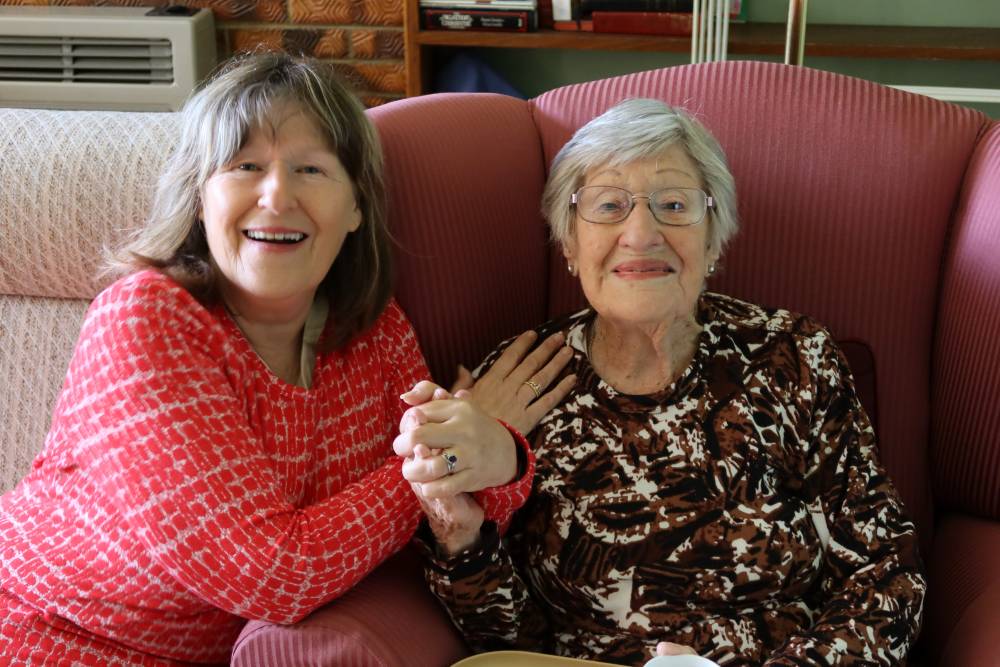
Maggie, 62 was working in law enforcement when she decided that it was time to quit and take care of her mum, Vera.
Not wanting her mother to live in residential aged care, she chose to care for her herself. That was over 12 years ago, and Maggie doesn’t resent having to make that decision.
She lives next door to her mother, who is 97 years old, and suffers from anxiety. However, despite her age, Vera still lives on her own, with support from her dedicated daughter. But Maggie does admit that it has been hard, and tiring.
“It has been a highly emotional as well as practical business,” she says. “I only want the best for mum, and I want her to live a premium life. That includes making sure that she remains independent and retains her dignity. That’s so important to her, and to me.”
Mother and daughter both receive a range of support to allow Vera to remain in her own home, including carer support for Maggie.
“It was hard at times, and very stressful, when we couldn’t get any of the services right, and the people weren’t right.
“But now that we receive support from Villa Maria Catholic Homes (VMCH), and it’s been wonderful.”
Maggie is involved in the Support for Carers Program, which provides a range of opportunities for carers in the Eastern Metro Region, so they can spend some time alone, doing activities they enjoy.
“The quality of the program is fantastic, and the workers are just wonderful. I have regular massages, there’s lots of social inclusion, and classes like art therapy.”
Maggie says her quality of life, and that of her mum, has improved dramatically.
“It has done so much for the quality of the time we spend together. We are cared for wonderfully, and it just makes our time we do have together more special.
“It used to be very hard, especially for mum to get around. Now, we have a wonderful support who comes every fortnight and takes mum where she wants to go. It gives me the chance to have that time on my own, which I really need too.
“It just lifts such a weight off your shoulders.”
Maggie says spending time with other carers is another relief and has made new friends who all understand what it’s like to care for someone they love.
“We might see each other at the carers gym, sometimes we go out for a coffee. But we all understand each other’s situation, and that it’s not always easy to arrange to catch up.
“I’d love to have more time, but mum comes first. She might have an appointment or want to catch up with friends. It’s her life too.”
Maggie says while she is happy with the decision she has made for her mum; she wishes that others understood the full extent of being a carer.
“People don’t see the work that goes into it. They don’t see the unseen care.”


