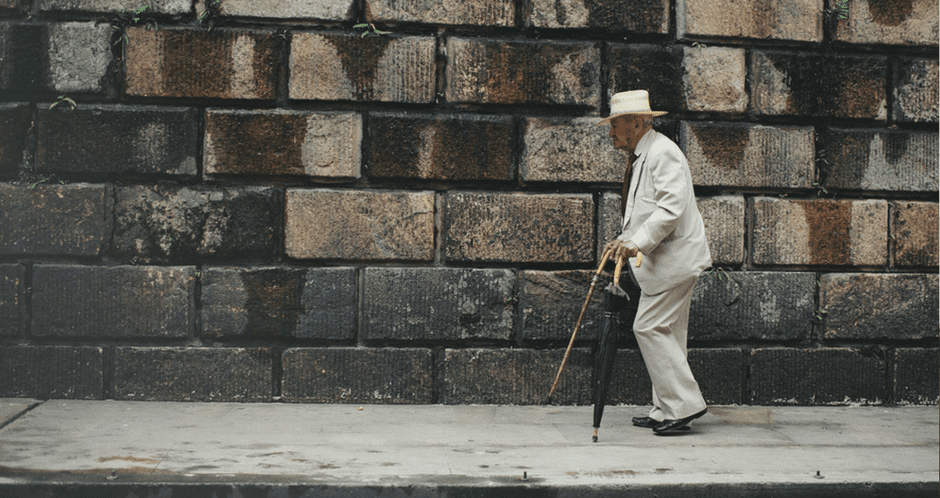
As Australia and the rest of the globe ages, governments are being forced to confront the issue directly with improvements in infrastructure. Communities that are primarily senior citizens have much different needs and requirements than family dominated communities. Governments have to think about ways to make the surroundings more compatible with aging populations. Unfortunately, the vast majority of our current cities and towns are not prepared. In particular, governments must confront the issue of streets and roads that are not suitable for seniors.
The biggest issues is simply denial and cultural acceptance. Baby boomers are retiring rapidly and the age of the population is shifting. However, governments are not making the necessary expenditures. Perhaps this is because most middle age voters don’t envision themselves as becoming elderly and don’t push for the proper investments to make cities safe and prepared for senior citizens. While it is hard to pinpoint the reasoning, the upshot is that there are much fewer expenditures than are necessary to age-proof streets and roads.
According to the World Health Organisation (WHO), the number of people around the world that are over the age of 60 will double between 2015 and 2050. This wave of people ageing will change our communities dramatically. Unfortunately, more elderly will not necessarily result in more healthy ageing. According to the report, those individuals from privileged backgrounds that lived healthy lives up until 60 or 70 are more likely to age gracefully. However, people from poorer segments of society or those that did not make good lifestyle choice may still live longer, but will have many more mobility and health problems.
The most obvious and perhaps simplest issue is the speed of cross walks. Senior simply walk much slower on average than other adults. Civil engineers typically assume that people walk 4 feet per second and adjust the crosswalk timing accordingly. However, seniors may walk 2 or 3 feet per second. Crosswalks must be slowed down to accommodate this fact.
Private real estate companies also have to deal with the aging population by making their properties more accessible and usable for senior citizens. While individual properties to not get voted upon, governments can compel them with more stringent zoning and compliance requirements. One thing to think about include locating lifts in central and entry locations rather than at the far end of a building. Shopping centers can be designed to be smaller with more entry points from parking lots so that seniors can drive right up to the store they need to visit. There should be more handrails, especially at pedestrian crossings.
Last, and certainly not least, staff in both private and public properties should receive more training on how to deal with the physically and mentally disabled individuals. Seniors are much more likely to have mobility issues than younger people and staff should know how to help them manoeuvre to where they want to go. Staff should also know how to be patient and let seniors fully explain any problems or issues they have.
Research has delved deeply into the process of making infrastructure friendlier. The most important change is what are called “complete streets”. The philosophy is that streets that are suitable for the least mobile person are also good for everyone, because safer and easier the commutes improve everyone’s standard of living. The main technical components include larger and clearer street signs, better and more closely connected street lighting, covered bus stops, side-walk benches, tree-lined streets and well-lit entrances to subways. All of these simple improvements help everyone in their commutes, while particularly helping seniors who may not be able to travel without them



5