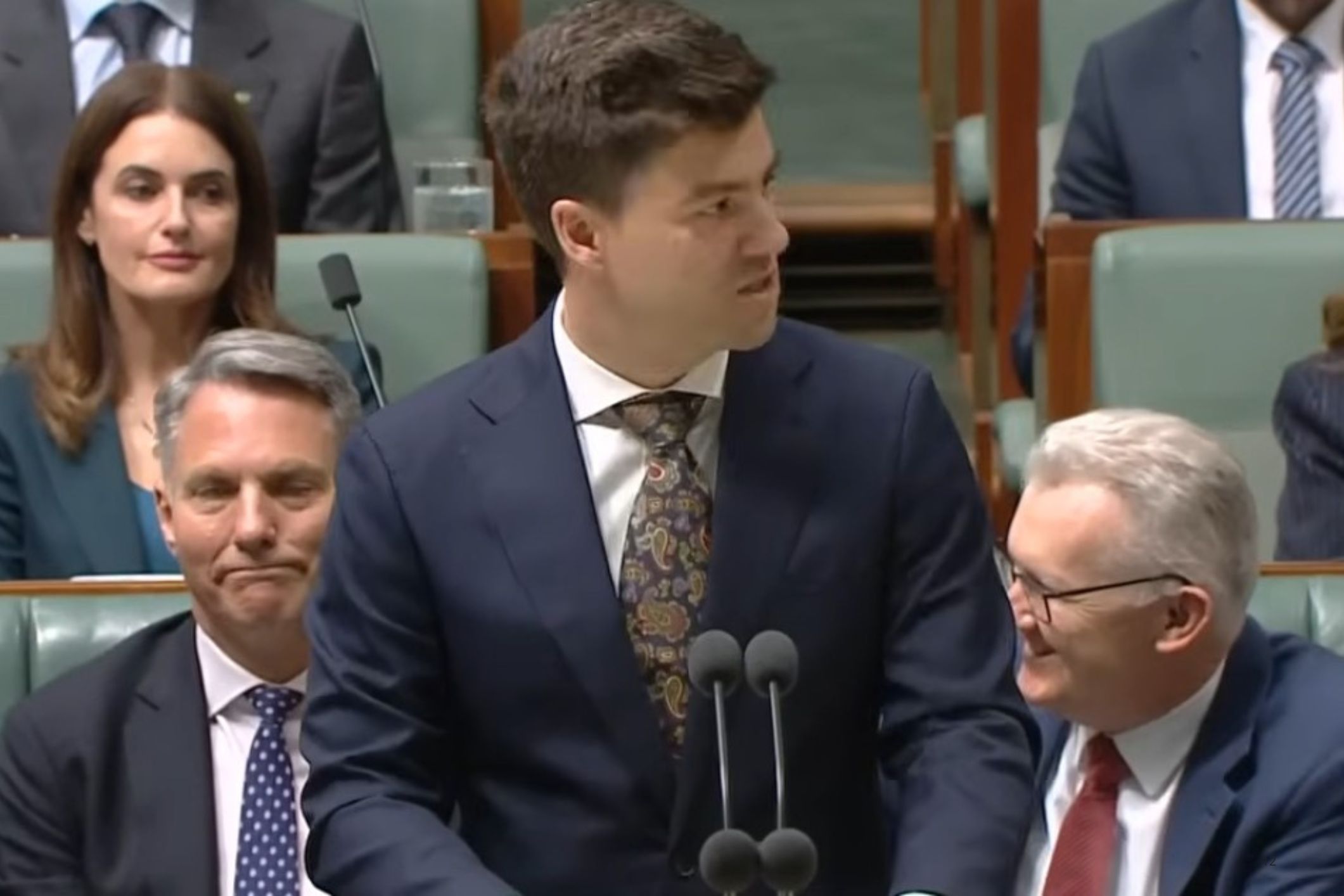
In a heated exchange on the floor of Parliament, Aged Care Minister Sam Rae faced pointed questions about the Integrated Assessment Tool (IAT) from Independent MP Dr Monique Ryan who challenged the government’s reforms, asking, “Minister, are these once-in-a-generation reforms just ‘robo aged care’?”
She added, “Experienced clinicians are unable to override algorithmic decision-making. The government’s new single assessment scheme is failing older Australians.”
Minister Rae’s response aimed to reassure, but a closer look reveals carefully crafted language that skirts direct accountability. He stated, “Let me be clear: the IAT classification algorithm does not replace assessor input; it relies on assessors documenting their advice in the IAT first.”
He continued, “I assure the member that assessors still play a critical role in achieving high quality assessment outcomes by using their clinical judgement and strong communication and engagement skills to complete the IAT during the assessment.”
The minister emphasised that the IAT ensures “accuracy and consistency” in decision-making, with particular stress on “consistency”. He also noted that the Department of Health, Disability and Ageing plans to refine the tool regularly and is monitoring its operation.
These statements are classic examples of carefully worded political rhetoric, loaded with semantic wiggle room. By saying the algorithm “does not replace” assessor input but “relies” on it, Rae implies a collaborative process without committing to how much weight human judgement actually carries in the final outcome.
Terms like “critical role” and “clinical judgement” sound empowering, yet they mask the reality that assessors are now barred from overriding the algorithm’s decisions in most cases.
This pivot from earlier promises, where overrides were allowed, leaves the government room to claim technical adherence to rules while ignoring frontline chaos. It prioritises “consistency” over compassion, as if uniformity in assessments excuses mismatched care for vulnerable seniors.
This ministerial framing stands in stark contrast to the raw frustrations voiced by aged care workers in the Facebook group Aged Care at Home Forum Australia, a community hub for Australian home care staff. Here, assessors, providers and carers share experiences that paint a picture of a system weighted against human insight, where algorithms dictate outcomes with little regard for real-world needs.
One assessor and delegate described manipulating inputs to game the system for better client results, focusing solely on what the individual can or cannot do without considering informal supports.
They lamented, “As a delegate I see some assessors not being clinically accurate in their information and you can see it affects the outcome. Assessors are not to blame, AI is not to blame. The fact is that as a clinician I cannot simply override an outcome, when the training we did before Nov 1 back in May said we would have the option.”
This highlights the betrayal felt after overrides were promised in training but abruptly removed, stripping away clinical discretion and even the ability to adjust priority levels based on judgement.
Echoing this, another worker called the minister’s claims outright “BS”, asserting, “They have no control. All info is input into software and a level is allocated. It takes all empathy away from the decision, now all based on an algorithm.” A colleague agreed, recalling an assessor who admitted outcomes were determined by “some algorithm” with no input from them.
The human toll is evident in stories of mismatched assessments. One carer shared how their parents, both stroke survivors with similar impairments, received wildly different levels: one a Level 2 via phone assessment, the other Level 7. They questioned, “You can’t assess someone without looking at them.”
Another described a client with high needs denied priority changes, now limited to cases of homelessness or domestic violence, leaving others to “just have to wait”.
Frustration boils over into broader critiques of government priorities. A participant described the system as a “fiasco”, accusing politicians of neglecting seniors while funding overseas aid and perks, demanding, “Vote them out. They are a disgrace.” Others highlighted wait times stretching for months, with one 102-year-old waiting seven months for reassessment, risking death before funding arrives.
Carer burnout was a recurring theme, with one anonymous member hospitalised from exhaustion, fearing reassessment under the new rules.
Political disillusionment runs deep, even among Labor supporters. One admitted disappointment, while another urged abandoning party loyalty, stating, “Voting for them is condoning this.”
Calls for transparency included demands for a whistleblower to expose the inner workings of the system, with scepticism about Rae’s claim that wait times are decreasing. As one quipped, “Did Sam Rae say that ‘wait times are coming down’ with a straight face?”
Providers like Adrian Morgan from Flexi Care have publicly noted a 37 per cent rejection rate for upgrades since the changes, a sharp rise from near zero pre-November 2025. This data underscores how the algorithm’s rigidity is downgrading care, forcing providers to navigate appeals while clients suffer.
The government’s handling of the IAT raises serious concerns about its regard for clinical expertise. Born from the Aged Care Royal Commission’s push for better assessments, the tool was meant to unify and humanise the process. Instead, by locking out overrides and hiding behind “rule-based” processes, it has created a dehumanised bureaucracy that values fiscal restraint over lived realities.
Assessors are reduced to data entry operators, entering information into an opaque system that produces decisions which may ignore nuances such as cognitive risks or family strain.
This is not reform but regression. The department’s vague promises of “refinements” do little to address the ethical crisis driving workers away or the risks facing seniors. With Australia’s ageing population growing to 4.9 million people aged over 65, ignoring these voices is politically risky and socially dangerous.
The minister’s semantics may buy time, but they will not mend broken trust or prevent avoidable harm. Real accountability would require publishing the algorithm, restoring clinical overrides and prioritising people over processes. Anything less is a damning indictment of a government failing its elders.



Just shows what a mess the aged care industry is in! Thanks to this and previous governments. When it comes time for them to receive services, they will then realise their failings.
Thank you Jakob Neeling.
I write as an 86-year-old aged pensioner who also tries to help her 92-year-old neighbour. I find this information alarming and hard to comprehend. My neighbour has been assessed with a result that seems inadequate for her reality. I am due to be assessed shortly, and am wondering whether I should postpone this assessment until this mess is sorted out. As a Labor supporter who generally applauds the efforts that Labor has made to improve the health needs of our Australian population I find this very disappointing.
I will keenly follow your efforts to tackle this issue.
Algorithms have no place in into informing us on how we deal with aged care. Pfffft
I couldn’t agree more that this government (and previous governments) are failing the Aged Care system and those dependent on it largely due to necessary fiscal restraint. The problem is not just in Aged Care but in Health and Disability in general and our overall living standards as Australians.
The solution is not to focus on Aged Care or NDIS or housing affordability or affordability in general…or every other individual interest you may have.
The solution is to force ALL of the politicians in Canberra and in every State to stop giving tax-free benefits and even obligation-free grants (gifts, graft) to global corporations to dig up our resources and give us almost nothing back except for the promise of creating a few hundred jobs (usually in places a long way from anywhere) buying the support of a relatively few FIFO workers with high incomes and high leave and benefits while the majority of Australians have to live with increasing demand on services being met with reduced tax base to fund those services and the resulting reduction of funding of critical services by our politicians.
While I have never been aligned with Labor governments (large government), they certainly did one great thing with the increase to the Coal Royalty Tax to bring in a significant increase (tens of billions of dollars so far and continuing) in revenue to the Qld State Government, for the benefit of Queensland Australians. And it’s success is evident in the now Liberal government’s decision to keep it in place.
It is a start but should be applied to all other resources and not just in Qld but across the country. Then we might have a hope of funding the needs of Australians, not just in Aged Care.
If we are truly frustrated with the under-funding and truly want to fix it, instead of focussing solely on our sole area of interest because that’s how we maintain relevance, we should instead join forces across industries, across individual interests, to focus on the solution to all of our funding problems. Large numbers on a single issue (the solution), rather than relatively small numbers competing with every other interest group for attention, is the only thing that will move the dial and force all our politicians to listen and act to implement the solution to fund all of our needs.
You make many very valid points here. The system is a complete failure presently.
Do you know if anyone with decision making power reads Hellocare analysis?
And yes ideally everyone affected by these budget cuts would do better for themselves and all of us by combining efforts. So many resources are used by each group duplicating including human resources which would be much more effective if combined. This of course is difficult to achieve human nature being what it is.
These politicians need to go out with the assessor’s for a couple of weeks and personally see the clients and listen to the assessor’s and what they have to deal with. The general public are sick to death of listening to politicians who stand up with their well written speeches but know NOTHING of the reality that is happening to the people who need help and less time to try and negotiate the system. I don’t care about their degrees get of their seats and get amongst the people experiencing these stupid systems.
Synergistic to the previous article!
Clinical judgement and empathy is a critical component to informed decisions.
Why train to be a clinician under this model as you just need to ask and document questions and answers?
Thanks Jakob.
It shows what the Government thinks of the ageing population. If all assessments are under assessed then they will die off before they receive the correct level of care. ( a great strategy for saving money)other nations value their ageing population Australia politicians make them disposable.
What about we use an algorithm to rate the the value of our politicians and reduce their pay accordingly
Sam Rae is wrongly appointed as the Aged Care Minister. He is a new minister and only spouts political jargon, and doesn’t have the experience for this complex portfolio. He only has to read any of the personal reports of problems the recipients are receiving, and the providers are vocal about the inefficiency of the whole system as well. The costs incurred/charged are a disgrace, and grossly misrepresented.
The CHSP level is to be introduced in 2027, the problems of the SAH aren’t anywhere near a solution, so how can the CHSP be loaded onto an unworkable existing system? As well as apathy and denial, ageism is also alive and well. We will die and won’t be a problem.
Thoroughly disheartened and disgusted.