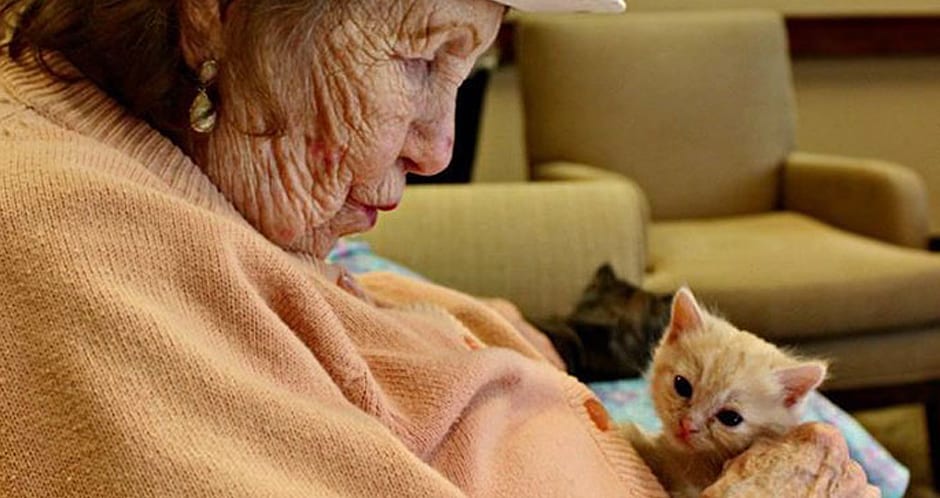
Companion animals give elders meaningful interactions. Human-animal interaction not only reduces stress levels, but also promotes feelings of well-being. Programs are now in place that use this special relationship to do just that, however, it is worth asking the question: Are humans the only ones getting benefit from these encounters? An animal shelter partnered with an elderly care facility, proving that animals need and encourage the act of caring in human beings.
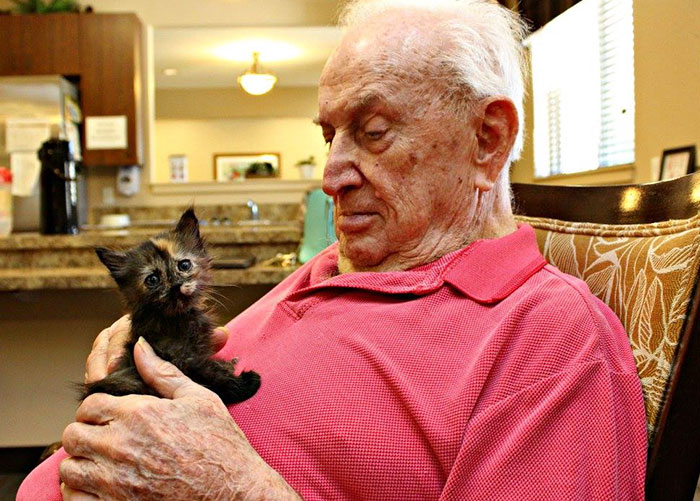
An Arizona pet shelter lacking assistance for newborn cats decided to enlist elderly residing at a care facility. Catalina Springs Memory Care Executive Director Sharon Mercer related that despite the odd pairing of seniors who lacked the ability to take care of themselves and very needy baby kittens,
“…there are skills, emotions, and needs that do not just leave a person with Dementia or Alzheimer’s. The desire to give love and receive love remains.”
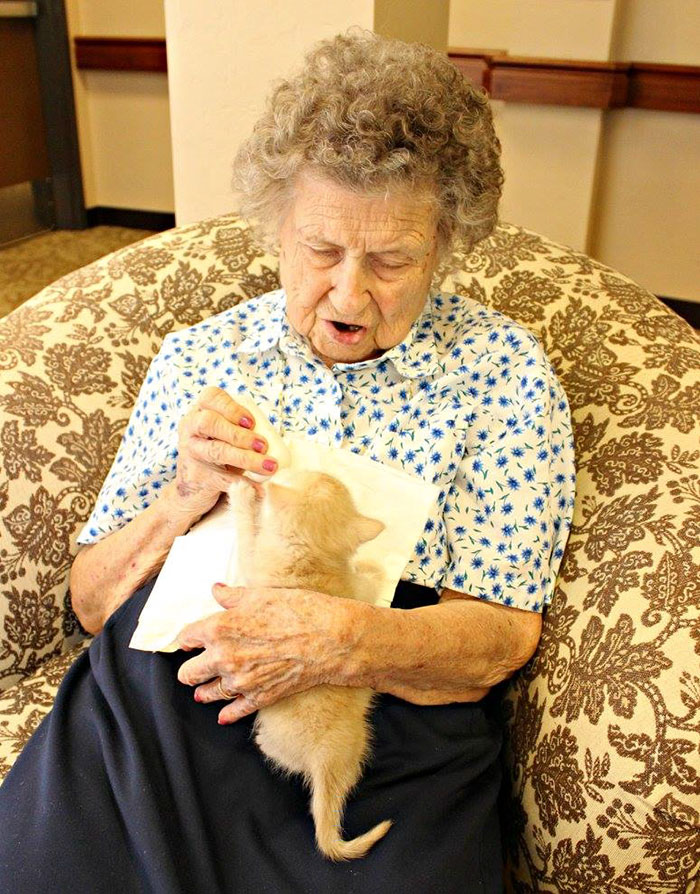
Health services director Rebecca Hamilton created the program. Not only involved in senior care, Rebecca volunteers her time to foster cats. Inspired by her own love of kitten care-taking, the idea to share this feeling with others was the motivating factor for the program. The idea was successful; conditions of both kittens and elderly improved. Mutual benefits were apparent as kittens enjoyed the care they received from attentive seniors. Two newborns, Turtle and Peaches, doubled in weight due to diligence of seniors engaged in feeding, cuddling, and socialising the kittens. It is well-known that abandoned newborn, whether animal or humans, need social interaction as much as food and shelter. Without this, mental and emotional stresses are much more prevalent.
There are numerous emotional and physiological benefits of owning a pet. One primary benefit is decreased anxiety, which in turn creates lower levels of stress-related conditions. Diverse studies have outlined the correlation between health and pet-owner interaction. Survival time for myocardial infarction patients, decreased blood pressure, and lowered heart rate have been noted to occur within individuals petting a dog or even watching a fish within an aquarium. However, companion animals are more likely to be dogs, as they rank highest in the statistics of pet ownership. This doesn’t mean that other animals are any less therapeutic as some people may prefer to interact with certain types of animals over others.
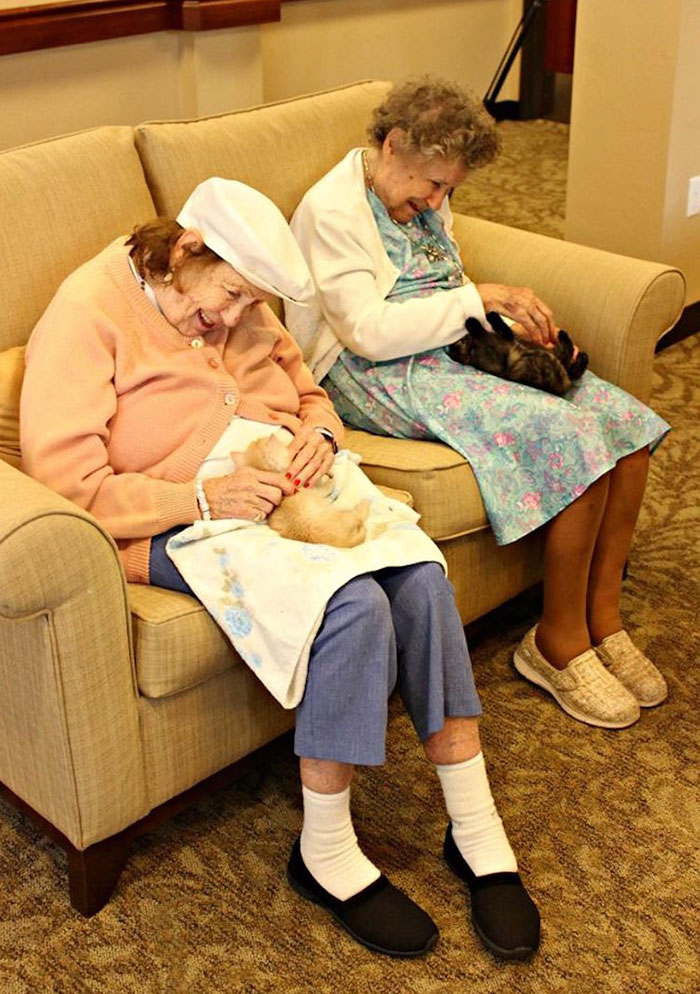
Animals have an especially positive effect on the elderly. They encourage social activity and a sense of responsibility probably not felt since the parting of children from the home. This is a strong motivating force in remaining active and mentally astute. In one particularly unique case of an elderly man who was recently widowed and would not agree to live with his son, a cat placed within the home resulted in an increased appetite and social connection with a lady living next door. People who experience depression and physical illness will often isolate from other humans, but do not feel judged or dejected in the presence of animals.
This is an inspiring case example of creativity in elderly care. Although medical science states many benefits related to improved conditions, the subjective benefits are directly felt and noted in elderly people. Holistic remedies make use of medications, but also treat emotional and mental distresses that cannot be targeted with prescribed medications 100% of the time. In fact, a depressed senior, whether living in or outside of a care facility may turn to excessive self-medication or even severe withdrawal, increasing the odds of comorbidities. This is the case with many dementia and Alzheimers’ individuals. Even giving them a low-maintenance pet such as a fish or a gerbil might make small differences within the person’s life. Next time grandma exhibits melancholy or a lack of motivation to get out of bed? Try getting her a dog or maybe a parakeet.





1.5
4.5