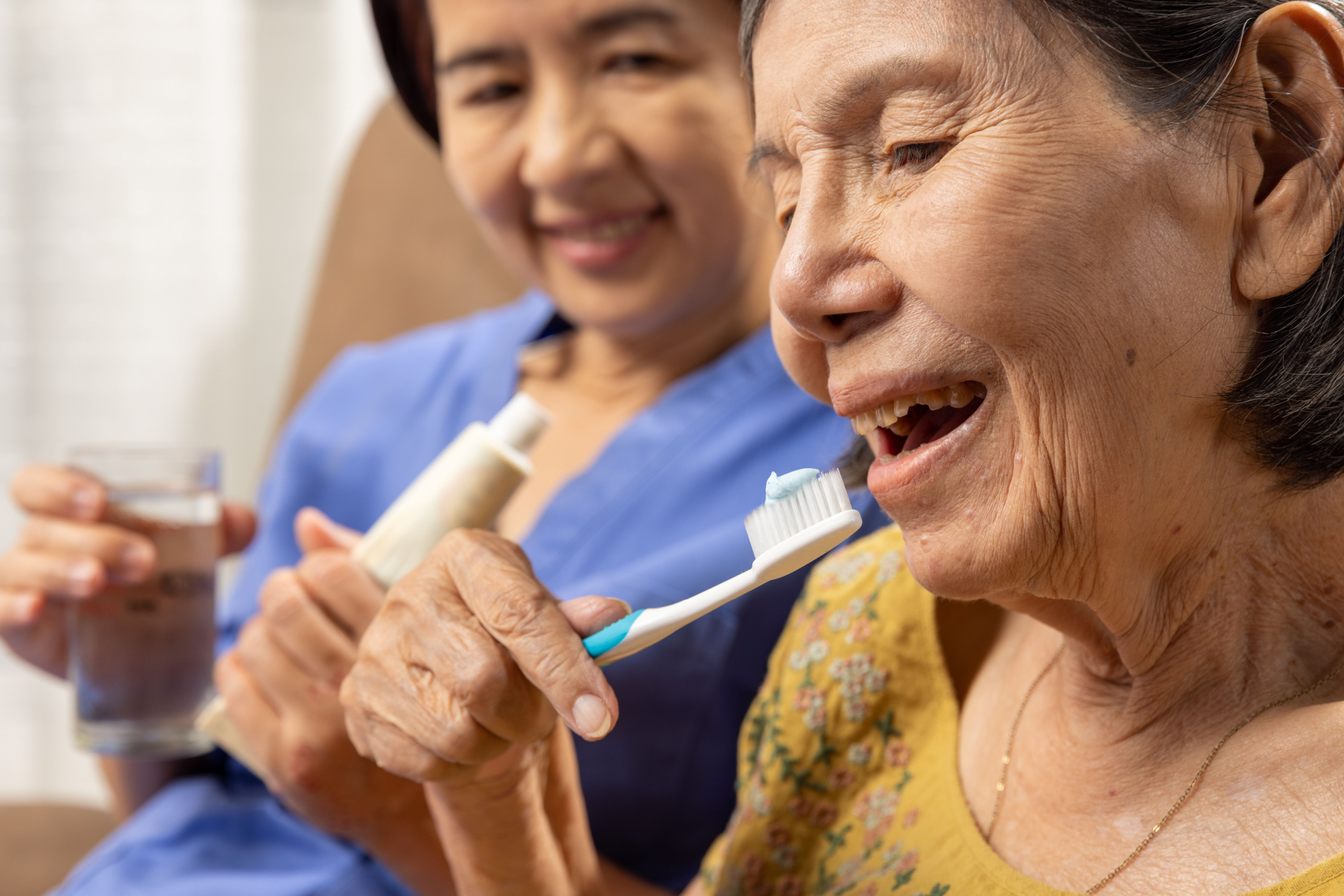
Health researchers have received crucial funding to develop a new app-based protocol to improve the oral health and well-being of residential aged care residents and address knowledge gaps among the aged care workforce about the importance of oral health care.
Designed by dentists and oral health care experts, the app will deliver the right information to care staff but it will also be designed to be used by families to find out the needs for oral health care for their older loved ones.
Major oral health problems start long before a person enters residential aged care. However, as residents become more frail and less independent, their oral health tends to worsen relatively quickly, particularly if their daily oral hygiene is not maintained.
Poor oral health in older Australians can cause serious health complications leading to increased risk of pneumonia, more emergency hospital visits, food avoidance, pain, weight loss and social withdrawal.
Lead researcher, speech pathologist and aged care researcher at Australian Catholic University (ACU) Brisbane, Doctor Kieran Flanagan, said key barriers to quality oral health care include cost, staff knowledge, training, and access to the correct oral hygiene products.
“Our ultimate goal is to provide a protocol for better oral health care that leads to better health and quality of life and for this protocol to be used broadly across the nation in residential health and that’s something we can all smile about.”
Doctor Meg Polacsek at the Australian Association of Gerontology agreed, stating oral health is often neglected in residential aged care due to common barriers such as poor understanding of the significance of oral health, high staff turnover, workload and time constraints.
She backs the need for aged care staff to be trained in oral health education, for clear guidelines to be outlined by providers to ensure that residents receive daily oral hygiene, and for a process to be established for seeking professional dental care as many residents are still not getting a dental assessment on admission or regular visits by dentists.
“Traditionally, aged care residents have often had only limited access to dental services […] there is evidence that dentists consider treating older adults as financially and professionally unrewarding, while families often lack awareness of the significance of oral hygiene and decline to support access to oral/dental services (eg through transport or payment),” she said.
“This is changing, with more specialised services for older adults, as well as mobile dentist services specifically for aged care. Some of these services provide treatment at the bedside and education for staff. However, the access to these services depends on the individual, their families and the facility. Organisational roles and responsibilities should be clearly communicated and managed, particularly across shifts.”
The new ACU protocol is hoping to address the important gaps in the aged care workforce’s capability and knowledge by measuring changes in oral health behaviours, social interaction, and diet before and after its introduction.
In the joint project with Amelo Dental, ACU researchers will initially work with staff and residents at five Southern Cross Care QLD (SCCQ) aged care services to pilot and review the new protocol but hope to roll it out nationally next year.
The app-based protocol will be funded by a $210,000 grant from Aged Care Research & Industry Innovation Australia (ARIIA).


A recent study put out in the Springer Nature publication found that people who have good teeth have a high population of good bacteria in the mouth.
Click Here