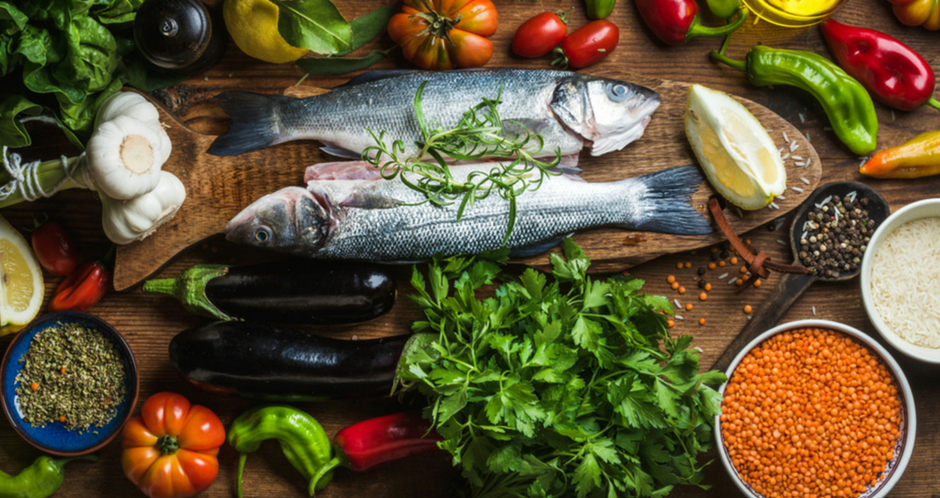
A good diet, full of nutritious food, has been known to help keep the mind and body healthy. But a new study has found that a Mediterranean diet may actually be able to help slow down brain ageing.
One of the things that can cause brain function to decrease as people get older is shrinkage – essentially when the brain’s volume decreases over time. When the brain shrinks and it loses brain cells which can affect learning and memory.
A recent research study found that older people who consumed a Mediterranean diet actually lost less brain volume over a three-year period than those than those who did not follow the diet.
The University of Edinburgh, led by Dr Michelle Luciano, analysed the diets of 967 Scottish people who did not have dementia at the age of 70.
This study was different from other studies as it continuously measured the same people over a number of years, while previous studies only looked to measure brain volume at one point in time.
From there, 562 had an MRI brain scan at around age 73 to measure overall brain volume. When measuring brain volume researchers looked at grey matter volume and thickness of the cortex (which is the outer layer of the brain).
Out of the 562 people who were measured at 73, 401 of them returned for a second MRI scan at age 76.
What the research had concluded was that the difference in diet was the reason why some people had less shrinkage.
There was a 0.5 per cent difference in brain volume between those on and not on a Mediterranean diet. Though that sounds small, it’s about half of what “normal” brain ageing is.
However, though researchers are crediting diet for slowing down of the shrinking process, they found that there was no connection between grey matter volume or cortex thickness and maintaining a Mediterranean diet.
Though the Mediterranean diet appears to help protect the brain from the ageing process, there isn’t a sole item in the diet that can attributed for the benefits.
It’s been widely claimed that fish is the food that is “good for the brain”, however the researchers in this latest study believe that results aren’t just from eating more fish.
What they do think is that multiple foods in a Mediterranean diet work together and in combination they help slow down the brain ageing process.
A traditional Mediterranean diet includes:
Though overhauling your regular diet may seem difficult or extreme, maybe try adding some of these readily available items and simple eating habits into your everyday lifestyle to help protect your brain.





5