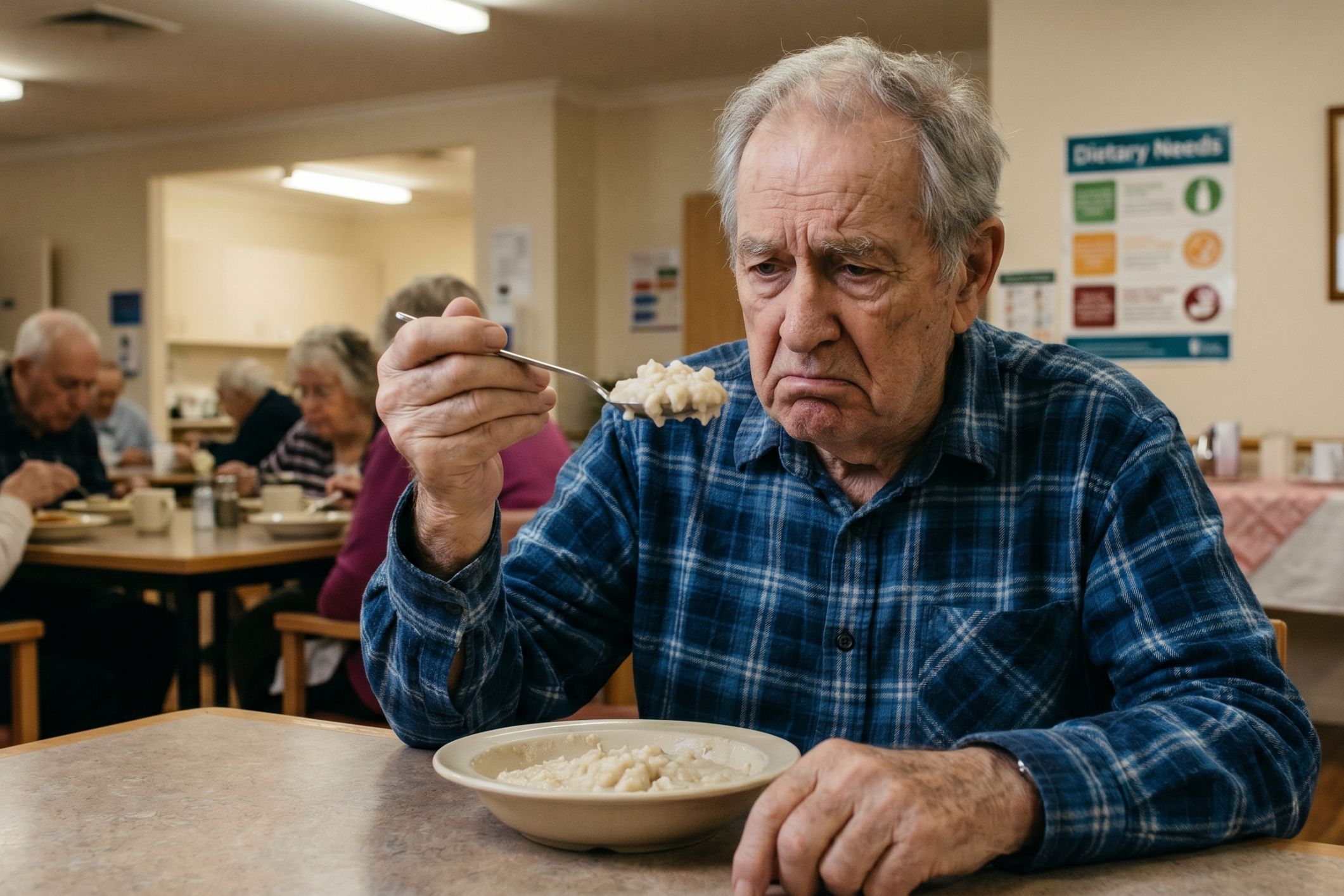
Recent coronial findings into choking deaths in aged care have brought renewed attention to a risk that has long been understood within the sector.
Residents with swallowing difficulties face a heightened risk at every mealtime. When food is not prepared to the correct texture, or when diets are not properly assessed and managed, the consequences can be immediate and severe.
Choking is the second most common cause of preventable death in residential aged care in Australia. Just in Victoria, coronial data revealed choking-related deaths more than doubled from 17 in 2023 to 38 in 2024, prompting the state’s Department of Health to issue an urgent alert describing it as an “emerging quality and safety risk”.
Choking incidents are deeply distressing for families, carers and providers. They are also, in many cases, preventable.
Swallowing disorders, known as dysphagia, are common among older Australians. A white paper recently released by The Pure Food Co reveals that up to half of aged care residents live with some form of swallowing difficulty. For these individuals, eating is not just a routine part of the day. It requires careful clinical management.
That management relies on one critical factor: consistency.
Texture-modified meals must meet precise standards to ensure they are safe to swallow. Even small variations in texture can increase the risk of choking or aspiration. Yet in many aged care kitchens, these meals are still prepared manually, often involving complex processes and relying heavily on staff training and time.
This creates a level of variability that is difficult to eliminate.
Frontline audits across the sector have reinforced this concern. Some have found that a significant proportion of texture-modified meals do not consistently meet required standards. That gap between intention and execution represents a real safety risk for residents who depend on those meals.
At the same time, the number of residents requiring texture-modified diets is increasing as the population ages and the prevalence of dysphagia grows.
These are not marginal issues. They sit at the heart of how care is delivered.
The sector is already moving in the right direction. Australia’s strengthened Aged Care Quality Standards have elevated food and nutrition as a core component of care. Providers are now expected to demonstrate that meals contribute to health and wellbeing, not just that they are served.
This is a significant shift. It recognises that food plays a direct role in clinical outcomes.
But regulation on its own will not remove the risk.
The Pure Food Co’s white paper outlines three practical steps that can help address these challenges. The first is improving access to speech pathology services, so residents are assessed early and placed on the correct diet. The second is strengthening risk management practices for texture-modified meals, particularly in kitchens preparing them in-house. The third is improving visibility of nutrition in home care, where providers often have limited insight into what clients are actually eating.
Each of these recommendations addresses a different part of the system. Together, they point to a more coordinated approach to managing risk.
There is also a broader shift underway in how providers are thinking about food.
For many, the conversation is moving beyond compliance and towards outcomes. Safer meals, delivered consistently, can improve not only safety but also intake, engagement and overall wellbeing. Families notice the difference. Staff gain confidence in what they are serving. Residents benefit in ways that are both immediate and measurable.
These are practical improvements that can be implemented now.
As the sector continues to evolve, the focus must remain on translating standards and expectations into consistent day-to-day practice. That requires the right systems, the right training, and the right support for staff on the ground.
It also requires recognising that food safety in aged care extends well beyond kitchen processes. It is a clinical issue that demands the same level of attention as any other aspect of care.
Every meal presents a moment of risk and an opportunity to reduce it.
The goal should be simple: ensure that every resident can eat safely, with confidence and dignity.
Because when that standard is not met, the consequences can end up being examined in a coronial inquiry.



It would be interesting to find out how many of the deaths due to choking came about due to residents, with a choice and risk form, deciding to eat foods such as toast, despite an assessed risk. If we really believe in resident rights this must form part of the picture.
That’s a fair question, I’d be interested to know that too, but I think the bigger underlying question is whether people on texture modified diets who are signing dignity of risk waivers are actually being given a real choice. If the ‘choice’ is between texture modified slop that looks and tastes absolutely gross, and normal food that could potentially kill them, is that really a genuine choice? If texture modified food is done as well as it should be – and there are some excellent suppliers out there – then residents with swallowing difficulties won’t have to compromise on safety to have a meal they actually want to eat.
Food strategies are only mitigation. The LifeVac has saved the equivilent of 80% of the choking deaths in residential aged care in the last 2 years as reported in the previous 2 years. One of the causes of choking death in RAC in Australia is the ACSQC clinical advisor is clueless.