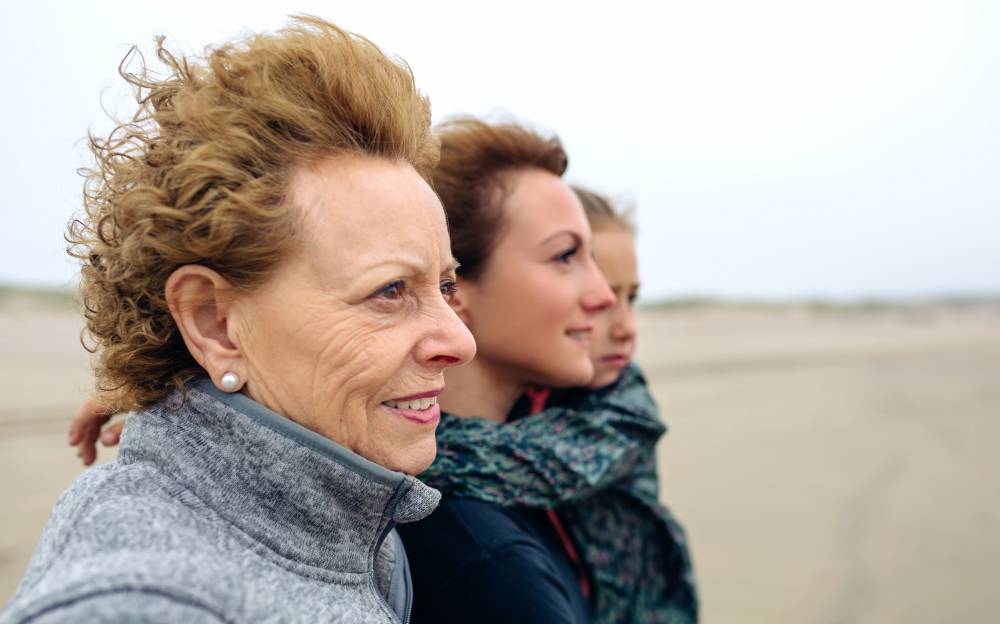
Many of those caring for elderly parents experience profound feelings of guilt.
Already leading busy lives of their own, often juggling career and children, many families struggle with the added responsibility of caring for an elderly loved one.
The term ‘sandwich generation’ was coined in the early 1980s to describe carers, mainly women, who were caught between caring for children and looking after elderly parents.
Today the pressure is often compounded because more women, and indeed men, are also juggling careers.
With families putting off having children until later and life expectancies rising, the likelihood of the periods where care is required for both children and parents is increasing.
Of course, it’s an honour to be able to care for an ageing parent, and it’s an opportunity to give back to the person who did so much for you, but caring for our frail and elderly parents can carry a toll, both emotionally and financially.
We can’t always be there for our loved ones, but we can ensure they are safe and feel cared for at all times.
While technology is readily used within some aspects of aged care, we are sometimes reluctant to use it for safety and wellbeing.

This unwillingness may stem from a simple fear of change, or perhaps it’s concern that once technology is used, the human touch will be lost.
Fortunately, some companies realise the importance of the human touch, and are using technology to enhance human connection, rather than hinder it.
Combining cutting-edge communication and personal care is becoming the hallmark of all aged care service providers, and it is this philosophy that has allowed a company like MePACS to make its mark, and to be at the forefront of safety and technology-assisted human care.
MePACS Personal Alarm systems allow users to contact a trained and caring operator with the simple press of a button, if they should fall or feel unwell. The personal alarms work at home and away – giving the user independence and reassurance where ever they are. The alarms do not auto-dial predetermined numbers, nor are they answered by a recorded service.
By providing 24/7 personally answered support, MePACS ensures that a loved one will never be without assistance or a reassuring voice. Plus, users have the confidence of knowing that if help is required, MePACS will call a nominated contact or 000, who can use information from MePACS to prioritise the emergency call.
Over the years, many users have developed trusting and supportive bonds with the MePACS operators. Some touch base with the operators daily, as a way of checking in and letting MePACS, and concerned family, know they are doing okay.
Entrusting the wellbeing of a loved one to another is difficult, but the decision to employ a personal alarm system is simple.
MePACS can deliver peace of mind to you and your loved one, and can reconnect you and your family with freedom.
MePACS has cared for nearly 40,000 Australians over 28 years.
For more information, visit the MePACS website or call 1800 685 329.


