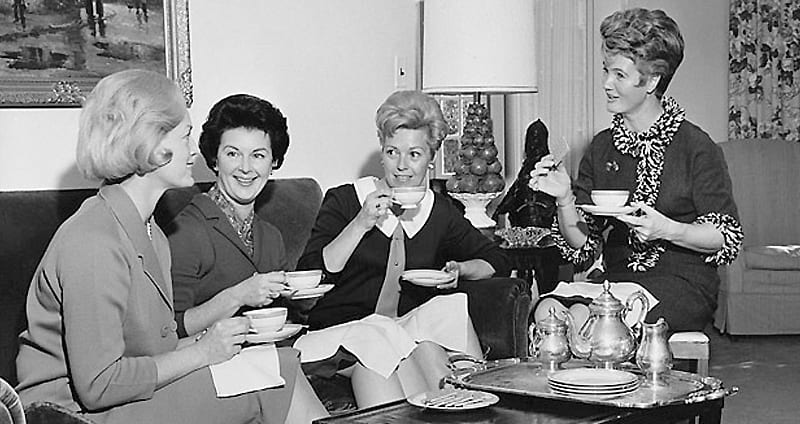
Would you ever participate in a Death Cafe?
Don’t let the name name fool you, though “Death Cafes” sound like they’d be this dark morbid thing, they’re really not.
If you’re unfamiliar, the Death Cafe is simple – it’s where people will sit around, maybe with a cup of tea or a slice of cake, and talk about death. It’s a discussion group rather than a grief support or counselling session.
Libby Maloney from Natural Death Advocacy Network (NDAN) explains that, “a lot of people don’t want to talk to their families, but they’re quite happy to talk about their friends”.
“Society has created this culture that focuses on living and focussing on what we perceive as ‘positive things’, talking about death often gets avoided”.
“And because of that, people are left without the information, and if you don’t have the information then you can’t make a genuine choice.”
“It’s information, choice and then communication. Without the information, you don’t have anything to communicate with your loved ones.”
Anyone, young and old, can have a Death Cafe – it can be done anywhere with family, friend, co-workers or even strangers.
While some people do it just randomly, and people come and the conversation just flows. Others organise regular meetings, with in-depth planning and themes.
Maloney proposes that Death Cafes be held at some aged care facilities too, “imagine in a facility’s lounge room, every month or however often, they have dedicated a sessions, ‘this month, let’s talk about coffins’, ‘let’s discuss where you can have a funeral’, ‘today we’re going to talk about natural choices’ or ‘this month we’re going to talk about wills and estates’,”
“If you pose conversations like that in a way that is fun, interesting and social – over cake and tea, over cocktails on a friday night – then it becomes a social engagement,” she says.
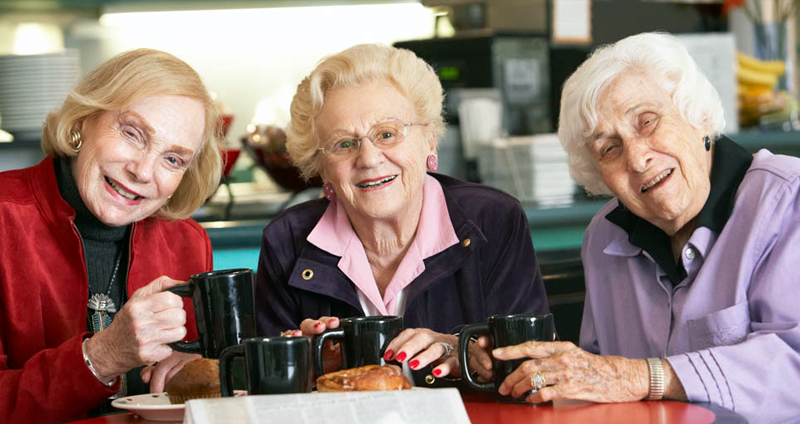
Maloney emphasises that it’s important to talk about all different things around the choices people have got, as that’s “how people gather their information”.
“A lot of people in aged care are very social and very active – if there was a regular session where you could all pop down, there was a guest speaker, and you could all sit around, have a chat and ask your questions and collect that bit of information in your head, then how is that not beneficial?”
It doesn’t have to be all deep and meaningful, sombre and terrible, but rather pose it as “did you know you can do this?”, which allows people to go “yes, I’m a shrouded burial person” or “I want a conventional funeral” or “I want all my family to have French champagne at my gravesite” – whatever they choose.
Maloney explains that “to die normally at end of life” is a “great achievement”, and when you are talking with friends you can have a laugh about the kind of gathering and celebration you have at the end.
Having an empowered death where you knew every option, where it was explained and that you chose what was right for you.
“There’s a lot worse that can happen to you than ‘dying well’. To die with your affairs in order, wishes communicated and with your forgiveness given and asked for could really brings a person peace regardless of their health”.
When the people you love know how you want to go, and dying with that peace knowing that there was nothing more you could have done – that is an empowering thing.





