Research over the years has shown the impact of how music therapy can benefit older people living in aged care.
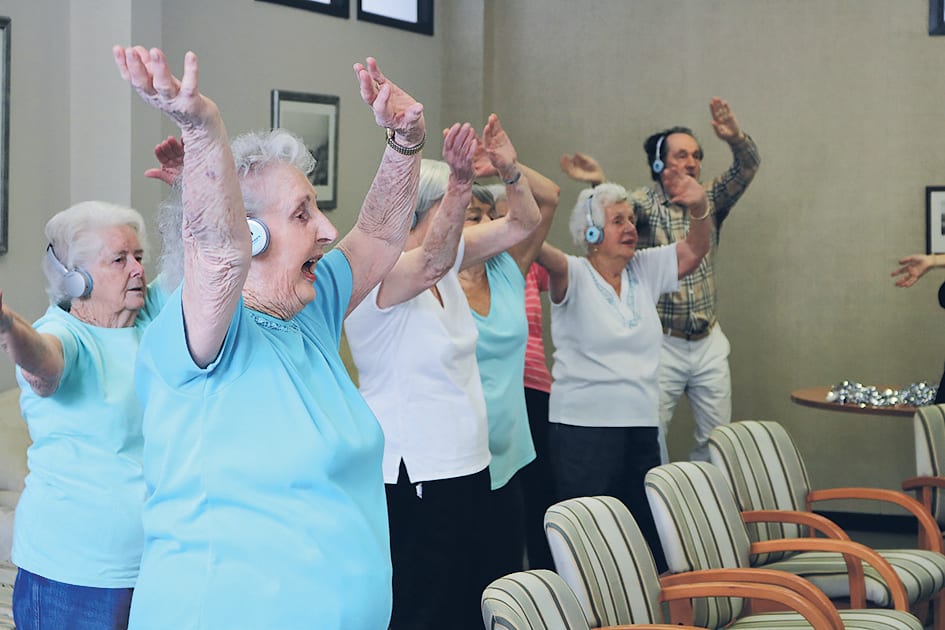
And now as a world first we are seeing the benefits of a “silent disco” for people living with dementia as part of their therapy and management.
Silent discos may look a bit odd – a group of people dancing with wireless headphones to what appears to be silences.
But because each person has their own sound system, they can tailor the music and the volume to every individual’s needs.
They can even play their favourite song from yesteryear. Music, for seniors, can act as form of Reminiscence Therapy.
Feros Care, the aged care service who have introduced the silent disco initiative at three of their northern New South Wales facilities.
Aged care staff have seen some extraordinary results from the silent discos, “the greatest impact we have seen is on the people who are not able to communicate ordinarily,” said Feros Care Positive Living Coordinator Jennie Hewitt.
“We have residents who have not spoken a full sentence in years, but when the music comes on, they start to sing the words and it brings up memories for them they otherwise can not seem to access,” she said.
“There were two residents who, after the therapy, were able to talk for the rest of the day.”
“We do also find their general mood is elevated for around two days after the sessions.”
“During this time, we have been thrilled to see family come in and have the opportunity to talk to their parent for the first time in ages, after the music therapy.”

Reminiscence Therapy isn’t only specific to music; it can be images, poetry, videos, even decor from an older time.
However, music is particularly effective because it registers on multiple sites of the brain. What this means is that even if the brain is very badly affected by a stroke or illness, there are still parts of the brain that recognises music.
Research suggests the link between music and memory is particularly strong because it has the ability to activate large areas of the brain, including the auditory, motor and emotional regions.
“With the change in behavior and sudden enjoyment we see once the music starts, there is definitely something going on there,” said Ms Hewitt.
“It does not take much for the residents to be up on their feet and dancing like they did when they were younger. Even those who can no longer walk sometimes stand-up out of their wheelchairs and get into the movement – it is just amazing.”
“There are no distractions for them – all they hear is their music and the voice of the facilitator, they become quite personally invested in it,” she said.
“What is also amazing is even though they can not hear or speak to each other, they end up doing things in unison, so you get this group atmosphere and the whole room is dancing.”
“Music soothes the soul,” they say, and this is especially the case seen in these residents living with dementia.
What do you have to say? Comment, share and like below.





Why is the music played through headphones rather than everyone being able to dance together?