This article is sponsored content.
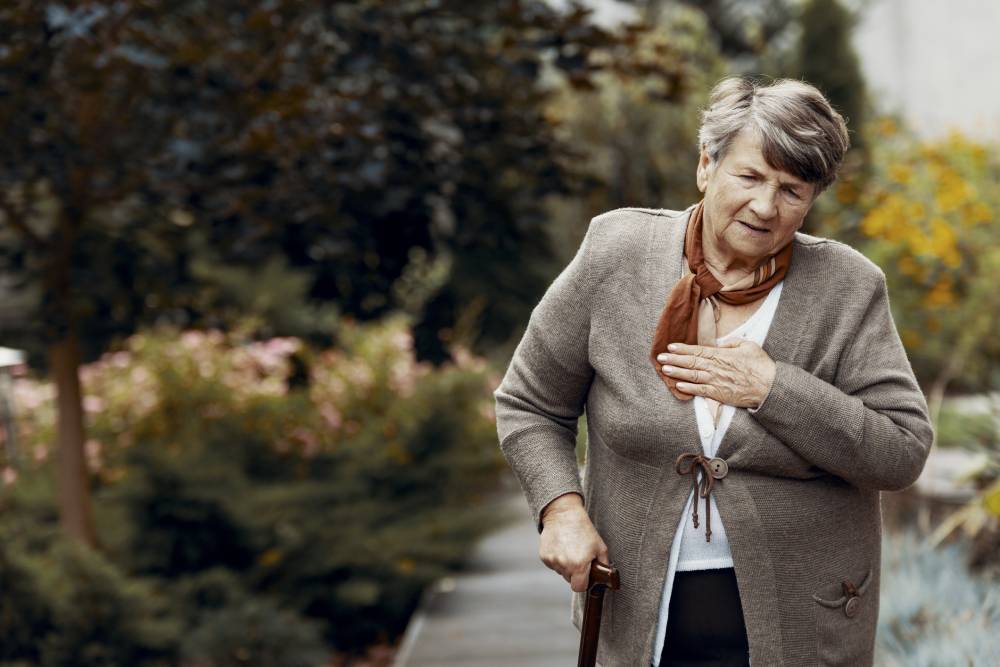
One in every three hundred Australians are housebound due to the debilitating condition of chronic breathlessness, and the figures are even higher for those over the age of 60.
There are people who are so short of breath that dressing or undressing, or just getting to the kitchen and back to get a cup of tea, make leaving the home “out of the question”, says David Currow, Professor of Palliative Medicine at IMPACCT (Improving Palliative, Aged and Chronic Care through Clinical Research and Translation) at the University of Technology Sydney.
Some people are breathless while at rest or from only minimal exertion, he said.
Those with chronic breathlessness who can leave the house are severely restricted in what they can do. “They are stopping because of shortness of breath every 50 or 100 metres,” said Professor Currow.
Chronic breathlessness affects every aspect of life, Professor Currow explained. “They’ve got to plan their day really carefully and think about what they choose to do.”
For example, patients will have to choose between having a shower or saving up their energy to play with their grandchildren in the afternoon, because the shower will leave them so short of breath.
Data from the Longitudinal Study on Ageing, showed those experiencing shortness of breath are “far less likely” to be sexually active than others in their 70s or 80s.
One’s social, physical, psychological and sexual wellbeing are all impacted by severe chronic shortness of breath, Professor Currow said.
Those with chronic breathlessness often find they become socially isolated, Professor Currow said.
“They can’t get out to see family and friends and family, and friends start to drift away and perhaps not call around quite so often.
“Or telephone calls can be difficult because of shortness of breath, and so their social world diminishes because their breathlessness is so severe.”
Chronic breathlessness is usually found in people with heart or lung disease. Though these diseases might be being ‘maximally treated’ by the best specialists and with the latest treatment options, the disabling breathlessness persists.
Chronic breathlessness can also lead to a “cycle of deconditioning” where patients become short of breath when they exert themselves, so they do less. The next time they try the same activity, they are even more likely to become breathless.
Regular, low-dose, sustained-release oral morphine over 24 hours has been shown to help improve breathlessness symptoms in patients suffering this condition.
The theory behind this treatment is that when someone experiences shortness of breath, the body produces morphine-like chemicals in the brain to try to reduce the sensation of breathlessness.
“Regular, sustained-release morphine augments the body’s own response and can relieve that sense of breathlessness, the unpleasantness and intensity of that breathlessness in order for people to feel more comfortable,” Professor Currow said.
“Some people begin to feel they can do a little more before they get breathless,” Professor Currow said. “It takes the edge off that feeling of working really hard just to breathe.”
Of course, doctors should carefully balance the risks associated with the abuse and addiction of morphine with the medication’s quality-of-life benefits for terminally ill patients.
“Concerns about abuse, addiction, and diversion should not prevent the proper management of chronic breathlessness. These factors are not prime concerns in the management of terminally ill patients,” says Professor Currow
“The aim is to improve quality of life by decreasing breathlessness,” Professor Currow explained. Research and experience have shown that with sustained release morphine, “patients begin to feel better in themselves”.
This article was sponsored by Mayne Pharma. Mayne Pharma International Pty Ltd ABN 88 007 870 984, 1538 Main North Road, Salisbury South, South Australia. Date of preparation November 2020.


