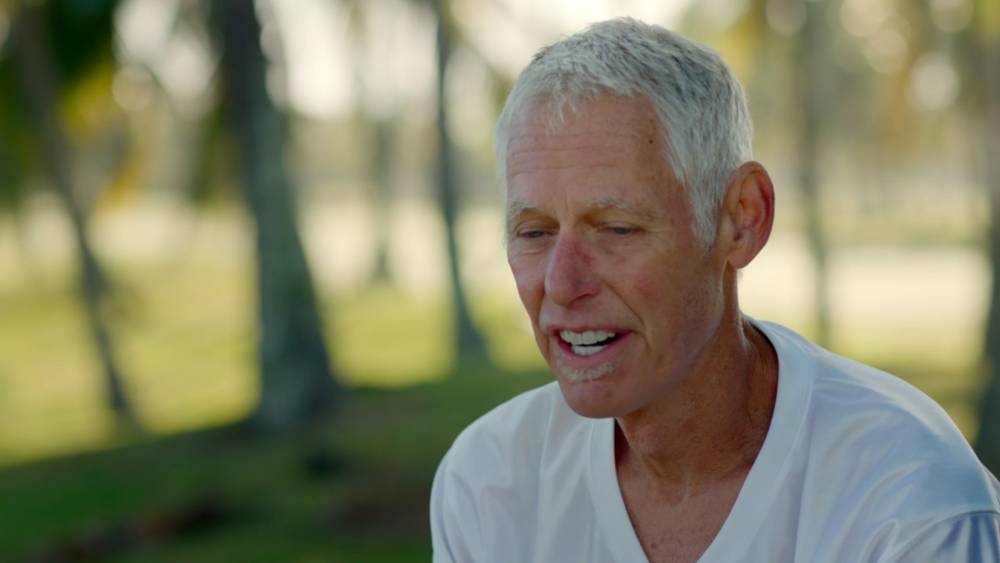
Mark Macy is the 58 year old competitor who has battled against the odds alongside his son in the World’s Toughest Race: Eco-Challenge Fiji. Hosted by Bear Grylls, the race sees 66 teams fight their way through remote backcountry terrain, 24 hours a day, with only a map and compass to guide them.
Mark Macy competed in the first ever Eco-Challenge, back in 1995 with his original team Stray Dogs. At the time they were all in their late forties and early fifties, making them some of the oldest people to compete. Since then, Mark has cemented himself as an adventure racing icon.
Mentoring his son, Travis Macy, Mark gave way to a second generation of adventure racing champions. “I never pushed him into anything,” Macy said.
“Travis spent his entire life hanging out in cool places waiting for me to finish races. I remember him waiting for me to finish the Leadville 100, in the crew car and along the course. He’d spend a summer vacation hanging out in Death Valley so I could compete at Badwater. He was exposed to all of that at a very early age and accepted it as normal. He thought it was normal to run 100 miles on snowshoes or 146 miles in the desert. As a result, Travis has turned into one of the most mentally tough guys I know.”
This year, saw Mark take return to the Eco-Challenge, in the form of the World’s Toughest Race. However instead of racing with his usual team Stray Dogs, who make up the only team of competitors in their 60s, Mark is part of Travis’ team Endure.
Mark and Travis not only make for an impressive father/son team, but Mark is taking on his 25th year of adventure racing with an Alzheimer’s diagnosis. Originally signed on to take part in the challenge on opposing teams, Mark and Travis decided to race together after the diagnosis was received. Not only recognising that his original team couldn’t offer the full support Mark would need, they also decided that taking this opportunity to adventure together would be an invaluable and meaningful experience.
Travis explained that it was no longer about winning, but rather about battling the odds as a team. “To do this race with my dad is a priceless, once in a lifetime experience, and I am far more excited to go out here and race with Dad and go slow and try to make it through than I would be if I was racing for the podium,” he said.
With Travis by his side, every step of the way, Mark has been able to take on the challenge of a lifetime, for perhaps his last time. “It was great racing with Travis, Shane, and Nellie on Team Endure, but also it was strange not racing with Stray Dogs,” Mark said.
“My world is different now with Alzheimer’s, and I have to adapt to that.”


