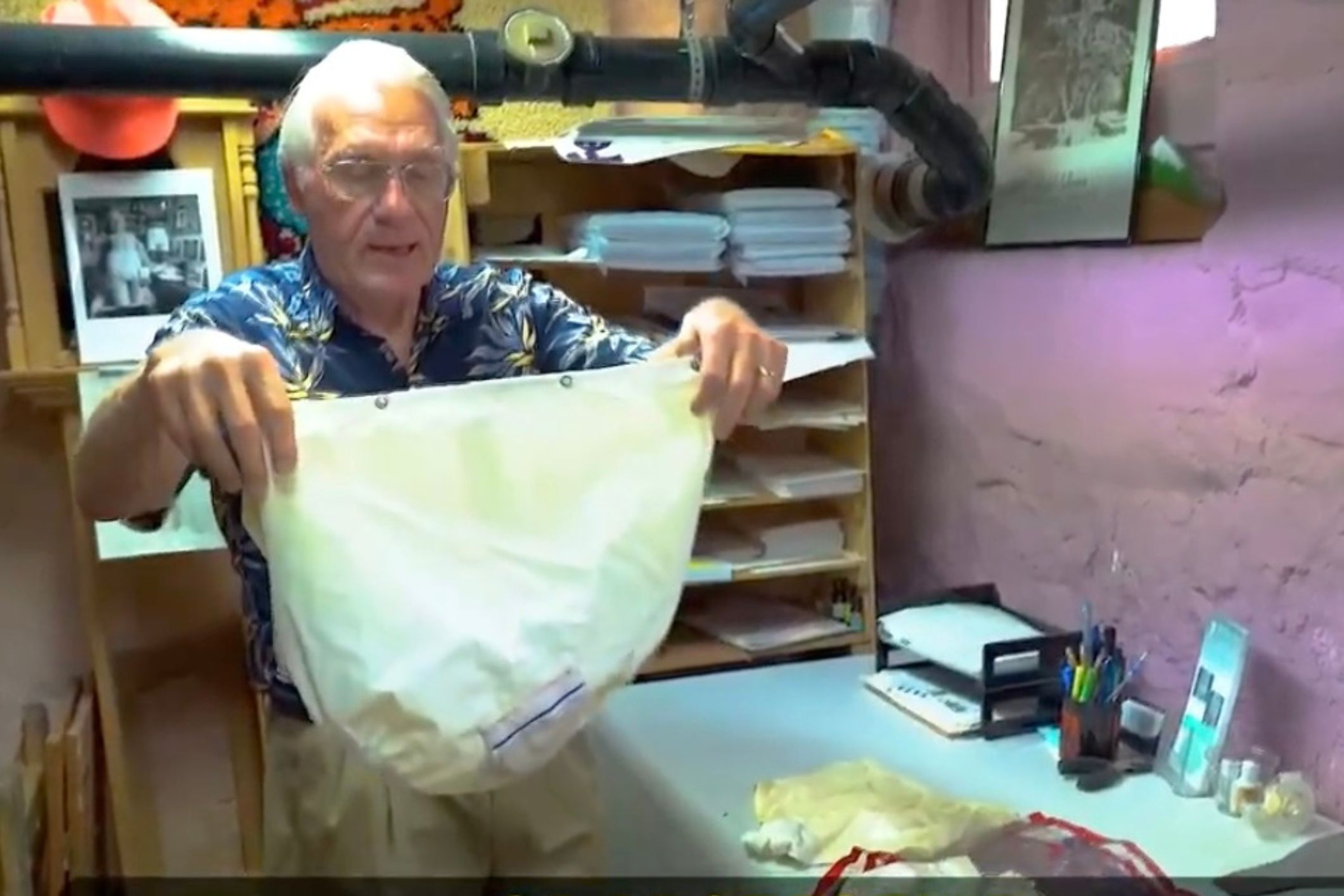
Most inventors aim for immortality through rockets, computers or world-changing medicine. Buck Weimer took a more domestic approach: he just wanted a peaceful night’s sleep next to his wife without being driven out of bed by what can only be described as atmospheric events.
His solution was not divorce, which he reportedly considered and quickly ruled out on the grounds that it “doesn’t look good on a resume”, but engineering. Specifically, underwear engineering.
His wife Arlene suffered from Crohn’s disease, a condition that can cause uncomfortable and sometimes very pungent digestive symptoms. Instead of treating it as an unsolvable marital inconvenience, Weimer treated it like a design brief: contain the problem, neutralise the smell, and preserve domestic harmony.
The result was a product that sounds like it was dreamed up after a particularly challenging barbecue: odour-filtering underpants with a built-in charcoal system designed to trap unwanted aromas before they escaped into the wild. The idea eventually became a commercial product under the name Under-Ease.
The early prototypes were, by Weimer’s own admission, not exactly a triumph of textile engineering. Airtight underwear sounds simple in theory, but in practice it proved a bit like trying to make a fart-proof tent in a hurricane. Air has a habit of finding a way.
The breakthrough came, somewhat bizarrely, from coal mining. While working as a psychologist supporting miners after a workplace accident, Weimer heard stories about gas masks used in rescue operations. That sparked the key insight: if charcoal filters can handle underground gases, perhaps they could handle the domestic variety as well.
From there, things escalated quickly into what can only be described as serious scientific silliness. Layers of fabric, sealed seams and filtration systems were combined into what was essentially personal air purification, worn a few millimetres from the source of the problem.
Somewhere between invention and obsession, Under-Ease was born.
What makes the story particularly charming is not just the invention itself, but the sheer earnestness behind it. This was not a gag product dreamed up for a novelty shop shelf. It was a genuine attempt to solve a very human problem: how to care for someone you love while also not fainting in your own bedroom.
Arlene, for her part, became both muse and early tester, which is a role nobody really prepares for in life. One moment you are going about your day, the next you are field-testing experimental anti-odour garments developed by your husband.
The invention eventually earned a place in the wonderfully odd world of the Ig Nobel Prize, an award that celebrates research that first makes people laugh, then makes them think. In this case, probably in that order.
The Ig Nobel recognition turned what might have been a niche medical-adjacent invention into global curiosity. Suddenly, people were not just asking whether such underwear worked, but whether it was socially acceptable to gift it to a colleague. (Answer: many decided yes.)
The business side of things followed its own unpredictable trajectory. The product found a small but loyal audience, particularly among people managing medical conditions, and also a far larger audience of people who thought it was the perfect prank gift for someone in middle management.
Later, the idea even made its way onto television in the United States, where entrepreneurs pitched it on Shark Tank. The reaction, predictably, involved a lot of laughter and polite discomfort. Investors admired the ingenuity but struggled to picture a mass market where odour-filtering underwear was an everyday essential rather than a punchline.
Still, the story of Under-Ease is not really about market size or venture capital returns. It is about what happens when ingenuity collides with embarrassment and refuses to back down.
There is something oddly noble about the entire enterprise. Most people, faced with a persistent and unpleasant household problem, would simply open a window and endure it. Weimer instead reached for chemistry, textiles and persistence.
And while the world may never need a global underwear revolution based on gas filtration technology, it is difficult not to admire the commitment to trying.
In the end, Under-Ease sits in that rare category of invention: deeply practical for a small group of people, wildly amusing to everyone else, and quietly proof that love and engineering sometimes share the same starting point.
Because if you can’t solve the problem of awkward domestic biology with science, what exactly is science for?