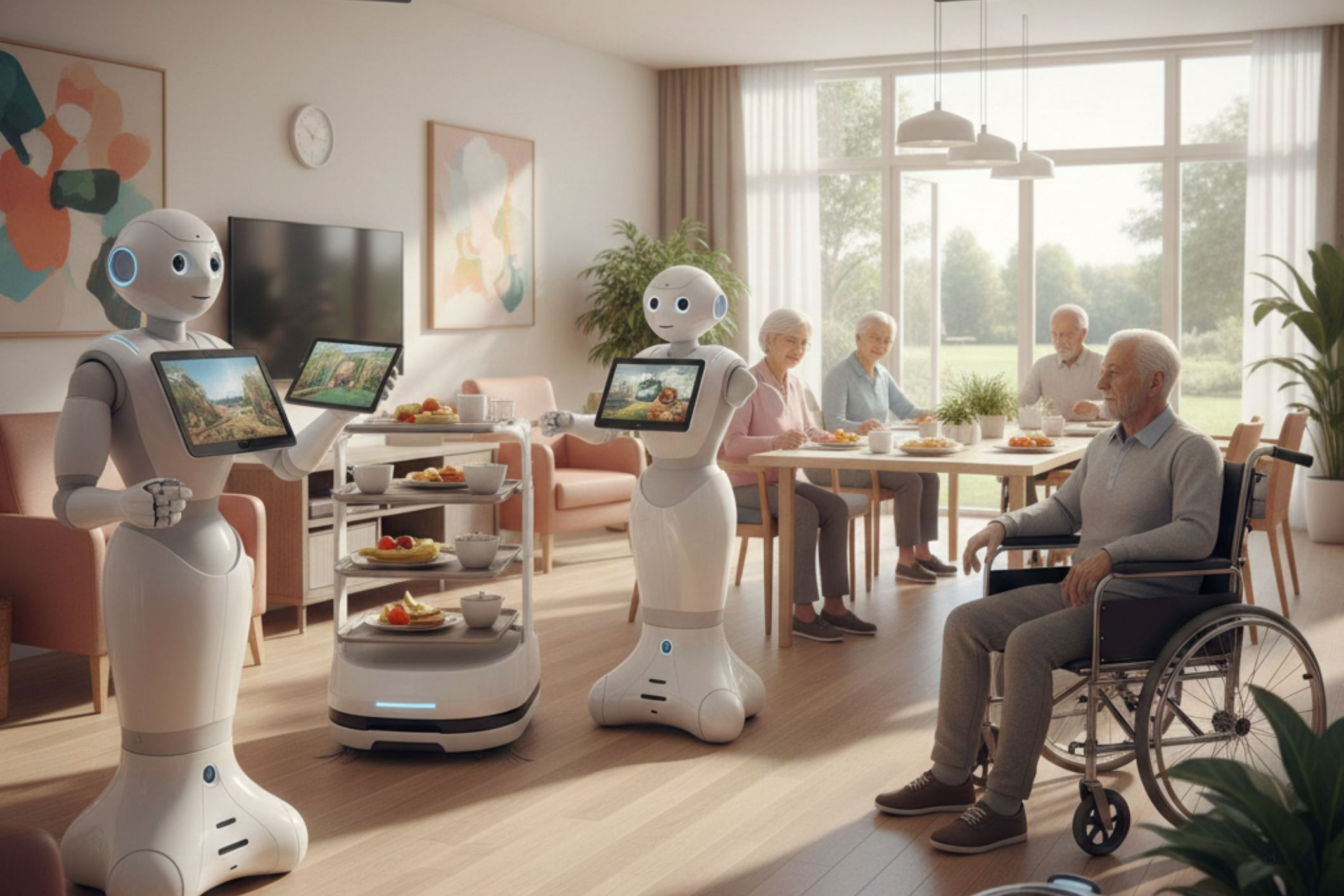
A recent proposal by Investor Mark Carnegie has suggested designing the athletes’ village for the Brisbane 2032 Olympics, primarily at the Brisbane Showgrounds in Bowen Hills, with aged care as the primary long-term purpose.
The idea is to construct facilities suited to high-tech retirement living from the outset, then temporarily repurpose them to accommodate athletes and officials during the Games. Afterwards, the sites would transition into permanent aged care infrastructure, complete with automation features.
This “build for aged care and Airbnb for the athletes” model aims to deliver lasting community benefits, avoid wasteful post-Games infrastructure, and help meet escalating demand for aged care places.
Such forward-thinking design avoids the pitfalls of retrofitting existing buildings, which can be inefficient and costly. By planning with robotics in mind, facilities could incorporate features like wide corridors for robot mobility, integrated charging stations, sensor-embedded rooms for monitoring, and layouts optimised for automated tasks.
This approach could reduce whole-of-life costs and create more sustainable care environments.
Robots are already playing an increasing role in aged care, both in Australia and internationally. In Japan, a leader in this field due to its super-aged society, robots handle tasks ranging from companionship and monitoring to physical assistance such as lifting residents or preventing pressure ulcers.
Developments include humanoid prototypes such as AIREC, which performs daily activities, and government-backed initiatives promoting AI-driven solutions to ease caregiver burdens amid workforce shortages.
Closer to home, Australian trials demonstrate growing adoption. Humanoid companion robots like Abi and Daisy engage residents through conversation, storytelling, music and games, helping combat loneliness and supporting staff in facilities facing worker shortages projected to reach tens of thousands in coming years.
Other examples include robots trialled at Baptist Care in Wagga Wagga for interaction and assistance, as well as service robots for logistics such as delivering meals or linen.
A 2025 Productivity Commission report emphasised how technologies, including robots for routine duties, could enhance labour productivity in the care sector, improve care quality, and lower costs without replacing human carers entirely.
The benefits extend beyond efficiency. Robots can provide consistent companionship, remind residents about medications, monitor vital signs or falls, and free human staff to focus on personalised, empathetic care.
In residential settings, they offer an extra layer of support, particularly for mobility, cleaning or social engagement. However, success depends on thoughtful integration. Robots should complement, not replace, human interaction, with an emphasis on resident dignity, privacy and staff training.
Challenges remain, including initial costs, ethical considerations around data and autonomy, and ensuring technologies adapt to diverse needs. Yet the momentum is clear.
Proposals like the Brisbane one illustrate how major events can catalyse innovation, turning temporary infrastructure into enduring assets. As Australia grapples with an ageing demographic, embracing automation thoughtfully could help create more responsive, dignified and sustainable aged care systems for the future.



I have yet to hear how a RESIDENT feels about the robots. Elderly people need human interaction and not a sterile robot to provide it. Everything seems to be about money, money and money. It also seems to me that no one really cares about the humanity of the elderly. It becomes really sickening to constantly hear the motherhood stuff from everyone in positions of power care in the aged care industry bleating about how they care about the elderly blah blah but never live up to their PR blurb. Why not get the robot to do the cleaning, bed making and other mundane tasks and leave the staff to actually provide real care to the residents by catering to their personal needs ; if these robots are supposed to ease the burden on the staff, then what are the staff doing when the robots are providing “companionship”, activities etc. Or, is it that the staff will be dismissed and enhance the provider’s profits by doing so.
God help the elderly because it seems that no one involved in aged care really seems to clearly understand or care what the elderly need. What a sad indictment of what humanity has become. Technology has a place but certainly not in the way outlined in the above article!
You’re absolutely right Bridgette. What a horrible end to a wonderful, productive and engaged human life to be tossed into a place relying on machines to care for you instead of human beings.
However, while I was reading the article where robots will be replacing an ever-shrinking human workforce It made me wonder whether this was really going to be the case. People everywhere are likely to have their jobs shrunk or subsumed by robots and will be left without anything to do. This could result in isolation and a concerning mental health situation within communities. Working in aged care where you are needed by other human beings could be the ideal solution to this situation. And you’re on the mark as far as the space the robots should occupy – the drudgery work of cleaning and heavy lifting can be done by mechanicals and caring for residents’ needs can be done by humans.