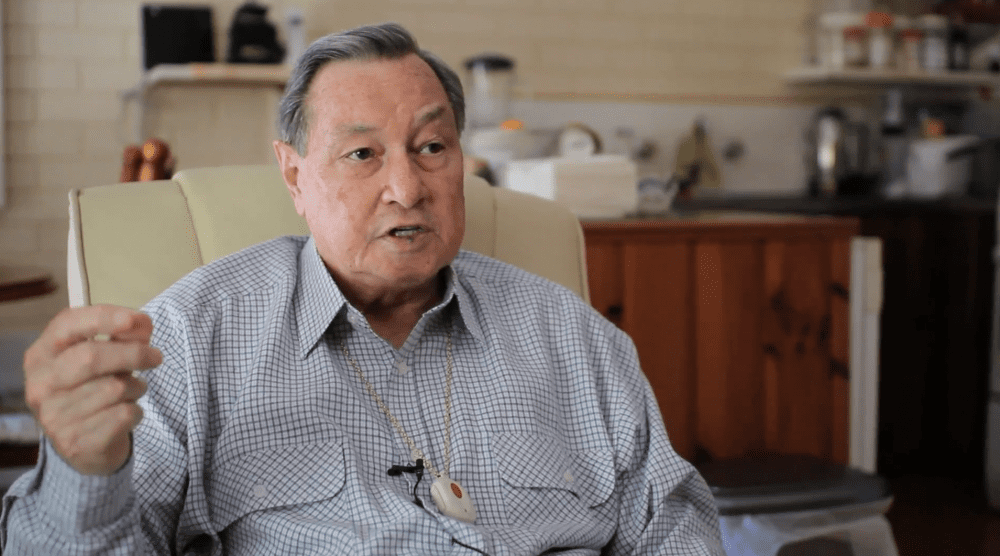
When Ron suffered a serious stroke last year, he says it was the “little MePACS button” that saved his life.
Ron was at home alone when the stroke occurred, and he quickly found himself in extreme pain.
Fortunately, he was wearing a MePACS personal alarm around his neck at the time, and was able to press the emergency button immediately.
“The one thing I had in my favour was that when I pressed the MePACS button, straight away I got a response,” he said.
Sonya at the MePACS call centre answered his call within 30 seconds, and Ron was able to tell Sonya he needed urgent help because he thought he was having a stroke.
The ambulance arrived within only 10 minutes of Ron pressing the MePACS button – and it was that speed of response that Ron believes saved his life that day.
“That was what saved me – it was the quickness of the response from MePACS that saved my life,” said Ron.
Sonya said she could sense Ron’s relief over the phone when he was able to speak to her in person, and when she was able to help him in a reassuring and efficient manner.
Sonya said, “You could tell that he was a lot less anxious, just from that phone call.”
MePACS is a fully monitored personal alarm service that has a manned call centre; you actually speak to a person once you press the button, and it’s that human contact that can make all the difference – especially in stressful situations such as the one Ron experienced.
Having a monitored service provides a far quicker and safer response compared to a non-monitored alarm. Unlike non-monitored alarms or autodiallers, the MePACS response operators are able to speak to the client to identify what help is required and they can communicate the information to Triple Zero. This information is key when helping Triple Zero prioritise the appropriate level of response.
It’s this human touch that is key to providing the speed of response that makes the MePACS service far safer and more reliable for its clients.

Had Ron simply called Triple Zero, he wouldn’t have been able to answer their questions as he was unable speak.
But because MePACS already knew Ron’s details, precious seconds were saved – seconds that may well have saved Ron’s life.
Also saving precious time was the MePACS keysafe which meant the ambulance could gain access to the house quickly.
Ron says he wouldn’t have been able to open the door to an ambulance. “The pain was so incredibly bad I couldn’t move,” he said.
After calling the ambulance, MePACS also alerted Ron’s friend, Garry, who lives nearby, and his brother in Sydney to let them know what had happened.
By the time Garry travelled the kilometre to Ron’s house and arrived at the scene, the ambulance was already there, stabilising the patient.
Ron said that prior to have the stroke, he had taken being a member of MePACS for granted.
“You don’t really acknowledge what it can do for you unless something really goes wrong,” he said.
“It was that little button that saved me. That’s what it’s all about. That thing is magical.”
For more information, contact MePACS.


