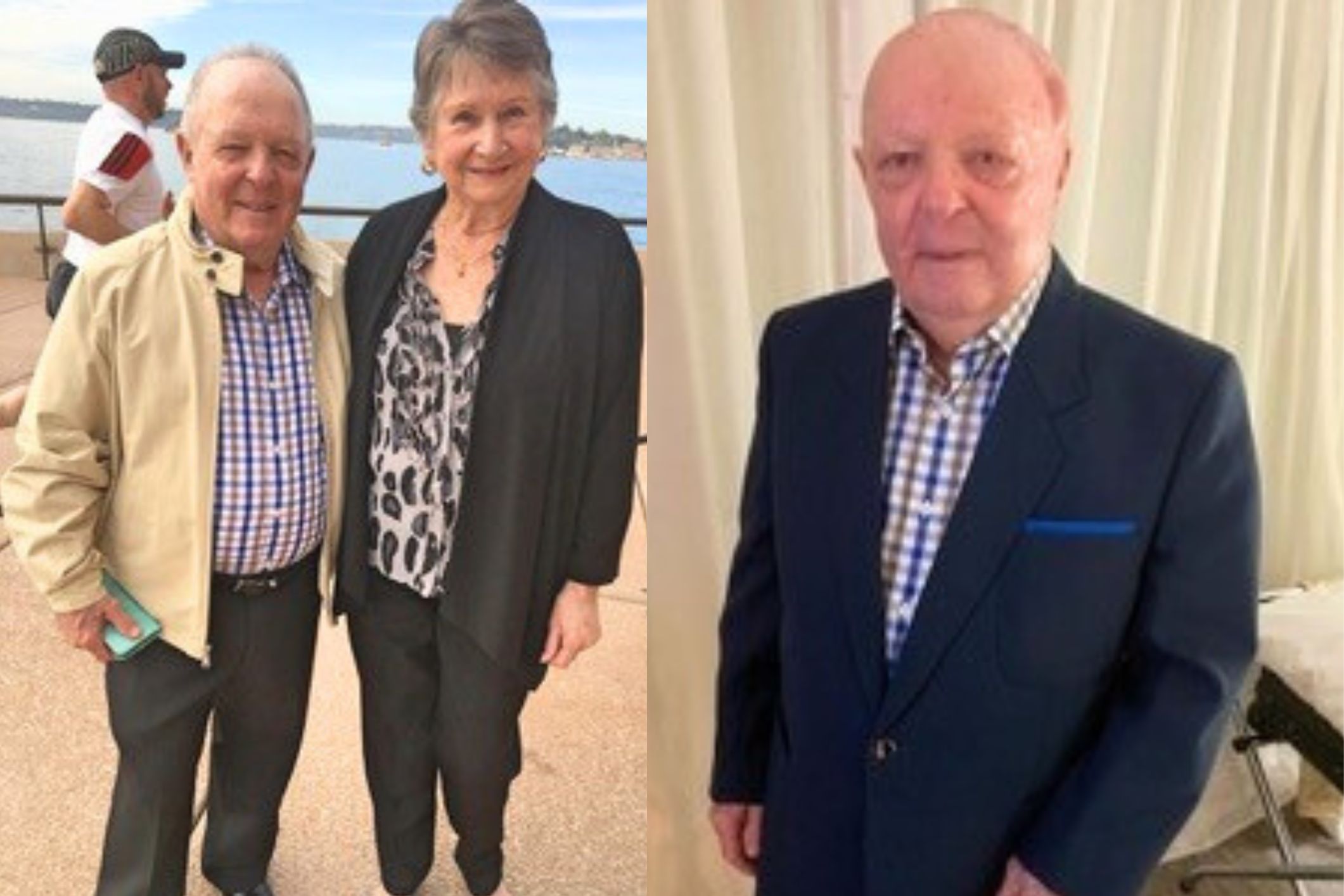
At almost 84 years old, retiree Robin Hatfield is hoping his decision to document his journey with terminal sarcoma will help fuel education and clinical trials of the under-researched type of cancer.
Sarcoma has numerous subtypes of cancer and there is not always a clinical trial or study available for each one, meaning funding for research is vital.
“I thought I might record what happens to me over the course of the journey through photos and reflection and then at the end, people in the medical industry might have some use for it… if documenting my journey can raise awareness, other people might get a little bit of time out of it and I’ve done something positive from it all.”
Living independently in a retirement village with his wife of 63 years, Emma, in Wollongong the former security and fleet manager had always thought of himself to be reasonably healthy. But red flags began to appear in his 40s when doctors found Melanomas on Robin’s scalp that needed to be removed. last July at a routine check-up, Robin’s dermatologist noticed some unrecognisable lesions on his head.
After being passed around to other General Practitioners (GPs) and dermatologists for biopsies and tests, Robin finally received his terminal diagnosis and was quickly booked in for surgery. A month later, Doctor Andrew Lee cut out the biggest sarcoma mass he had ever seen from Robin’s scalp during a gruelling five-hour operation.
In September 2022, Robin completed six weeks of radiotherapy, suffering from the usual side effects of nausea, watery eyes and a lack of appetite or taste.
Almost exactly a year post-diagnosis, Dr Lee is happy with Robin’s progress.
“I asked the oncologist ‘What do we look for? What happens if it doesn’t work?’ He said, ‘Robin, we don’t think that we don’t have that thought here. We only have positive thoughts,” said Robin.
Doctor Denise Caruso, Chief Executive Officer (CEO) of Australia and New Zealand Sarcoma Association (ANZSA) said as you age, your risk of developing sarcoma increases although it remains relatively low compared to other age-related cancers.
Although significant milestones have been made with the ANZSA National Sarcoma Database, more research and support are needed to uncover new treatments to help improve survival rates and quality of life for patients after treatment.
“Older individuals may experience unique challenges in dealing with sarcoma due to age-related factors… [and] diagnosing sarcoma in older people can be more challenging, as symptoms may be attributed to other age-related conditions,” she explained.
“This delayed diagnosis can lead to more advanced stages at presentation, potentially impacting treatment outcomes. However, it’s also important to note that the impact of sarcoma on older individuals can vary depending on the specific subtypes, stage of disease, overall health, and individual circumstances.”
If any older people have concerns about a lesion or other health issues, it is important to see a GP as soon as possible who will typically look at your medical history assessment, conduct a physical examination, organise imaging tests (such as X-rays, MRI, or CT scans) and a biopsy to obtain tissue samples for examination under a microscope.





