Did you know that the skin is the largest organ in the human body?
It also serves many functions. The skin is a barrier that protects human organs from impact and pressure, and from things like bacteria and chemicals in the environment. The skin is also responsible for regulating our body temperature. And it is through the skin that we are able to perceive temperature, touch, and pain.
Because the skin is such a vital organ, it is of the utmost importance that we protect it, and this is particularly the case for elderly people, whose skin can be especially fragile where any break leaves them vulnerable to infection and prolonged injury.
Skin tears are a common problem among the elderly.
According to Wounds Australia, “In Australia, skin tears account for 54.8% of all wound types in elderly people, with up to 25% of residential aged care facility residents suffering from a pressure wound, leg ulcer or skin tear at any one time.”
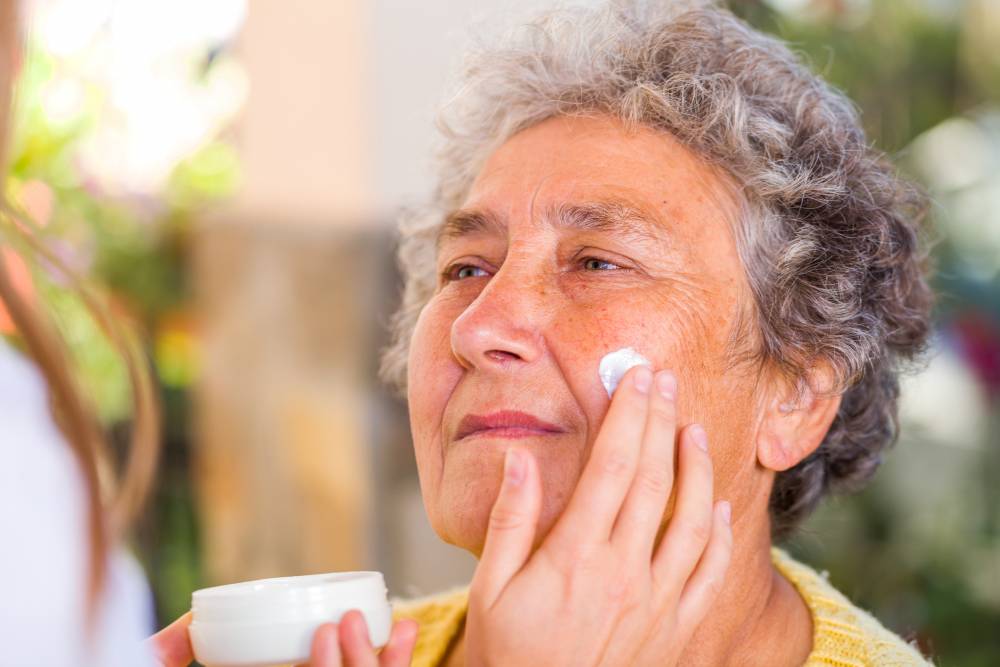
Research has shown that twice-daily moisturising reduces the incidence of skin tears by almost 50 per cent for residents living in aged care facilities. The study recommended that the moisturiser be applied in a downward motion in both the morning and evening, preferably after showering.
Aromacare uses important emollients in its products that moisturise the skin to help maintain an intact skin and prevent skin tears in aged care residents. The emollients used include Macadamia oil, Sweet Almond oil, Coconut oil fractions, Aloe Vera gel, Jojoba oil, Shea Butter, Natural Vitamin E, and Vitamin B3.
Creams take only five minutes to apply and are best applied to residents’ arms, hands, back and legs twice a day, in the morning and evening prior to settling, and ideally after showering.
Aloe Vera is considered somewhat a ‘super ingredient’. Evidence suggests it can help bind moisture to the skin, accelerate wound healing, reduce itchiness, reduce skin inflammation, and can be an effective treatment for psoriasis.
Aromacare includes aloe vera in all its creams and lotions for its hydrating, healing, and anti-inflammatory effects.
Aromacare has developed its own creams and lotions especially for elderly people living in aged care accommodation.
Aromacare’s Skin Repair Cream has been specifically designed to increase skin hydration and elasticity, to help reduce skin inflammation, and speed up the healing of damaged or bruised skin following injury.
This particular skin repair cream contains Calendula, Arnica, Lavindin Super and Geranium essential oils, which are all known to “promote optimal healing in damaged skin”.
The Moisture Plus Hydrating Dream is non-aromatic cream designed to improve skin health, integrity and hydration, to help protect against skin tears.
Lavender Hand Cream has become a staple in the aged care industry. Lavender can promote wound healing, and has been shown to decrease feelings of pain, while calming and soothing the mind and promoting a sense of wellbeing.





Really awesome Thanks a lot
Catering Indstries
It’s great that you mentioned how it is of the utmost importance that we protect the skin because it is such a vital organ. My mother is now aging and it seems she still wants to take care of her skin as much as possible. So for that, I think my mother should look for skincare products for aged skin.
https://prolox.com.au/