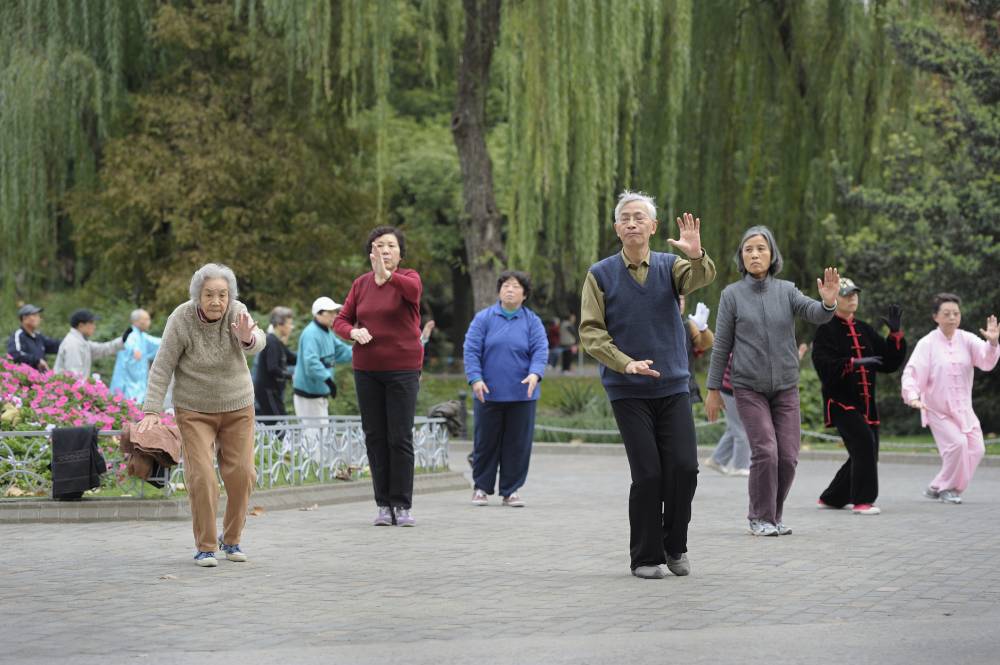
Tai chi can reduce the incidence of falls and improve quality of life for people who are living with dementia, according to a new study.
It has long been known that tai chi has benefits for older people, but this study, for the first time, examined how it might benefit people who are living with dementia.
Preventing falls among people who are living with dementia is a hugely important issue because people living with dementia are twice as likely to experience falls, twice as likely to suffer injuries as a result of the falls, and their recovery rate is far poorer, said research leader, Dr Samuel Nyman of the England’s Bournemouth University.
The study followed 85 people who were living with dementia. Half the group received a free tai chi class every week for 20 weeks and was asked to perform tai chi at home. The other half carried on with their regular lives without tai chi.
Each group was asked about falls weekly, and after six months, balance tests and quality of life surveys were repeated
During the study, 38 people with dementia experienced falls and overall 122 falls were reported. When the results of one participant, who experienced a number of falls, were removed, 44 people who did tai chi experienced falls and compared with 61 falls for those who did not do tai chi.
The researchers also found that the people who did tai chi reported their quality of life remained stable, whereas the people who did not do tai chi experienced a decline in their quality of life.
Dr Nyman said, “We found that tai chi was something really enjoyable for people to do.
“They enjoyed coming to the classes. They enjoyed doing the tai chi and meeting up with other people who are in the same position as them.”
Tai chi can help those living with dementia “empower themselves” and avoid the “isolation” they often experience, said carer ‘Bizzi’.
One of the other benefits of tai chi is it is safe for people living with dementia.
“We found that Tai chi is really safe. There were no problems at all with people doing it in classes or at home,” Dr Nyman said.
“The carers were able to bring people along with no increase in stress or burden on them, which is a really important finding,” he said.
Tai chi is an ancient Chinese mind-body exercise that combines smooth, continuous movements with deep breathing and mental concentration.
It is considered suitable for people who are living with dementia because the movements are slow, gentle and repetitive.
Instructor Hilary Currand described tai chi as “moving meditation”.
Somewhat surprisingly, those who took part in the study and did tai chi did not experience an improvement in balance, which raises questions about how exactly does tai chi reduce falls?
To answer this question, and to strengthen the latest findings with a larger sample size, the researchers are planning a further study of the effects of tai chi on people living with dementia.
Dr Nyman said with further study the findings could be really significant, and can help us find new and better ways to care for those who are living with dementia.
“You would be able to prevent people having a hip fracture and turning up at Accident and Emergency (in hospital), and of course have good quality of life,” he said.


