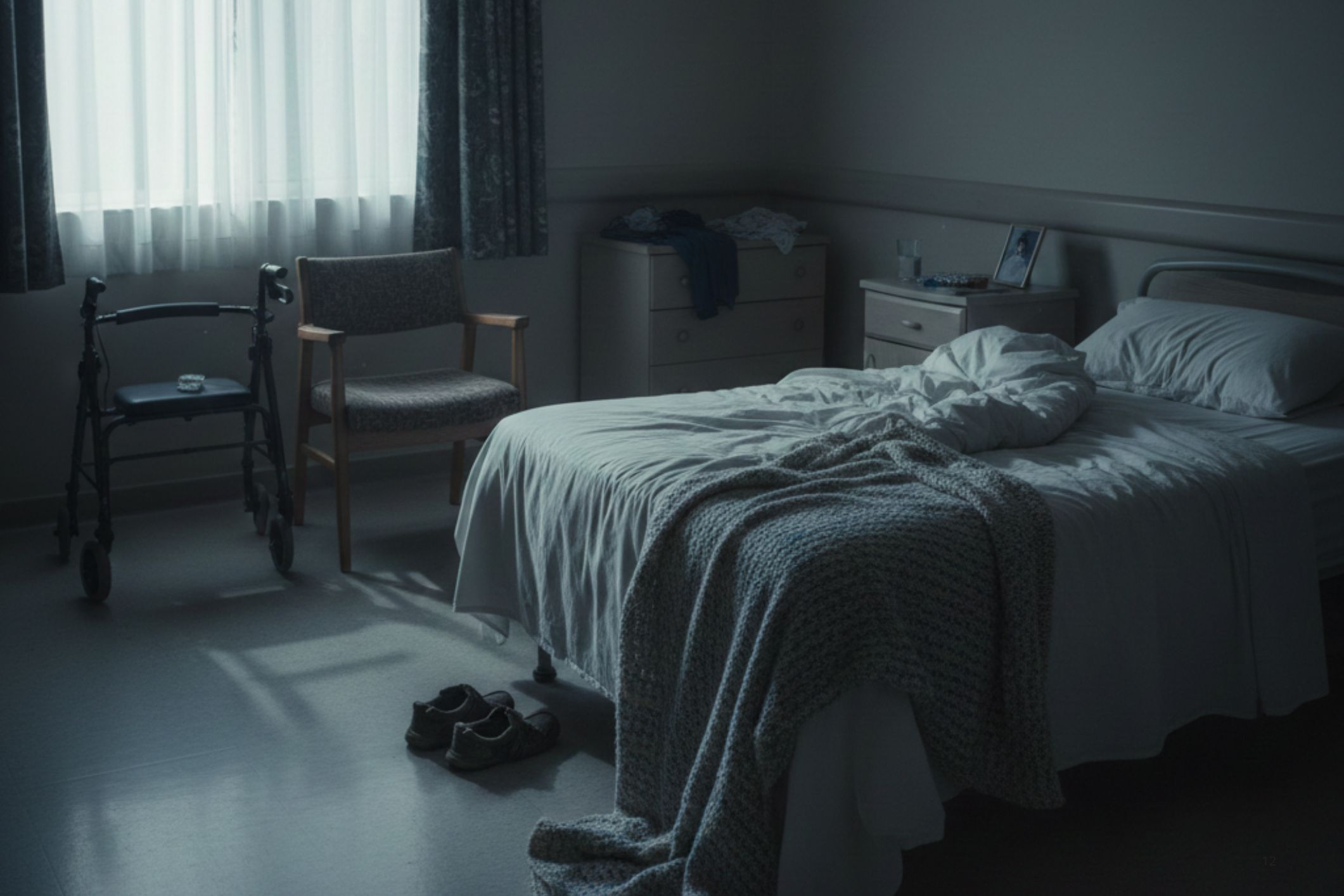
It was a case that rattled the quiet coastal community of Port Kennedy earlier this year — a shocking allegation involving two elderly women who had barely shared a room for a week.
In January, emergency services were called to the Bethanie Waters aged care home just after 4am. Inside one of the shared rooms, 88-year-old Lilian Donnelly was found dead. Within hours, police had charged her 76-year-old roommate, Suzanne Margaret Lupica, with murder.
The pair had lived side by side for only four days.
What followed was months of legal limbo, punctuated by questions that could never be fully answered: What happened in that small room? How could a disagreement escalate so catastrophically? And what responsibility does the justice system owe to someone who may no longer understand the system at all?
This week, the case took a heartbreaking turn. Appearing via video link in the Supreme Court, Ms Lupica was formally assessed as unfit to stand trial. Justice Bruno Fiannaca ruled that, on the balance of probabilities, she is suffering from a mental impairment significant enough to prevent her from participating in her own defence.
Medical evidence presented to the court indicated Ms Lupica meets diagnostic criteria consistent with Alzheimer’s disease, including severe memory loss and cognitive decline. Justice Fiannaca said these impairments prevent her from giving meaningful instructions to her lawyer, following court proceedings, or defending herself against the charge.
The court also heard her condition is permanent and unlikely to improve. “There is no prospect the accused will become fit to stand trial,” Justice Fiannaca concluded.
For the family of Ms Donnelly, the outcome is devastating. A murder charge will not proceed to a traditional trial. There will be no jury, no verdict, and no moment of legal closure — only a “special proceeding” scheduled for a later date, designed to determine ongoing management and safety, rather than guilt or innocence.
For Ms Lupica, the ruling means she remains in custody, her future uncertain and her understanding of it likely limited.
And for the aged care community, the incident remains a deep wound. Bethanie Waters described the tragedy as “deeply affecting”, reaffirming that staff acted swiftly when the alarm was raised and emphasising that resident safety remains their highest priority.
The case has also reignited concerns about the complexities of caring for residents with cognitive decline, and the risks that arise when aged care facilities, already stretched thin, attempt to meet the needs of people with vastly different behavioural and clinical profiles.
Premier Roger Cook earlier described the incident as “very distressing”, expressing condolences to Ms Donnelly’s family. His words still hang heavily today, as both families grapple with a grim truth: justice systems are not designed for outcomes that feel this unfinished.
Two women entered a shared room four days before the tragedy — one is gone, and the other can no longer comprehend what happened.



I can see it happening. When I was in hospital after a breakdown I was sound asleep when a man came in saying it was his room. He threw my phone across the room then proceeded to pull all the covering off my bed. I was lucky 2 nurses saw him enter & were able to calm him down, I was lucky really don’t know what I would have done otherwise. It just shows how easily these things can happen.
Thirty years ago a similar incident arose in Kempsey and the Area Health’s response was to close the Mental Health Ward. A group of concerned citizens formed a Mental Health Support Group which fought diligently to have that ward reinstated. Today, Area Health have already decided to take Kempseys hard won ten bed unit and gift it to the larger neighboring town of Port Macquarie, leaving Kempsey oncemore without a Mental Health Ward. Now in our eighties with some alreadt deceased. few have the energy to fight again for Kempseys Mental Health ward. Area Health maintains that the ward was under utilised, yet twice this year I was admitted to the Emergency ward at Kempsey to find Mentahealth patients in obvious distress in the Emergency Ward. What is really going on here? What is the true agenda?
Well they should never been put in the same room management needed to assess these to residents properley and this continues they need to ask staff what should be done not just to fill the bed or rearrange other areas for them it’s a trade guy but this is going to happen all the time especially when you have a person that is cognitively impaired and does no what day it is let alone putting a stranger in the room they need to think before grabbing for money