How many of us take our friends for granted? In a good way, I mean. That they are there for us and with us in so many ways, with many of those heightened in these pandemic times, when we are asking about each other’s welfare, entertaining each other with items that make us laugh, or think, or both, staying connected through phone calls, Facetime or Zoom, and then – eventually – being able, if we live close enough, to get together in real rather than reel time.
I’ve been fortunate in having such connections with several friends, living near and far. But it’s only now that I’ve asked myself how many friends do I actually have, and for how long have I enjoyed their friendship. These questions were stimulated by two things coincidentally coming at roughly the same time. The first was a survey question that was part of an ongoing project for which I’m a subject – Maintain Your Brain – and which is examining the health and wellbeing of older people. That question asked how many friends had I been in contact with over a specified period. And it proved interesting to have to do that count.
The second stimulant came from an article that I was reading, which recommended a book called Drop Off, about the friends one makes while dropping children off at school. I immediately thought of two of my longstanding friends, made in that way at different times.
And then, more broadly, the combination got me thinking about the friends that I now have, and how long I’d known each, and how and when we’d met in the first place, as well as what was it that kept those friendships going while others had fallen by the wayside.
And that, in turn, led me into comparing what a lot of we older people enjoy doing, and that’s constructing our family trees, vertically and horizontally, with what I’ve never heard of anyone doing, and that’s constructing friendship trees, of people whom we’re not related to, but who – together – give us a sort of story of how our past life has kept on giving in the form of key friends that we have made, some enduring and others not, for various reasons.
How would such trees look? Each of us might have our own ideas about that. For me, it seemed that I needed to start with two trees, and each would focus on my personal friends, whether ones whom I’d made, or ones in common with my husband. And these two trees would be:
As to how to form those trees, the easiest way for me was to create Word tables that I could add to (or subtract from) as needed. And I set them out in the following ways (which, ideally, I would like to be able to colour in, with the two left hand columns in brown for the tree, and the two right hand side ones in green or yellow for the friends, depending on whether they are evergreen or deciduous. I’ll have to find out how to do that):
The Evergreen Tree of Enduring Friendships
[with as many rows as required]

The Deciduous Tree of Memorable Past Friendships
[with as many rows as required; and – for me – death would be one reason, possibly noted as Endured Until Death, or EUD]
And, having roughed out each of the trees myself, I’ve realised that there is an added benefit for those of us who are thinking of writing a memoir, as trees such as this can stimulate so many memories that – in turn – can provide a great basis for one or more chapters.
Perhaps more importantly, however, it can help us to focus on the present enjoyment of valuing the friends that we have right now and right here. And as a sort of remarkable coincidence (I do find that life is full of them), the day after I’d worked on my tables I came across a sort of endorsement of this view in the final pages of a book that I had been reading (one that I can highly recommend: Elizabeth Gilbert’s City of Girls). In it, the author has her 90-year-old narrator reflecting on friendship to her 70-year-old acquaintance, in the following way:
This is what I’ve found out about life, as I’ve gotten older: you start to lose people…. It’s not that there is ever a shortage of people – oh, heavens no. It is merely that – as the years pass – there comes to be a terrible shortage of your people. The ones you loved. The ones who knew the people that you both loved. The ones who know your whole story.
Those people come to be plucked away by death and they are awfully hard to replace after they go. After a certain age it can become difficult to make new friends. The world can begin to feel lonely and sparse, teeming though it may be with freshly minted new souls.
Of course, those of us with good relationships with the younger members of our families are the lucky ones if we find ourselves facing a sparcity of close contemporaries. But in the meantime, let’s make the most of our evergreen friends and memorialise those who have fallen away for one reason or another.
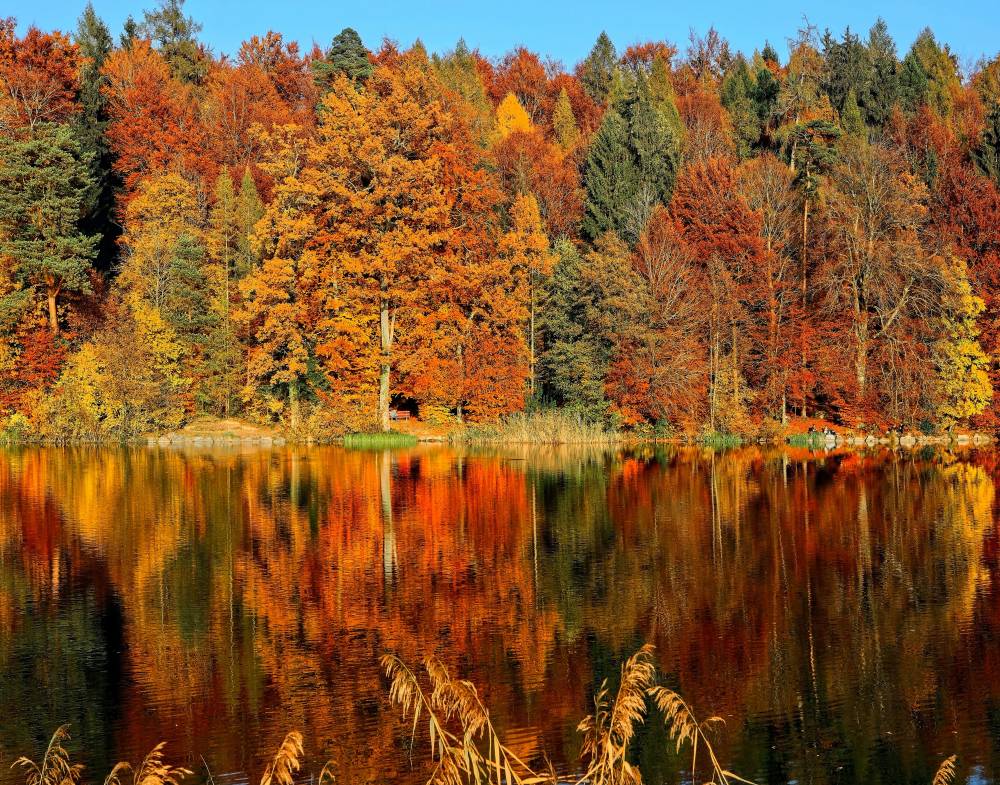
Image by Ricardo Gomez Angel via UnSplash



I think this is a wonderful idea, for sentimental as well as practical reasons.
Interestingly I had only recently been reflecting on friendships or the lack of close ones nearby, the friendship trees might do the job.