Learning a new language is always going to be easier when you have someone to practice with. Thanks to a new initiative, this is now possible. Share Ami is connecting French learners with isolated French older people to chat via a video call each week to practice their conversational skills.
Share Ami, which translates to Friend Share, aims to “create intergenerational links by connecting students learning French and elderly living in France over video chat,” according to their website.
While France has been going in and out of lockdowns and various restrictions, the initiative is offering older people who are isolated from their friends and family the opportunity to talk and share with people from all around the world. At least one conversation is recommended per week.
The Share Ami name comes from a play on words between the English and French languages. By using the English word ‘share’ and the French word ‘ami’, which means friend, the name means sharing friendship, but ‘share’ also sounds like the French word ‘cher/chère’ which means dear, so the name also sounds like the phrase ‘dear friend’ in French.
The organisation behind the initiative, Oldyssey, wants to raise awareness about older people around the world, and give them a voice.
“Oldyssey gives voice to old people and shows solutions that bring generations together,” says their website.
Originally targeted at students, the initiative is open to anyone around the world who is learning French. After a Tweet from a participant went viral, the small team at Oldyssey, which consists of just six people including the two founders, responded saying that they were going to struggle to keep up with the new demand of people wanting to get involved following the Tweet.
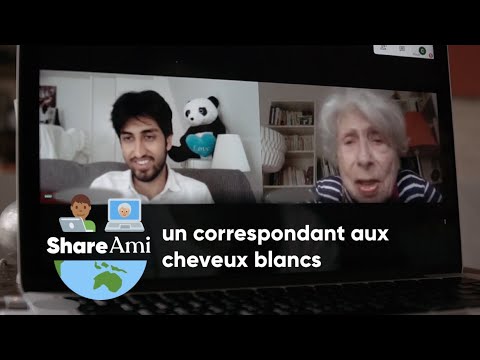
You can watch a video below of a typical conversation during one of these video chats. The conversation between 22-year-old French learner Saif, and 91-year-old Andrée, who lives in Paris and is subject to current travel restrictions, is entirely in French, but that may just inspire you to pick up the phrase book and give French a go.
For more information and to find out how to get involved, visit their website here.





I am hoping to start up a U3A group of French speakers and wonder whether these senior students would be interested to befriend and have regular conversations with an isolated person in France. Do you think it would be workable and a positive initiative?
Je projette d’animer un cours de français en Angleterre pour des personnes du troisième âge qui ont un assez bon niveau de français. Je ne sais pas si cela les intéresserait de bavarder en ligne avec des personnes âgées en France. Qu’en pensez-vous? Est-ce que ça pourrait éventuellement se faire?
Hi there,
I hope this message finds you well.
I’m Peter, representing SERP Solutions, and I’m reaching out to explore a potential collaboration with your website.
We would be thrilled to be a part of your content contributor program, if available. Could you please inform me about the process to become a contributor, or if there’s an opportunity for us to discuss this further?
Thank you for considering our request. I am looking forward to the possibility of working together to provide valuable and engaging content to your readers.
Best regards,
Peter
Hi Peter, reach out to irene@hellocare.com.au