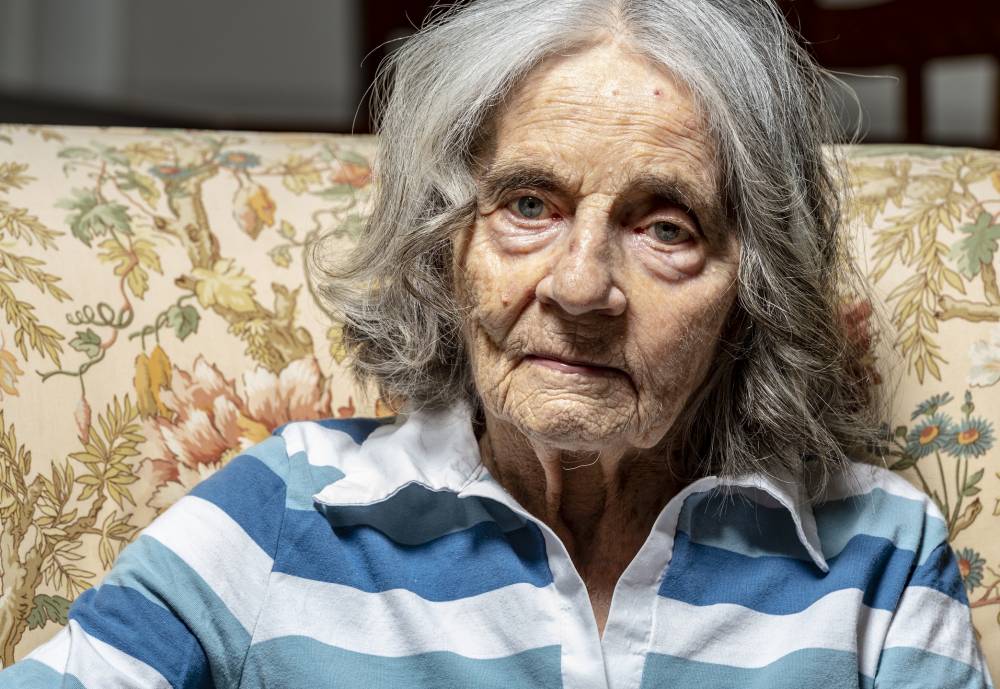
We asked some of our older relatives, isolated and in aged care, how they were feeling during this uncertain time.
“I feel purposeless.”
“I don’t think I’ve ever felt this lonely.”
It makes you feel “unwanted”, “fearful for the future” and “scared.”
Not only do emotions speak for themselves, science firmly agrees that social connection enhances our lives, increases our life span and improves our wellbeing; especially later in life.
Sadly, a recent study looking at loneliness of older Australians living in aged care homes, canvassed similar painful feelings to that of our older relatives. However, with COVID-19 upon us and older Australians in a high-risk category for illness and death, it’s crucial that they isolate.
My great-grandmother Gwen, who is a mere 102 years of age and a complete social butterfly, is really feeling it. I called her home in Adelaide and we had a chat.
“I really miss the community,” she says, her voice shaking a little, “it’s just not the same eating in my room alone each night.”
“I miss the friends I’ve made here, I miss my family… I don’t want to live a lonely life at this age.”
Restrictions for aged care homes are firm, with no outside visitors allowed and all group gatherings, shared meals and external excursions cancelled.
I feel for her, but I can’t imagine the extent of isolation she feels. The lives of elderly living away from family must be excruciatingly lonely, a loneliness that people of younger generations don’t – and perhaps never will – understand.
Even before coronavirus, a 2018 study shows that 17% of Australians in the elderly age bracket experience loneliness. Yep, they were feeling pretty isolated before this forced isolation.
“It’s quite common for elderly relatives put in aged care to feel somewhat abandoned,” Domenic of RDNS tells me.
“They just feel like a part of their life stops, they lose independence and constant connection with friends and family, especially those of the younger generation.”
Public health officials are telling us to minimise physical contact to combat COVID-19 however, that does not mean they are recommending social disconnection, exclusion or rampant individualism.
As we retreat into our homes and focus on our own individual dilemmas, it is easy to lose sight of our essential connections to one another and to be ignorant of those most vulnerable to the fraying of social and emotional bonds.
Perhaps, the term “social distancing” should be replaced with “physical distancing”, as recommended by the World Health Organisation. I mean, in the act of practising physical distancing; surely, we need social closeness and connectivity more than ever?
There is research that shows people who are well-supported by their communities are more likely to survive crises, but beyond that, now should be a time of giving, a time of reflection, an opportunity to go back to basics and to truly appreciate one another.
I’m not innocent in the struggle to stay connected with family across different states and countries, but they are a real part of my story and truth be told, there is a lot I don’t know about them. In the difficult circumstances we are facing right now, we can still connect and take social responsibility – even as we stay physically distant. Social responsibility goes hand in hand with empathy, compassion, humanity and love.
As well as following the guidelines for physical distancing and good hygiene, we can further help older Australians during COVID-19, by staying connected to them. We are young, we have smartphones, we are experts in connectivity. This is an opportunity for technology to work the wonders it was invented for. Call your grandpa, message that neighbour you haven’t seen in a while, send your relative in aged care a letter, organise a family dinner on Zoom.
With more than four million Australians over the age of 65, there are a lot of lonely hearts right now. Let’s take this time to show them that they can still feel loved, from wherever they are.
Photo Credit – iStock – LordHenriVoton



As we are in total lock down & all staff have signed a commitment to maintaining social isolation when not on shift, we are treating our residents as a large family unit, which means that they are attending the dining rooms for meals & small group activities are taking place on each floor several times each day to allow everyone to engage with their fellow residents. In addition, we have been able to enlist the help of an extra activities officer to do room visits for those residents who choose not to attend group activities & to facilitate phone & video calls between residents & their families & friends outside the facility.
So far these interventions have kept spirits high inside the facility & residents have only just, in the last few days, started asking when their regular excursions & shopping bus will be able to resume. Hopefully life will be able to return to normal for our residents sooner rather than later & we will be able to maintain our zero cases of COVID or influenza throughout the winter.
It doesn’t seem to occur to those who are commenting on, and making decisions for, older people that as we get older we have a different view of death. For much of our lives death is something that either won’t happen to us or won’t for a long time so we don’t think of it. As we age it becomes more part of our lives and could happen anytime. This is why everyday is important and isolating us is the height of cruelty. Instead of treating us as idiots and making decisions for us why not ask us what we want to happen to us? I’m tired of youngsters thinking they know everything and making unintelligent decisions for us. May the 92 year old who survived the virus but died of isolation not have died in vain.