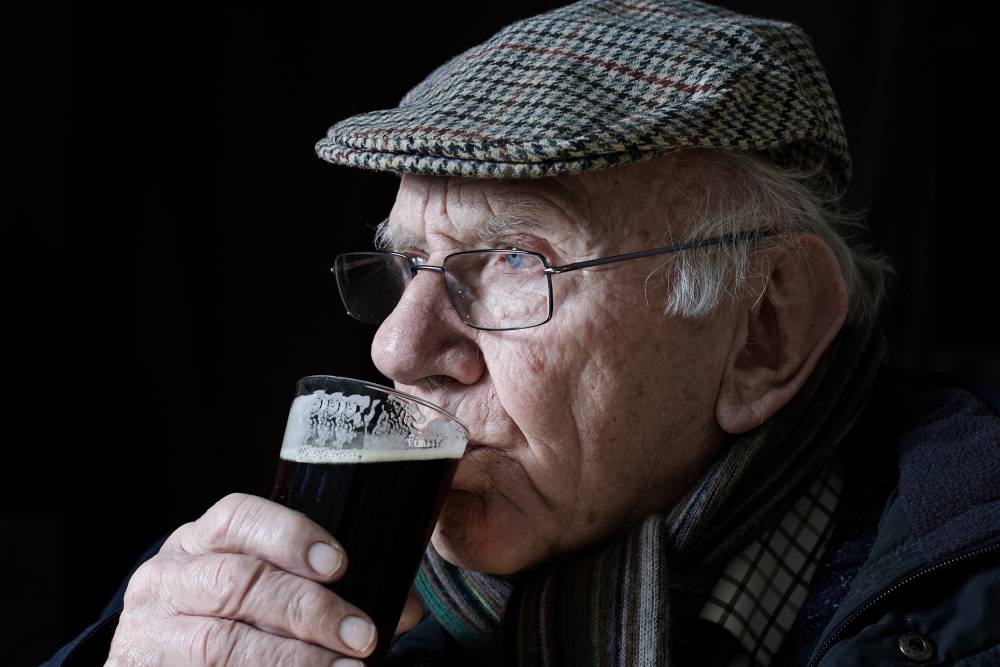
Older people should be supported to make decisions for themselves, and not have a life that is imposed on them, says a leading advocate against ageism.
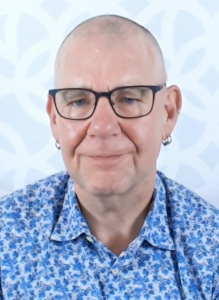
‘Ageism’ is “pervasive” in our society, says Dr Panter, chief executive of ECH, one of the largest providers of housing for older people and aged care services in South Australia.
Speaking at Leading Aged Services Australia’s Ten Days of Congress, Dr Panter said ageism is so entrenched, many of us won’t even recognise it when we see it.
In its worst form, ageism results in “infantilisation”, or treating an older person as a child, he said.
To illustrate his point, Dr Panter said he never receives complaints from families about organising transport and assistance to take older people shopping.
But he has received “umpteen” complaints about transport and assistance for taking people to the pub on a Friday night.
“Each time I have to explain that going to the pub is what your dad wants to do. It’s part of his way of staying socially connected, it’s part of his quality of life. He is an adult. He’s perfectly able to decide how much he drinks and when he drinks.
“Our job is not to tell him how to live his life. It’s to enable him to live the life he wishes.”
“We take away their ability to make sensible decisions. We take away their ability to live with risk and determine themselves the level of risk they want to live with,” Dr Panter said.
When Merle Mitchell, 85, gave evidence at the Royal Commission into Aged Care Quality and Safety recently, she explained she is prevented from taking risks living in residential aged care that she would take if she was living at home.
For example, she was only allowed to see her daughter twice during the COVID-19 lockdown. Though she understood the reasons for the lockdown, she believed she would have been prepared to take the risk of seeing her daughter if she was living at home.
“It’s an illustration of how we may strip away their rights,” said Dr Panter. “That process is ageist.”
Ms Mitchell understood why the facility had to operate a certain way during the pandemic, but it had to be acknowledged that the residents “lost control” in that process, Dr Panter said.
Dr Panter said he was “surprised” the Aged Care Quality and Safety Commission doesn’t express concerns more often about Standard 1 of the Aged Care Quality Standards.
Standard 1 is “I am treated with dignity and respect, and can maintain my identity. I can make informed choices about my care and services, and live the life I choose.”
“I’m aware of practices across the system that I wouldn’t see as respecting the rights of the individual and would be ageist in their practice,” Dr Panter said.
Ageism can also creep into responses to Standard 3 – “Personal and Clinical Care – too, he said.
For example, if their inspectors identify a rug might be a trip hazard, it’s not up to them to fix the trip hazard, it’s up to the client to decide if they want to remove the rug.
“We can’t force people to take certain actions, even if it is in their interests,” Dr Panter said.
Older people should be able to make all the decisions about how they want to live their lives.
Even forcibly evacuating residents from their home during a bushfire is beyond the rights of aged care services providers, he said.
We have to empower older people to live the life they want, taking a holistic approach that sees the whole person for who they are.
ECH engages consumers in the co-design of its products and services.
People with lived experience of the services they offer, clients, families and volunteers, take part in reference groups that meet regularly.
Representatives of those groups sit on quality, governance and housing committees.
“We pay more than lip service to having that consumer voice, that lived experience, sitting at the table and supporting them to be able to participate in the debate and discussion,” Dr Panter said.
“Ageism has gone under the radar for too long. We heed to call it out and take a stand and show we are genuine about tackling it,” Dr Panter said.
He encouraged listeners to read, ‘This Chair Rocks’ by Ashton Applewhite, which is a manifesto against ageism.
And he concluded by issuing a plea for listeners to call out ageism when they see it. Not to let ageist practices go by, not to let ageist comments slip.
If we don’t, older Australians won’t have the quality of life they deserve, he said. “They won’t be able to live independently and in control of their lives, right up until they die.”
Image: tirc83, iStock.



Dr Panter’s article highlights an inherent problem with the Quality Standards. We are seeing risk and risk management being placed at the forefront of assessor thinking when undertaking assessments.
It is understood that there must be a reasonable amount of risk assessment and management, particularly when a person may lack insight into their personal safety, which could inhibit their ability to make a measured decision about risks they wish to take, but to have to “minimise” risks to resident who have full cognition and decision making capacity, which includes case conferences ,1 on 1 discussions and a load of documents to “evidence” the provider has done EVERYTHING they can to “manage” the risks, does blur the line considerably between safety and the resident’s rights to choose.
The consequences always fall on the provider to prove they did everything in their power to manage and minimise the risk, and it would be a very brave provider who would use the :human rights” approach, and simply encourage residents to be adventurous and fully support their right to take risks.
It is incumbent on the legislators and regulators to support a resident’s right to take risks by providing some assurance to providers that they will not be “punished” (as is the current feeling amongst providers) if an incident occurs while a resident is taking “risks” (which most of us call normal life activities).
It is absolutely ageist to assume that all residents in residential care need to be “assessed” as this does strongly imply that they cannot be trusted to make their own decisions about risk, and this surely is at odds with Standard One of the Quality Standards?