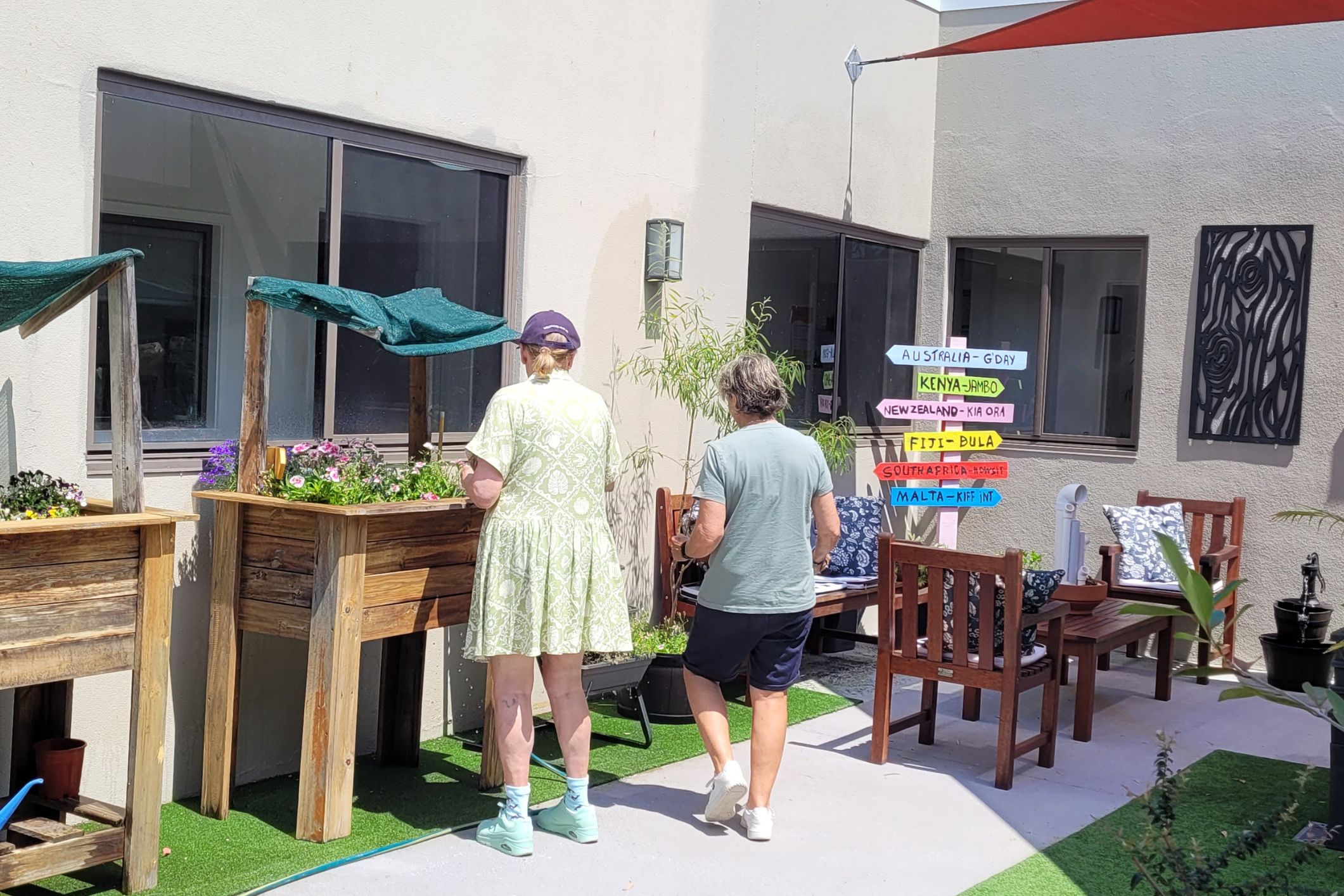
The new Aged Care Act is about bringing person-centred care to the here and now. Yet if the change is going to be real it has to make its way from just words into the hallways of aged care, into people’s rooms and routines.
Long gone is any tolerance for lip-service to dignified and person-centred care, it has to be real, it has to be supported, and importantly it must be humanly possible for front-line staff to provide it. Residents deserve to be cared for as full human-beings, and staff deserve to be trained and equipped to provide just that.
Sally Hopkins of Eden in Oz and NZ consistently asks a question to provider clients and staff, “if you needed care tomorrow, would you be prepared to live where you currently work?” The Eden Alternative approach has been the difference between leadership teams and front-line staff gazing at the floor knowing something’s wrong, to bustling and thriving hallways of genuine friendships, fulfilled residents and staff who never want to leave.
A band-aid won’t cut it
Hopkins doesn’t hold back, “if it’s not good enough for us, it’s definitely not good enough for the people in care now.” The Eden Alternative approach starts with facing current operational health. What is actually going to make “person-centred care” a reality for residents, and make it humanly possible for front-line staff to implement?
“The current institutional system is broken, for organisations and people who are operating in institutional structures, and government is saying ‘we want you to be person-centred’. What is required is more than a band-aid approach”.
“Many organisations say, we’ve got the person at the centre of what we’re doing, but for so many staff the task list still dominates.” Hopkins sees current practice as, “‘I’m here to do ‘you’ instead of what can we achieve together?”
Central to the Eden Alternative offering is supporting aged care organisations to update policy and practice so front-line staff truly have the time, energy and confidence to build relationships with residents. It comes alongside providers, to guide cultural and operational change, so that the people receiving care are in the driver’s seat and staff are empowered to genuinely collaborate and partner with the resident.
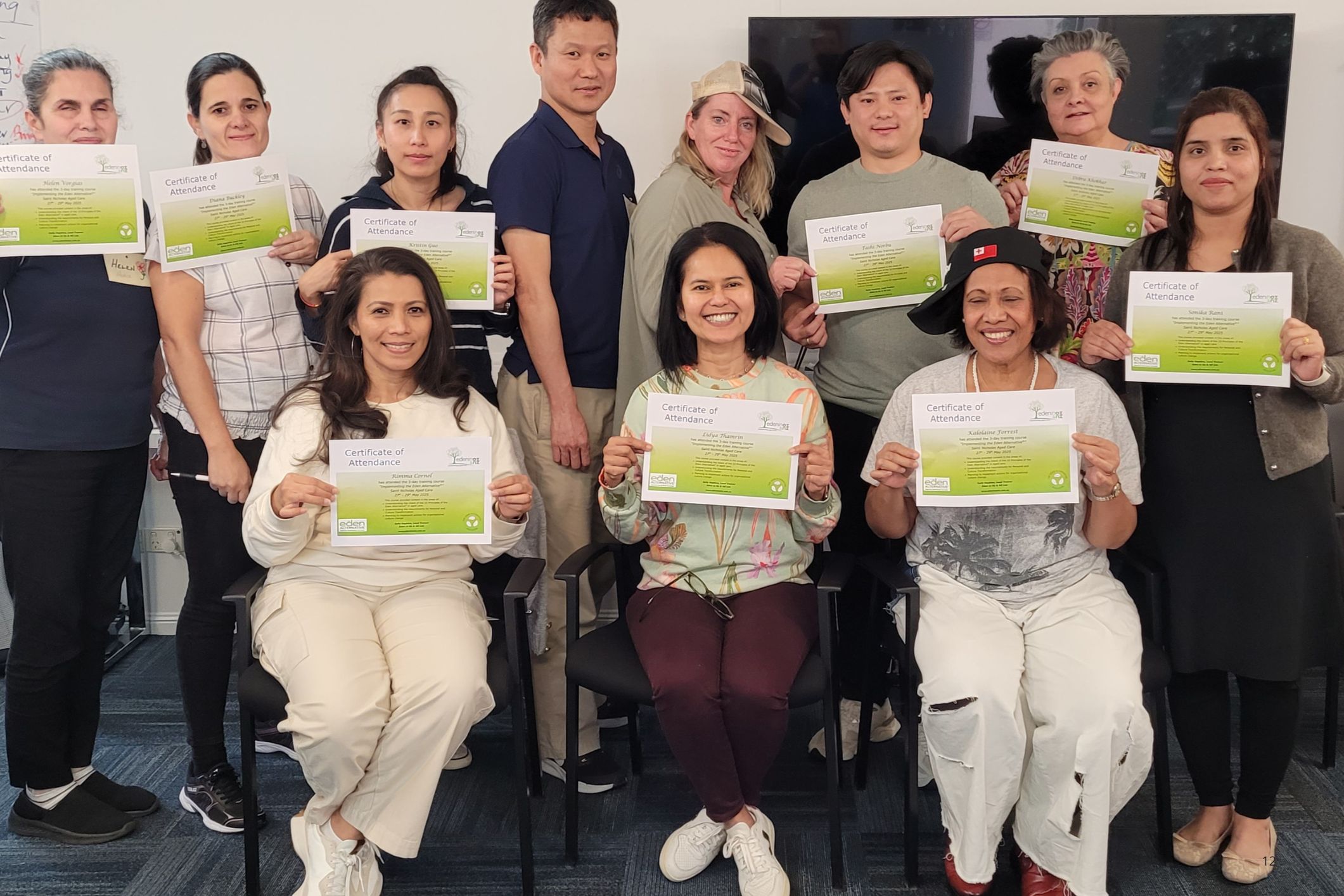
Provider partnership
Most in aged care are sincerely pouring themselves into their work. Many have been breaking themselves to meet compliance yet it always seems like wading through red-tape. Hopkins and the Eden Alternative model start from the beginning. Why do we need to change, so that everyone in this home thrives? What’s working well? What needs to improve or change? Who needs to be involved to get the changes happening?
Hopkins has seen this process for many providers, “it takes time, money and resources to make these changes.” However, “over time, you have to be committed to making the changes in culture and realise that this is your new reality. The return on investment for homes implementing the Eden Alternative includes lower staff turnover, because the hugely important ingredient of culture is there.”
“A supportive Culture is what people want.”
“Workforce attraction and retention is a challenge globally.” Hopkins names a pain-point of many an aged care CEO, “‘how do I keep my staff? How do I get the right people to work at this organisation?’ It’s about the culture that you offer.” A great culture is a non-negotiable.
For providers, investing in culture, shaping it and taking the time to create a vibrant, supportive and resilient culture takes a huge amount of time but has benefits that may surpass being counted.
“Front-line staff and residents want an alignment of values that they will align with consciously or subconsciously.” Or they will be repelled by an organisation’s culture, and quit or leave the organisation. Getting it wrong can have disastrous impacts for residents and front-line staff and the organisation as a whole.
Humility leads to growth
Hopkins has walked alongside many workers who have voiced their frustration, wanting to provide excellence in care and struggling to find the route to it. She has seen through close partnership of the Eden Alternative approach, that seeking change first starts with embracing the need for it, from all levels in the organisation.
“We’re asking front-line staff to be person-centred, but the organisation needs to support that in their policies and procedures and changed practice. They need to embrace it.”
Within the organizational structure, “if the policies aren’t in place, to support the practice of person-centred care, we’re not going to get any change.”
“The focus of The Eden Alternative approach is, person directed care, putting the senior in the driver’s seat. We’re empowering staff to be able to let go, while still doing their jobs, being able to listen, and to put into place what the person wants to have happen, on their time-table.”
Eden in Oz and NZ works to an ambitious goal, “the rhythm of daily life should be determined by the people living in the home and their interests, and what they want to do today, with guidance of course. Residents should be the main conductor of how they want things done, in partnership with the care partner (staff), where they can achieve more together.”
Hopkins notes this means embracing the powerful but subtle reality of relationships, both by providers and staff. “They have to embrace the intentionality of meaningful relationships between people, to see this as valuable and not a waste of time or money.”
Leadership and front-line staff need to be supported to build relationships. This means policies to safeguard ratios, stretched bandwidths and to focus upon real teamwork. For all roles, policy and practice change must mean putting an end to walking through the door and having to shoulder the burden of wondering what’s going to go wrong next and do we have a full team roster today. Being supported to have an abundance mentality is helpful.
Residents are a resource
The Eden Alternative teaches organisations, and all levels of staff, how to start the conversation of deep cultural change, to navigate it for residents and staff by residents and staff.
For example, Eden in Oz and NZ guides every organisation to include the end user, the resident, as part of any recruitment panel. “It needs to be intentional and continuous, and for every position in the organisation, including the CEO.”
Hopkins shares, “when residents are part of the selection process, they are looking for a different set of skills. They are looking for, ‘are you going to be nice to me? Are you someone I can rely on? Do I trust you? Do I like your tone?’ All that stuff. It’s the emotional substance they are responding to.”
Recruiting for the “heart” is a key to success. For the potential new employee you’re demonstrating that the voice of the resident is important too, and reflects the organisation’s values and mission.
From her nearly two decades of experience she shares, “at the end of the day, the residents want to know the hire is going to be the right fit for the organisation, and this home, based on what they know as a person living here.”
“CEO’s have told me, every time they ignore the residents’ comments or selections, ‘I like A over B’, every time they ignore the advice on who to hire, because they like B’s skill-set they bring, invariably they get it wrong.”
“Turnover costs are big, you could save a lot of money every time you recruit someone because you’ve made the right decision in the first place, through hearing the resident’s voice”, Hopkins notes.
“Residents also have a vested interest in new hires succeeding, they will be your champions to check in and support new staff.” Hopkins shares that she has seen when this culture of resident inclusion is supported and maintained, it has built up a rock-solid support network for staff at all levels.
“[Residents] They are definitely an untapped resource.”
Purpose, like good wine, ages well
Hopkins advocates, “with an organisation pursuing policy and practices supporting person-centred care, this is asking, ‘how can we shift the control of direct care back to the end user, the person?’.
“People need purpose. In every home or community centre we have former lawyers, nurses, engineers, doctors, teachers with a host of skills. They might need support to do some things they can no longer do easily, but for many their brain is sharp, they are interested in their world and they want to contribute.”
Opening opportunities for all levels of staff in a home to see residents’ capability, and putting money into supporting the ability to spend time and build relationships, this can result in receiving support from purpose-led residents.
Hopkins shares, “during Covid, at a residential care home in Brisbane, a resident told the Manager she was bored and needed something to do. The Manager worked out with this person what would provide meaning and make everyone’s life happier. When Covid testing was happening at the front door, the resident provided the RAT tests, ensured that temperature testing occurred and provided a welcome smile. It was such a success for everyone, but especially the resident. They were definitely contributing to their community.”
Meaningful change is not a dream it’s a definite
Eden in Oz and NZ works with all stakeholders to make meaningful sustained change happen. That means tackling the reality.
“The organisation needs to set up their culture of person-centred care that supports the routine and daily practice of being person-centred for the people who live and work there. Organisations must ask ‘what does that mean for staff?’ ‘How do we, in practice and policy, entrench this and support this? After all, we work in their home, they don’t live in our workplace.’
“Encouraging meaningful and purposeful relationships for staff and people they are supporting”, is the baseline start for Hopkins and training in the Eden Alternative approach.
Hopkins has seen this scenario many times, “residents may not have a lot of friends and care staff, including those from overseas, may not either. Why not enable and encourage them both to find friendship together. That small change in practice can support a depth of relationship which changes the reality of the home for people in profoundly beneficial ways.”
“And in supporting this for all staff, and residents, change is magnified. That leads to a whole lot of subtle shifts.”
At a recent visit to an Eden registry member organisation, the staff shared how much they were continuing to learn about a resident, from their resident/staff buddy program. “It’s more than what’s in the care plan.”
The Eden Alternative is about, “addressing loneliness, helplessness and boredom”, by putting residents at the centre of the care. It’s ambitious and entirely possible, Hopkins has seen and lived this change alongside heart-felt providers and staff, and spunky seniors who have got their ‘mojo’ back because they were finally seen for all of themselves.
“Loneliness’s antidote is companionship. Helplessness, the giving and receiving of care. If residents are able to give you, the care worker, information, they can care for you. That’s a gift of purpose and community. Spontaneous tea breaks and conversations can alleviate boredom, particularly if they’re not programmed into a schedule.”
“Time together could even be at lunch time. Supporting front-line staff to be able to sit down with residents, sharing a meal with them can have profound impacts on a home’s culture and operation. We are social animals, and thrive when supported to have genuine relationships.”
With everyone lifted, everyone can feel the benefits, including the easing of long-time management stressors trying to only meet the red-tape of compliance, in an environment that is working for the whole organisation. For staff, the team support means everyone can focus upon the individual. The Eden Alternative model of care taught is for everyone in the home.
Empowering front-line staff in care practices
In workshops, Hopkins has worked through subtle shifts that front-line staff can do to put resident’s back in the driver’s seat, from asking “what side of the bed they sleep on, ‘how do you like your tea or coffee’ (in detail), to how do you like to get dressed, including what sock goes on first.” There are biases that people can bring into care which are acted upon without thinking.
“We apply our background/approaches to people we’re supporting, which could be wrong, and we wonder why people get cranky.”
In a recent Eden Alternative participant presentation, a front-line staff member was showcasing a project they’d implemented, to change culture and, in practice, how to support a resident-directed care approach. They shared a simple yet profound breakthrough. She said to the group “‘I thought this was going to be hard but it was so much easier because we just talked to the residents’”. Hopkins good-naturedly says, “I was wondering where she was going with her initial comments but then I was amazed, I could not have paid her enough to say that.”
“The new standards demand you are caring for people with dignity and respect and providing choice”, Hopkins notes. In practice, “it’s about, ‘we hear you, we work together to put into place…whatever you need.’ We’re meeting any unmet needs!” She exuberantly shares, “The mantra is, ‘Nothing about me, without me!’”
Disrupting for good
When it comes to residents with cognitive challenges, Hopkins says the Eden Alternative approach continues to guide staff to see the person first, and not have the resident initially defined by their disease. People living with cognitive change should be supported using the Eden 7 Domains of Wellbeing, which are “Identity, Connectedness, Security, Autonomy, Meaning, Growth and Joy”. Hopkins shares, “when we look at a person through a wellbeing lens, we see other dimensions of the person.”
“We need to encourage people, regardless of cognition, to do things for themselves around the home. This is serving everyone”, Hopkins advocates. “If we understand more about the whole person, meeting them where they’re at, and not where we think they should be, we will develop deeper and more meaningful relationships that support and balance the care.”
A case in point, “I recently visited a home where everyone is living with a diagnosis of dementia. Except for the fact that I knew the medical condition of the people living here, you wouldn’t have known that this was the case. At this home, clinicians have been focusing upon de-prescribing unnecessary medications and the care partners support the residents to do things which are of interest to them, and not what interests the staff. The flow of the day is determined by the residents.”
Hopkins explains, “there needs to be a transformational lens for person centred care to be a success. We’re the Eden Alternative and we’re called that for a reason. It’s the alternative to what is in place, disruptive and transformative. It’s not driven by compliance. It’s driven by relationships and a person’s wellbeing.”
She is frank, “it’s more than a marketing exercise. You can’t be an Eden Alternative Associate nor an Eden Alternative Registry member without training and validation in the Eden approach. It’s more than lip-service, you must show and sustain the changes that you’ve made.”
Hopkins says, “the Eden Alternative sells hope and possibility, and teaches it into practice, it is not imposing it, but being a part of a solution, particularly including seniors, front-line staff and families and the whole organisation.”
Ongoing education
Throughout Eden in Oz and NZ client partnerships, education in the Eden Alternative approach is recommended, accessible and expected. “Education is ongoing. We train absolutely everyone, board members, executives and leadership teams, care partners, staff, residents, and volunteers.”
“We’ve trained many people over the years as Eden Associates in both residential and community care organisations in Australia, New Zealand and South East Asia. One thing I do know is you can never unlearn this person directed approach, when you put yourself in the shoes of another person. Personal transformation is a critical element of culture change and The Eden Alternative provides this.”
“Where should we start?”
Hopkins advocates for clear and honest reflection for aged care leaders, managers and staff, particularly as the new Act sets into place, “we need to be quite honest, to put all the cards on the table, do some soul searching, we can’t keep continuing to do exactly what we’ve been doing and expect something different.”
For care staff, seeing their jobs as more than a list of tasks to be done by a certain time is critical and being supported to put this into practice is vital. They should, and be organisationally-supported, “to see the person first, to not be afraid of older people, to recognise that ‘they are caring for their future selves’”.
Hopkins is a straight-talker, working to train to safeguard what she has seen and heard from some seniors and loved ones. “Ask yourself, ‘would I like to be treated in the same way that I’m currently treating the older person in front of me?’ If YES, great, If NO, then it’s beyond time to change.”
She assesses, “the best performers now are doing things completely differently than twenty years ago. They’ve changed, they’ve pivoted because of their learnings and experience. Change has come from being honest about what’s working and not, pivoting and investing in change for everybody.”
Hopkins always pursues transparency in training. “We must continue asking ourselves as community members and stakeholders, ‘what does this mean for me? How do I make it happen? How do we move it from me to the we? How do we, as a collective get this to happen?’” She sees the short answer as education, education, education.
“I would live here”
She encourages providers looking at the budgets ahead to be, “prepared for the longevity of change, you might know you need a culture shift, so let’s start the conversation, ‘who do we talk to? Where do we start?’ Planning is a big part that must be honoured.”
For staff, Hopkins encourages, “considering what needs to change for you to live where you work. Working with your colleagues, focus upon developing genuine teamwork, support and envision a future where saying YES is an easy answer. We are all responsible for the quality of care that is being provided and we cannot wait any longer.”
“Being person-centred means focusing upon developing and supporting meaningful relationships, changing our practice, providing care from the heart, and dreaming that everything is possible.”
The Eden Alternative way is an alternative, it’s right there in the name and it’s here to disrupt for good. At its heart? Resident-directed care, creating a sense of home, supporting meaning, purpose, and having workplaces that front-line staff never want to leave. This is good for residents, good for staff and good for business.
“We want every service provider, their board, CEO, new and older staff, families, volunteers to say, ‘I would live here, I would use our services’. Genuinely. Saying NO is not an alternative.”


