Five years ago, Anne Mubale was living as a refugee in Kenya, having fled her war-torn home in the Democratic Republic of Congo. Today, Anne provides support to older Australians living in aged care as a VMCH Personal Care Assistant (PCA).
And while things are looking up for Anne now, it’s not been a straightforward road.
Anne is among hundreds of hopeful refugees and new Australians who undertake aged care training with Registered Training Organisations (RTOs) but struggle to find gainful employment.
In March 2018, a pilot program called Interconnect, run by not for profit aged care provider VMCH, in partnership with Emprevo (workforce technology) and employment providers The Bridge Inc and Wingate Avenue Community Centre, was formed to help to combat this issue by providing four candidates with on-the-job training in the VMCH workplace.
“This initiative came about after uncovering how many people were deemed long term unemployed after completing a Cert III in Individual Support for many reasons,” said VMCH Senior Manager Learning and Organisational Development, Kate Tonge.
“We worked closely with our Residential Service Managers to come up with the program specifics, including volunteering, practical shadowing and mentoring, to give candidates exposure to what working in aged care involves and to make an informed decision if this is something they wish to proceed with. And more widely, we want to upskill our workforce to meet the clinical, emotional and spiritual needs of people in aged care.”
One year on, three out of four candidates (including Anne) are finally enjoying success in their chosen fields, while one is receiving support to improve her language skills and confidence.
“After I did my aged care course in 2015 I could not get a job, so I ended up having to work in a factory,” Anne said. “I did this for a year but did not think I could do it forever, so I went back and studied disability. It was while doing this and still looking for a job I got nominated for this program.”
Anne said without Interconnect, she’d still be looking for work.
“All jobs asked for experience, which I didn’t have. This program helped me get the experience and allowed me to show them (VMCH) how well I can work and how much I like to care for others.”
Emprevo’s Strategic Relationship Director Wendy Fergie said while the pilot was a great start to address the growing need for a caring workforce, more needed to be done.
“The biggest problem we have found is candidates receive no practical experience and no check as to whether the candidate’s language skills are at a level they would even be able to learn the skills being taught.”
Interconnect was made possible through a one-off JobsBank grant from the State Government. Wendy and Kate said further funding was needed to keep the program running, and ideally, upscale.
“Our hope would be to build this program to be a national initiative lead by VMCH, working with Emprevo, to build a workforce for the future with the amazing people already in our communities,” Wendy said.
“Through providing them with the right training and support to be work ready, we could address the shortfall of jobs forecast and change the way working in aged care is viewed today.”
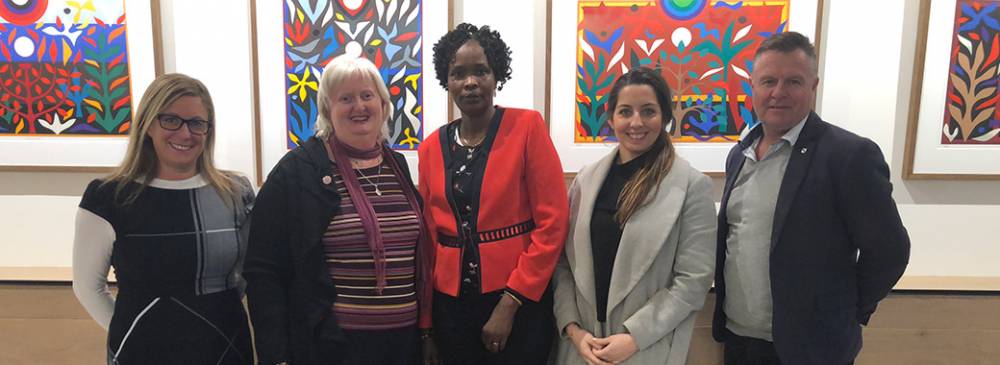
Image (from left to right): Wendy Fergie from Emprevo, Bridget O’Shannassy from VMCH, Interconnect participant Nyawarga Sham, Stacey Kraloglou from The Bridge and Matt Farrow from Victorian Government Department of Employment. (Image supplied.)





